Summertime on the Island of Pain consisted of hot days and cold nights, but with the Autumn came a drop in the temperature that tested Ruth’s powers of concentration once again.
There was a chill penetrating Mei Lubaba’s bones. Her muscles twitched, and there was a frosty tingle in her hands and feet.
She was accustomed to living in higher elevations. Her father’s farm, where she spent most of her childhood, was well above sea level, and she spent lots of time camping in the surrounding mountains.
Mei was active and outdoorsy. But when she was indoors, she warmed herself by fire. And while outdoors, she had warm leather coats and soft, thick animal fur.
On meditation retreat, Mother Ruth sat still for long periods, and the cold settled inside her like water filling a leaky boat. The warmth of her body seemed to rise out of her, only to be replaced by an icy chill that sank to her core.
She tried not to shiver. Her father had told her that shivering cools the body quicker. She tried to maintain her concentration in meditation, but the cold air persisted.
She had one thought that kept returning. She had heard of a practice by which meditators used the body’s subtle energy channels to heal themselves from the inside. She had never been taught the method but knew it was possible.
At first, she tried to channel the vibration of her impulsive shivering into her lower body. There was an energy center, an inner fire, that she could tap into, and she wasn’t giving up on it.
After many failed attempts, and just when she thought it was fruitless, she calmed her mind and prepared her body for the coming freeze. She would freeze to death, she thought, but she would do so in deep concentration and perfect stillness like a badass.
Marpa, the translator, came in with the cold.
Marpa Lotsawa spoke calming words to Ruth as her body went numb. She felt as if she were dying. She had heard that the mind tricks the body into feeling like it was on fire as a person freezes to death. She was not looking forward to that.
The fire of freezing was another one of Mei Lubaba’s greatest fears. And obviously, she never wanted to burn to death.
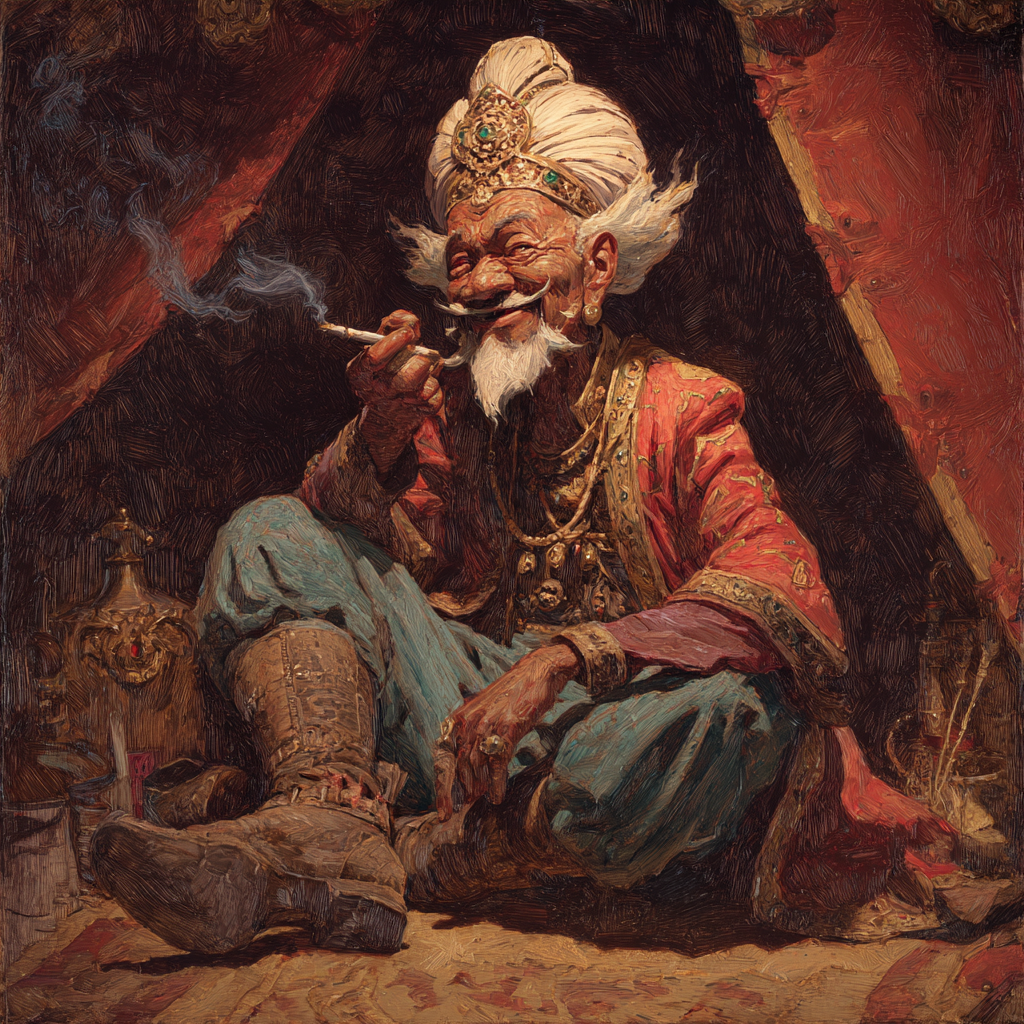
Marpa, the translator, was a stately-looking tall man with the mustache of a merchant.
In contrast to Milarepa, who looked like he had just stepped out of the jungle after living with wild hippos for years, Marpa was well-dressed and well-mannered. He spoke to Ruth with an intellectual superiority bordering on disdain. Like Milarepa before him, Marpa had no time for her comments, but instead of being quiet like his student had been, he would raise his voice and speak over her until she had stopped her prattling then his voice would fall back to normal. He looked directly into her eyes while he did this.
Marpa and Mei left her body behind and entered a pure land realm, but this one was pure light and heat with a large sun disk in the sky that was warm and pleasant to look at, not like staring at the Earth’s sun at all but more like gazing at the harvest moon.
Marpa talked down to her, starting quickly as if the lesson had already begun, only she was late for class.
“Freedom from the four extremes means understanding that the object of cognition exists in a momentary mode, empty of thought constructions and lacking objectification.”
Ruth tried to hold her tongue as Marpa used grand words she could barely understand and spoke in bombastic tones.
Marpa was born into a farming family. He financed his spiritual development while he was married with kids.
He was called Marpa the Translator because he did just that. He translated the teachings from ancient dead languages into common tongues. However, his precision of speech made learning from him a painstaking process, and freezing to death while she misunderstood him was not an acceptable outcome.
He continued rapidly.
“Freedom from the four extremes is to know that the characteristics are false, and in reality, clear light.”
The four extremes! Mei thought. I know this: Tumult, Sloth, Aversion, and Attachment. She wanted him to slow down, but she was the student, and he was the teacher, so it was her job to get to his level, not the reverse.
Marpa Chokyhe Lodro did not walk with Ruth as Milarepa did but stood before her, lecturing like a disappointed tutor. He spoke as if picturing a full audience, but as he taught, he slowly removed articles of expensive clothing, dropping each, in turn, as he lectured.
“The middle way is defined in terms of self-awareness,” the lesson continued. “A self-awareness that is far from nothing; it appears as colors, sounds, sights, tastes, and objects, but characteristics do not arise from it. There are no labels on it.”
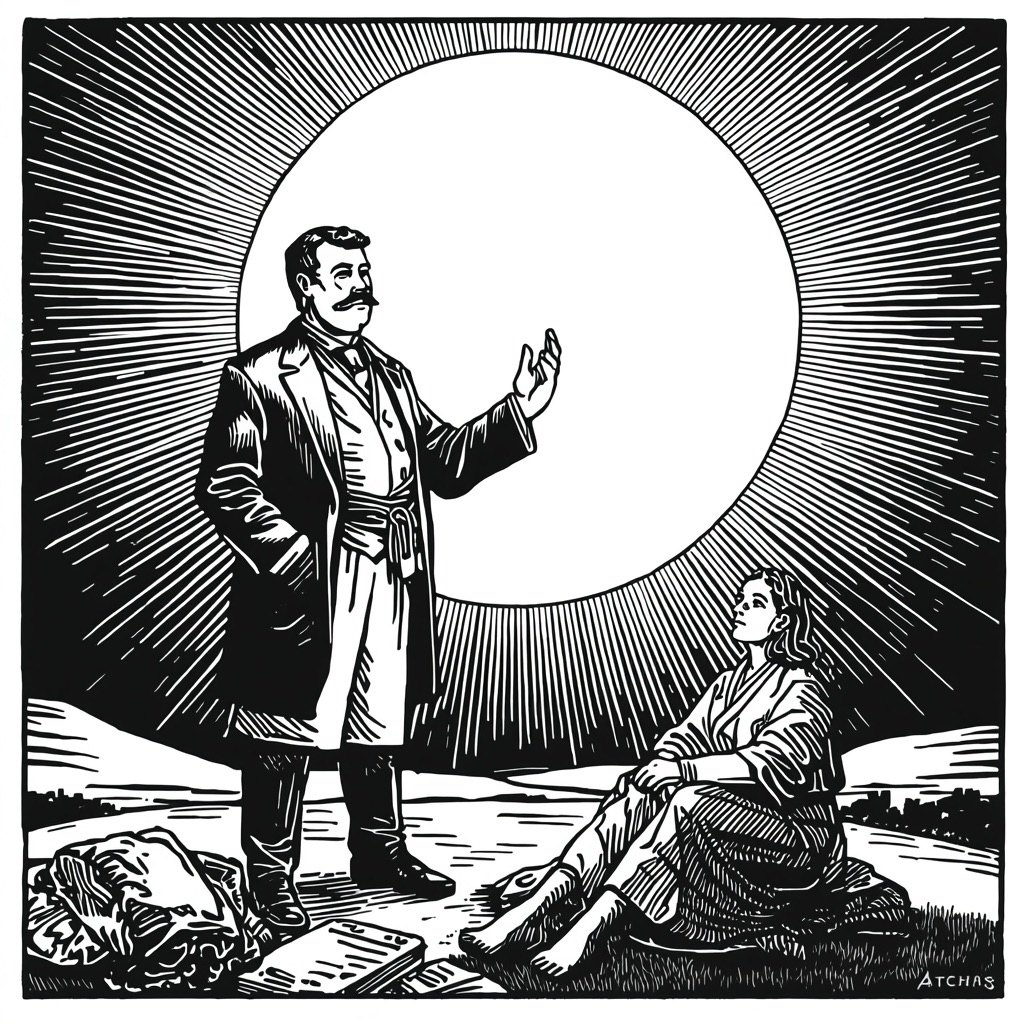
Ruth tried to concentrate on his words but was surprised by the translator’s continued striptease.
Why was he taking off his clothing? She thought. It might be the light or the heat of the realm they had visited, but there was nothing unpleasant about the temperature or anything else.
She started to question him, but his voice raised above hers as he stared into her eyes until she dropped her inquiry.
Marpa spoke with an academic cadence. “To know the emptiness of objects is to know emptiness free of appearance and coverings.”
His silk shirt fell to the ground, and he began to remove his pants.
“That is the Middle Way from which the subsequent or conventional has been purged.”
Marpa was professorial, as if addressing an assemblage of scholars. He spoke to Ruth Lubaba as if he were speaking to the plurality of every life she’s ever been or ever will be.
“Teacher?” she implored him to let her ask a question, but he talked over her again.
“People without compassion are like sesame seeds burnt by fire,” he said.
Marpa told her, “All phenomena are like an illusion.” And he dropped his pants. He said, “All suffering is like an illusion.” And removed his undergarments with an ease of movement, that left him naked to the sky.
“What about the death of your son?” Ruth asked him, keeping her eyes above the equator.
This stopped him in his tracks. Nude and seemingly annoyed at her interruption, he stared at her, waiting for the moment to ask, “What is your point?”
“You called the death of your son a ‘Super illusion.’ What did that mean?”
Marpa moved his naked body closer to her. Only then did Ruth realize that none of it made her uncomfortable. Not his manner and not his nakedness. As Marpa moved closer, she smiled at how comfortable she was with his display.
“My teacher was Naropa,” he said. “My teacher taught me to control my inner fire. He taught me to develop my inner fire and to grow my inner fire,” he told her. “Naropa instructed me to create heat with my mind and not to combat the cold. Something you may need in the coming winter,” he said. “You need to open the heart-mind energy center and increase the generation of compassion and wisdom in deep meditation. Does that answer your question?” the naked man asked her.
It did not, but Ruth said, “Yes.”
Ruth knew the story of the translator.
Marpa had sought out Naropa to be his teacher, but as Marpa had done to Milarepa, Naropa first sent Marpa on a quest.
Naropa instructed him to find another teacher, a fabled madman named Cucuripa—a madman across the water.
Cucuripa lived in the middle of a poison lake with a pack of wild dogs. It took Marpa tons of perseverance and faith to find him. And it was a miracle that the poison, journey, wild dogs, or man himself did not kill him.
Marpa moved in so close to the sister that she could feel the heat of his breath. It was uncommonly hot. And she could feel the warmth of his sex. It was unusually seductive for her. She had never been attracted to the male form, but something about the translator contained an abundance of sexual energy that she could not deny. She giggled. As an adult woman, as a senior nun, she giggled.
“I do not know the way.” He whispered to her, full of uncharacteristic humility and a half-chub that indicated a certain degree of sexual excitement.
She stared into his steely, solid gaze and felt all the heat he generated from his naked form. They stood so close and so silent and so still for so long that when Marpa spoke the last words Ruth would hear from him, she hadn’t taken a breath for some time.
With all the sexual attraction and the spiritual reverence of a superhero and a teacher of his caliber, with all the pleasant nature of an unpleasant demeanor and the tremendous heat of a giant sun in a peaceful sky juxtaposed with the supernatural heat of the translator’s molten naked body, he said, “This too was a super illusion.” and then he faded from view.
The brittle cold inside her bones subsided slightly, replaced by a pleasant warmth like her mother’s butter cakes fresh from the oven.
Mother Ruth returned to her physical form on her meditation seat in her tiny tent with a lingering sexual excitement that was not unwelcome and gently served to warm her nearly frozen flesh.
This, too, was a super illusion.
Naropa entered next, but not for another twelve weeks. He came in, like the others, at Ruth’s lowest moment. The winter was cold, and the snow fell, draping the hillside in glorious white. Ruth used her inner fire meditation to bring heat from her internal energy centers that melted the snow around her tent and scorched the earth.
Her next crisis came with pain attached. There was a pain and a doubt that rose in Ruth’s heart and mind. Her muscles began to ache from soreness, but she did not move. Her skeleton felt uncomfortable inside her body. Her skull began to hurt, but she did not move. The physical pain became unbearable, but she did not move.
Ruth Lubaba began to pass out from the excruciating pain as Naropa arrived. He had white hair tinted red and was dressed in opulent splendor, like wealth or royalty, with a fancy turban tight against his forehead.
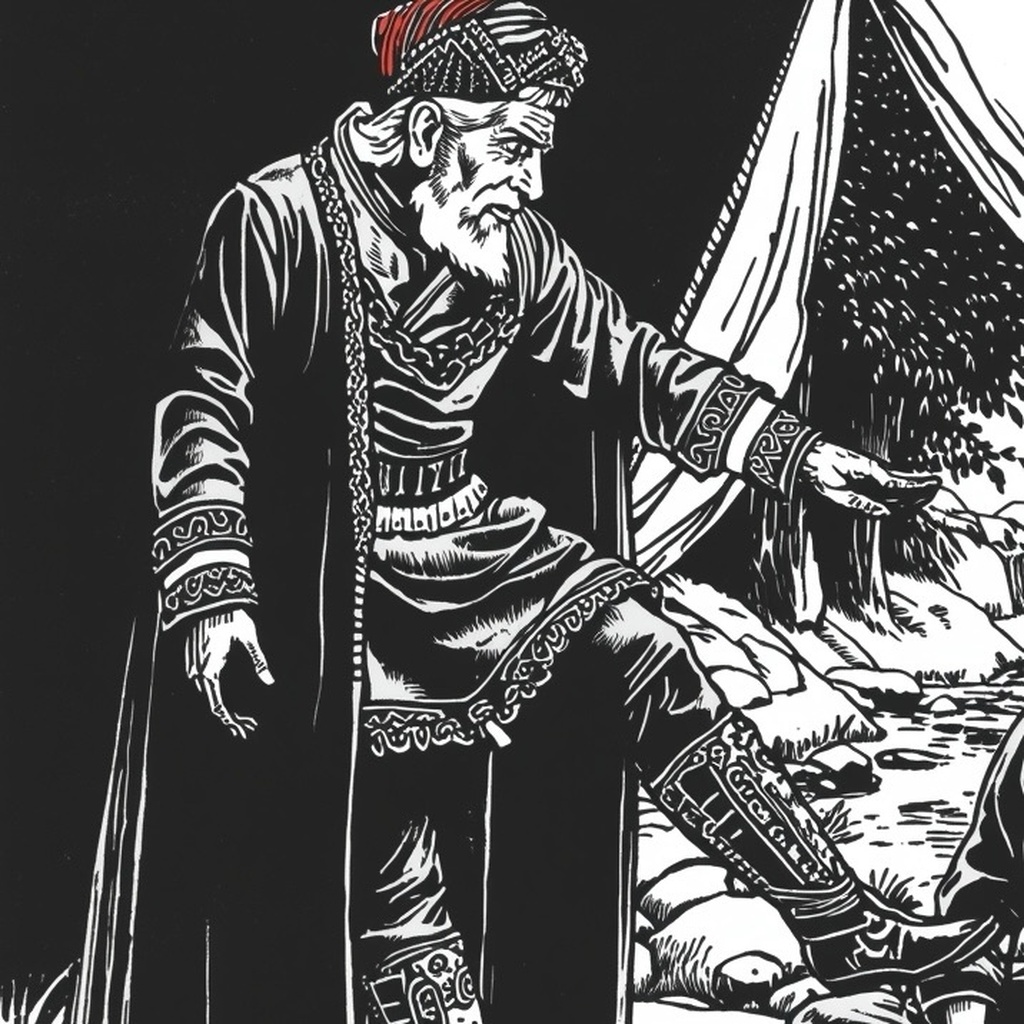
He entered her tent as if walking onto a stage. He smiled at Ruth as if they were old friends, but she didn’t acknowledge him, sitting in meditation, perfect stillness and excruciating pain.
He looked down at the nun sitting there in her tent in her meditation pose and became visibly and audibly annoyed. She had not stood up to greet him.
Naropa cleared his throat loudly and posed royally, looking away from her, expecting a reaction.
After a long pause, Naropa grew tired of waiting and kicked the nun in the thigh with an expensive boot. And when this did not rouse her, he kicked her repeatedly, clearing his throat and making a gesture of perturbation with each kick.
Ruth let a soft smile come to her face. She did not expect to be kicked by the great, long-dead Naropa in a tent on a lonely forest grove near a babbling brook, but here she was.
With every kick from his silken-draped, pretty painted, leather-footed personage, she grew more amused by the situation. She never emerged from deep concentration, and he just kept kicking her.
The pain in Ruth’s legs had disappeared. The pain in her head and her back had disappeared. And each kick was an introduction to greater comfort and further amusement.
She was being beaten up by one of her heroes, and it felt wonderful.
Naropa and Ruth entered a pure land together. This one was filled with soft grass, a cool breeze, and light healing rain. There was no kicking in the pure land and no pain. There was only a gentle rain, pleasant-smelling flowers, and extraordinary comfort.
Ruth turned her attention to the former abbot of the fabled Nalanda University and anticipated the coming lesson.
Naropa stood in the same regal pose as he did in the physical realm. He stood waiting to be acknowledged, adored, or worshiped.
Ruth either did not know or did not notice. She asked him the question she had always wanted to ask her hero.
“Venerable Naropa.” she began as a frown darkened his face.
Insulted by her insolence, Naropa turned and walked away from Ruth like a spoiled child forbidden from getting what he wanted. Ruth followed.
“Venerable Naropa?” she called after him as she followed close behind.
Naropa left the abbotship of Nalanda University to find a teacher. He found Tilopa, but the great Tilopa initially did not accept him. Naropa left his post to find a teacher, only to follow him for years before being acknowledged by him.
As Ruth called after him, she began to suspect how Naropa must have felt.
Tilopa eventually taught him the yoga of inner fire, so perhaps she simply had to persevere.
Naropa stopped, turned, and spoke to Ruth as if at the midpoint of a lesson that had started ages ago.
“You must go through certain life experiences and seek out the teachings,” Naropa told her of his physical Yogas.
The yoga of the illusory body. The yoga of the clear light of the mind. He described his inner fire technique, saying, “What need do I have of warmth? The whole world is warm for me.”

He spoke of his devotion to his teacher and the yoga of the dream state. He talked about his humility and his meditative equipoise. The yoga of the in-between state. He explained that his teacher could show her how to transcend the body and the pain of the body.
She never wrote anything down. She never took notes. She listened intently as he described in full detail yoga techniques that were centuries old, but there was no paper in the pure land. There would be no notes to refer back to, no recording, no video. (Nor will I be so bold as to include his words here, for the techniques are dangerous to the uninitiated).
Naropa taught one time. He explained every technique once. He never paused. He never asked any questions or expected any response.
He transmitted the complete instructions for the yoga of transferring consciousness permanently into a pure land, then Naropa departed.
Ruth heard and understood but she was unsure if she would remember once she had returned to her body.
Tilopa would visit next, and perhaps he would help her remember.
Tilopa appeared as the doubt crept in.
Ruth began to doubt her worthiness. She was a spoiled brat, not worthy of her gifts and not worthy of her famous teachers. She had been given so much but felt like she would waste it all.
She did not let these feelings control her mind. And she resisted the urge to fight them off with ego. She would get what she deserved if she trusted in karma, and even if she didn’t.
Doubt would only serve to discourage her in the meantime. There was no need for suffering while she waited.
Tilopa arrived, and the tears began to stream down her cheeks.
Ruth had been in perfect Samadhi for hours. She didn’t actually know how long. She hadn’t eaten, slept, peed, or moved for what felt like forever, or it was no time at all, and her mind was playing tricks on her.
“What pure land does Master Tilopa have in store for me?” she wondered. “What would be the nature of this lesson?”
There was first the spiritual mastery of Milarepa. Then, the mental discipline of Marpa. The physical control of Naropa followed them.
What would Tilopa teach her? What was left?
Tilopa leaned in close to her as she sat still. “Let go of the past,” he told her. “Recall nothing.”
There was no need for notes in higher realms, and memory was unreliable.
“Let go of the future,” he continued. “Imagine nothing.”
Was Melvin the future? Or was he the past? Mei thought, letting doubt seep in again. Am I his teacher, or is he mine?
“Let go of the present,” Tilopa told her. “Think nothing.”
She let her mind rest in its natural state. And I’m sorry, there are no words to describe it.
“Let go of knowing and not knowing,” he said.
“Examine nothing,” she told herself.
“Let go of being and not being,” they recited together. “Control nothing,” they said.
“Rest.
Relax.
Let go.”
She could feel the warmth of him towering over her, but his voice sounded like it came from inside her mind, as if he were simultaneously sitting beside her and inside her.
“Cut the mind at its root,” he explained. “And rest in naked awareness.”
Little Mei’s mind stopped being a container and became an open space. It turned from a heart-shaped box that contained precious jewels to an open landscape that included the great outdoors.
The universe was small and tidy like a wrapped piece of candy, and as he spoke, it unwrapped itself and grew into an arena of ordered chaos.
Like rapid fire, his words came quicker than his heart son’s.
“Obsessive use of meditative disciplines or perennial study of scripture and philosophy will never bring forth such wonderful realizations. This truth is natural to awareness because the mind that desperately desires to reach another realm or level of experience inadvertently ignores the basic light that constitutes all experience.”
A Tiny Tilopa spoke words of truth from inside Mei’s mind. The pure land was inside her. While the exterior Tilopa placed his hands over her ears and whispered, “Let’s get something to eat.”
“Realizing that nothing can last,” tiny interior Tilopa continued. “And that all is a dreamlike illusion.”
Ruth’s eyes fluttered open with her next inhale, and she stared at the older man. He was beautiful. He was physical. He was right there.
Mother Ruth slowly unwrapped her legs and pushed herself up to stand. She hadn’t stood in a while. She hadn’t eaten for a while. She breathed life back into her legs and feet, and they flushed with new energy and heat; then, she followed Tilopa out of her tent and into the night.
It was dark.
“One torch can dissipate the accumulated darkness of a thousand eons.” Inside Tilopa said to her as the other Tilopa led her into the darkness and down to the brook. There was no moon, and the stars provided little light.
They passed out of the campgrounds, past the prayer flags that marked their sacred space, and over a small hill to a flowing stream.
“The appearances of the world are not the problem. It’s clinging to them that causes suffering,” Interior Tilopa told her as they walked along the stream.
Exterior Tilopa made small talk. He talked about his students Naropa, Marpa, and Milarepa. He watched their careers in the Dharma with rapt attention.
“Does that mean you know the future?”
“I know what you know, and you know what I know. You always have.”
She asked him why she was special. Why should such illustrious teachers visit her, or if she had simply gone insane?
“Did Milarepa imply you were insane?”
“Yes.”
“Well, he’d know.” He laughed. “Most people see conventional reality and think it’s accurate. That’s all there is. Most people think they’re the center of the universe. Most people live their lives attached to their suffering and oblivious to other people’s. But you do not feel like most people. That is the very definition of insanity.”
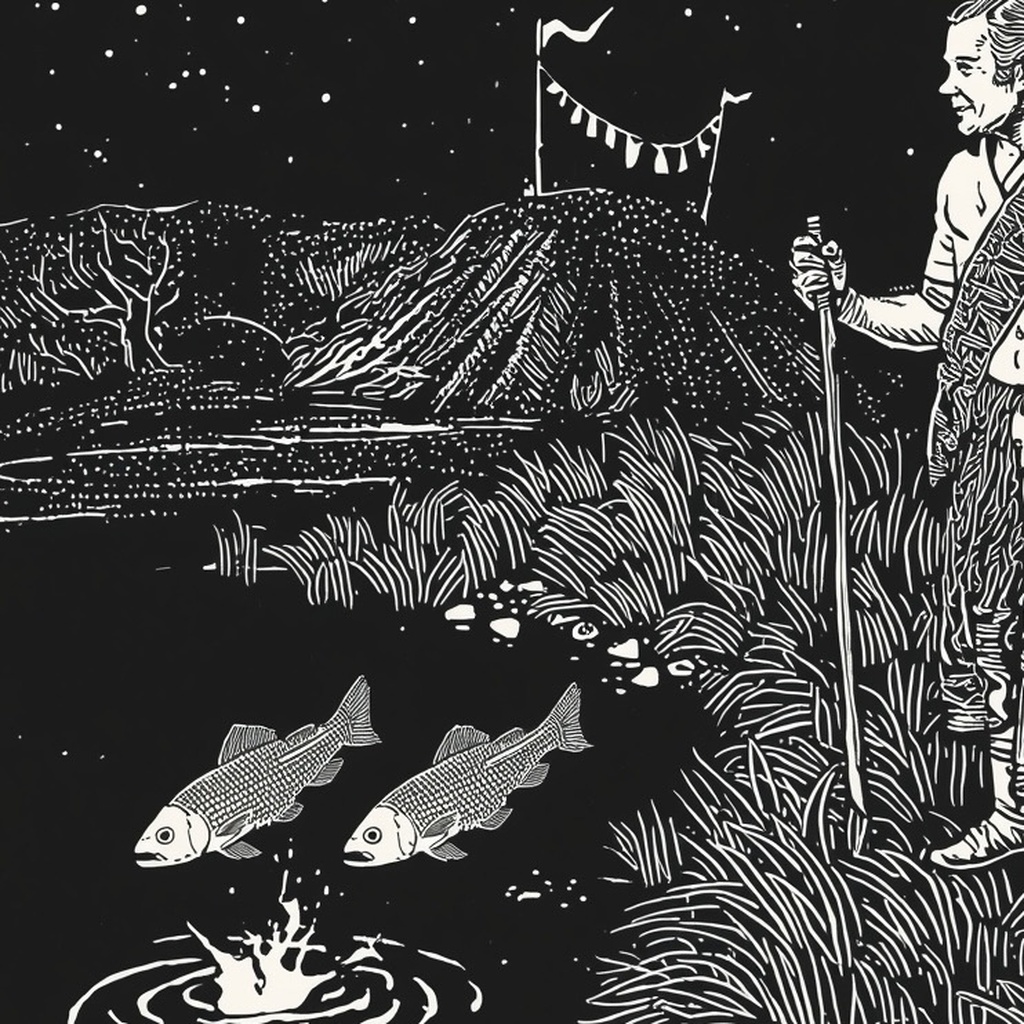
They reached a spot in the stream that was teeming with fish. Surely, he didn’t want her to kill and eat one. Or perhaps he did.
She pulled a utility knife from her rucksack, and she found a stick she could quickly whittle to a sharp point.
“Stop all physical activity and sit naturally at ease.” He commanded her. “Remain silent. Let the sound be like an echo.”
He recited slogan after slogan. “Do not think about anything. Look at experience beyond thought; be open-minded like space. Let go of control, stop, and rest at ease in that state.”
Two fish leapt onto the shore before Little Mei could finish her pointy stick and flopped helplessly on the wet ground.
“Awareness without projection is the greatest meditation. Train and develop like this, and you will come to the deepest awakening.” Tilopa smiled at the two fish and bowed deeply, appreciating the depth and kindness of their offering.
Ruth and Tilopa prayed, and she proceeded to scale, cube, and wrap the cubed fish in rice paper to save them for later.
They walked back to the campground while Tilopa told her the famous sandal story of how he accepted Naropa as a student by smacking him on the crown of his head with a shoe.
She told him that everyone knew that story. He joked that Naropa had had a wasp on his head, and he was merely trying to swat at it. Ruth did not believe him.
But what he had meant became clear. His actions were motivated by compassion, and Naropa had a genuine devotion. So, it did not matter what he did or what action he performed then. As long as those two conditions existed, Naropa would have found liberation.
“I could have kicked him in the nuts, and he would have experienced something similar,” he told her. “And they would still tell the story about the crazy old man who kicked his student in the nuts. And it would still have had the same outcome.”
Ruth reached her tent as Tilopa said those last few words. The black of the sky turned grey as the sun rose. The retreat would soon be over.
Ruth could smell their attendants on the wind, coming back to bring them to the university after a year in retreat.
Retreating was temporary. No matter what Melvin believed, we cannot spend our life in retreat. You have to come out and explain what you’ve learned.
“The fool in his ignorance, disdaining Mahamudra, knows nothing but struggle in the flood of Samsara,” Tilopa told her as the dawn made its presence known with color.
“Have compassion for those who suffer constant anxiety!” He bellowed as if time were running out, and he still had more to say.
“Sick of unrelenting pain and desiring release, adhere to the awakened ones, for when their blessings touch your heart, the mind will be liberated.”
Ruth wept.
“Thank you, teachers,” she said. “For seeing me.”
She spoke to Milarepa and Marpa. “Thank you, teachers, for hearing me,”
She spoke to Marpa and Naropa. “Thank you, teachers, for touching me,”
She spoke to Naropa and Tilopa. “Thank you, teachers, for blessing me.”
She spoke to Tilopa and Milarepa. “I hope to, someday, make you proud,”
“If you create the causes and conditions for liberation, the outcome will be liberation. It can’t be anything else.” And with those words, Tilopa vanished, and Ruth fell into walking samadhi.
It was as if he had smacked her on the head with a sandal. ||
Read another story → · See all of Melvin Horton’s stories →
Share this:

I occasionally say interesting things. Sign up for the newsletter →
Comments are closed.