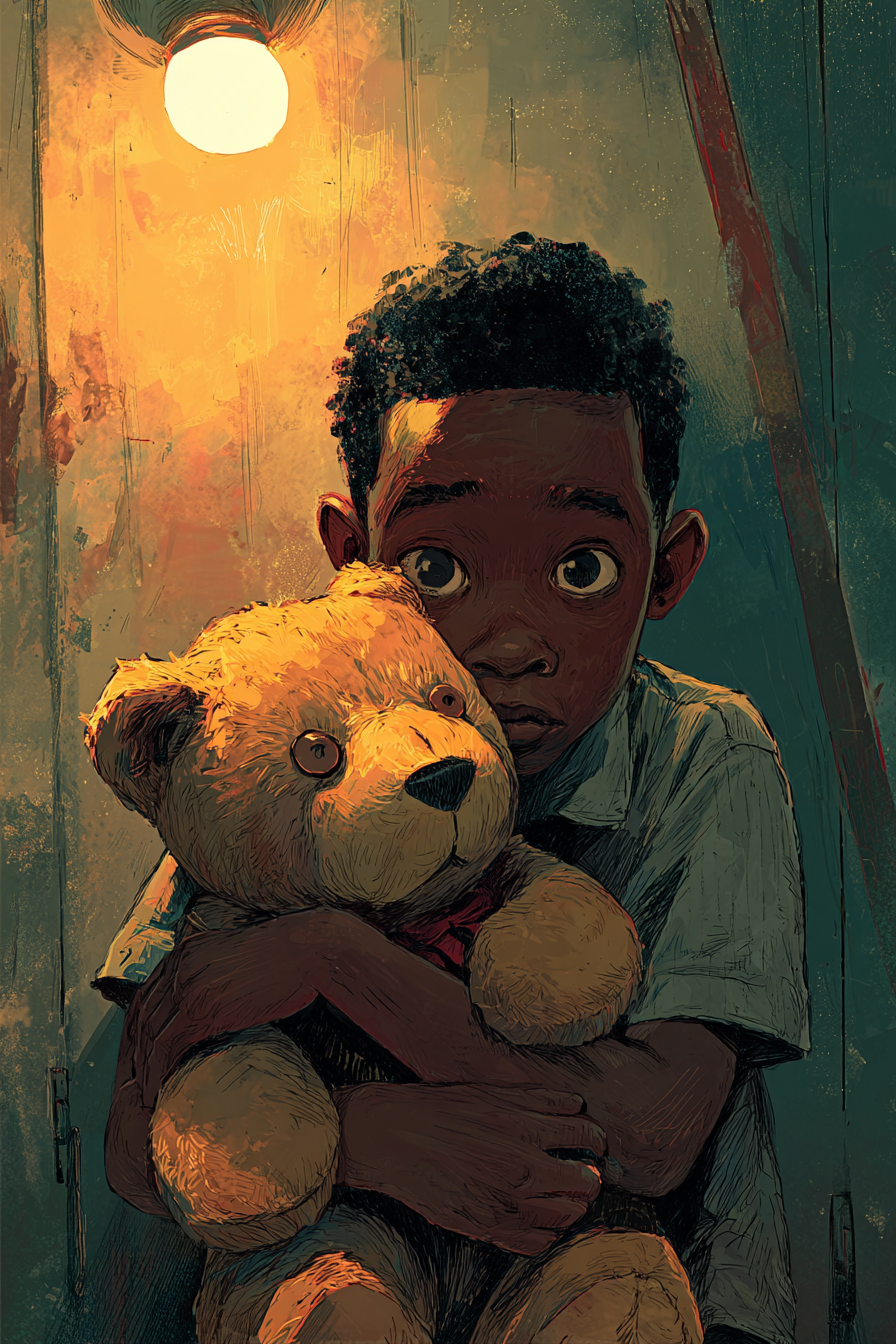
Melvin Hawthorne pulled his old teddy bear close and gave him one last hug. He had received the dreaded call. His so-called stepfather, Ankh, was shouting from below:
“Get down here. Now.”
And his step-monster was not a patient man.
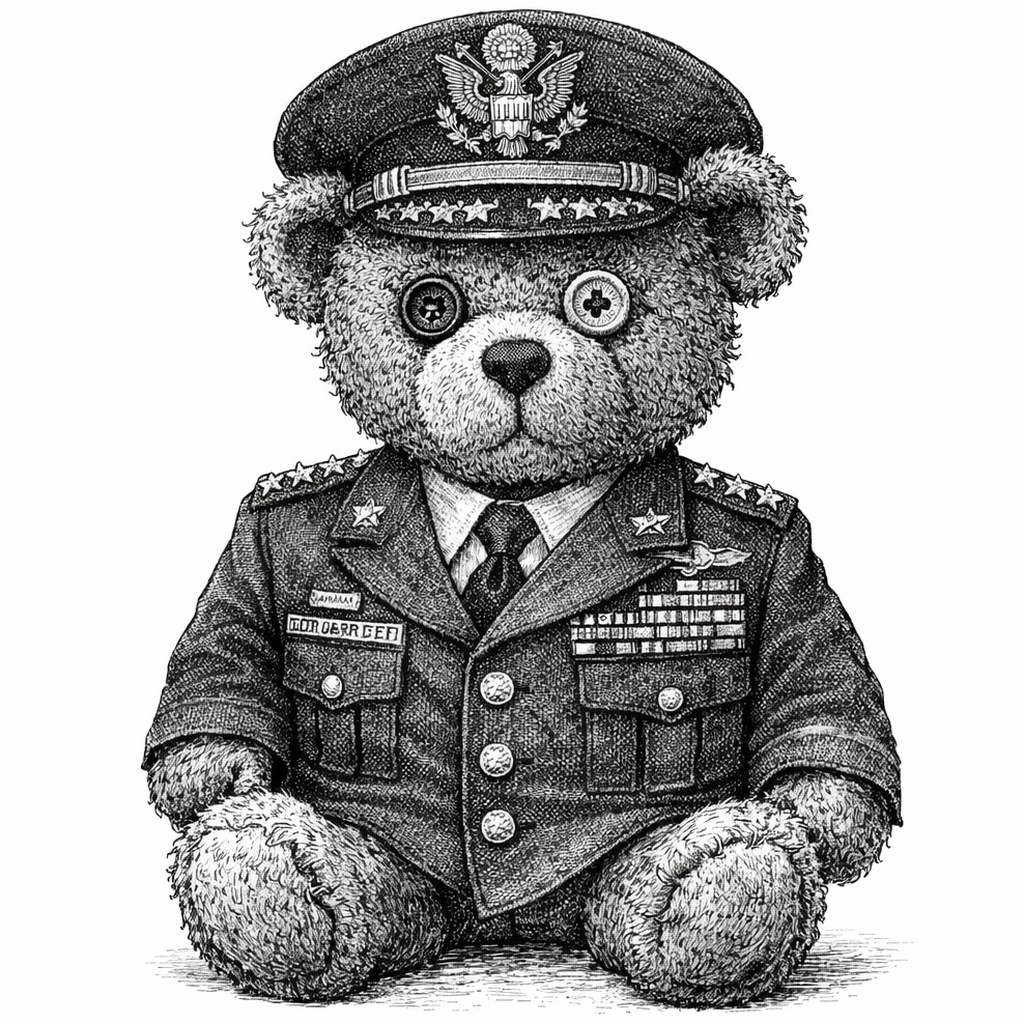
Theodore Melvin Beam, Esq., was a tan, classic bear — Teddy to his friends. He had been suitable for hugging, squeezing, venting, and companionship for longer than Melvin had been alive. He was an exceptional bear and an ally — a hero of conflicts both lost and won.
When Melvin found him, Teddy Beam had already survived years of neglect. Both eyes had been replaced by mismatched buttons long ago. His fur had darkened and stiffened with age. A crunchy bear from another era, he had little patience for boys who complained about pain.
“Pain is relative,” he liked to say, and then laugh softly at his own cleverness.
Melvin’s pain was, unfortunately, both relative and in-origin — so the joke worked, if not always the timing.
“In my day,” the old bear would opine, “a boy would be given a good thrashing by his legal guardian, and it built character.”
Professor Beam was always present and accounted for whenever Melvin had to hide in the closet to escape the enemy’s advances. Lord Admiral Beam stood ready to banish the demons and soothe the hurt and the heart. Brigadier General Beam had met the enemy — and the enemy feared his calm and innate sense of honor, duty, and loyalty.
The World Council of Folklorists called them demons, devils, or monsters. Names didn’t matter. They remained the black, tortured hell-beings who had been tormenting little Mel from the minute he was born.
And yet — Melvin, age eight, was clever. Clever enough to survive. Clever enough to find refuge where there shouldn’t have been any.
His mother, fake-uncle Samuel, and the monster Ankh — the demon, the devil, and the step-monster — had shaped his world for years. Caregivers hit children back then with belts and sticks and open hands in front of God and everyone. This was a time when “fell down the stairs” was an acceptable explanation, when children weren’t spoken to privately, when reports vanished before they were ever written. Melvin had been born in the wrong century, and he suffered for it.
Twice, his tormentors put him in the hospital. They broke his eye socket — the worst of it — and the scar remained. They threw him down a flight of stairs once, breaking his clavicle but not his neck. One Sunday morning, his step-monster snapped a broom handle across Melvin’s back for oversleeping.
He lived with black eyes, bruises, and broken bones that defied polite explanation. This was before private interviews with injured children. Before mandatory police reports. Before Child Protective Services.
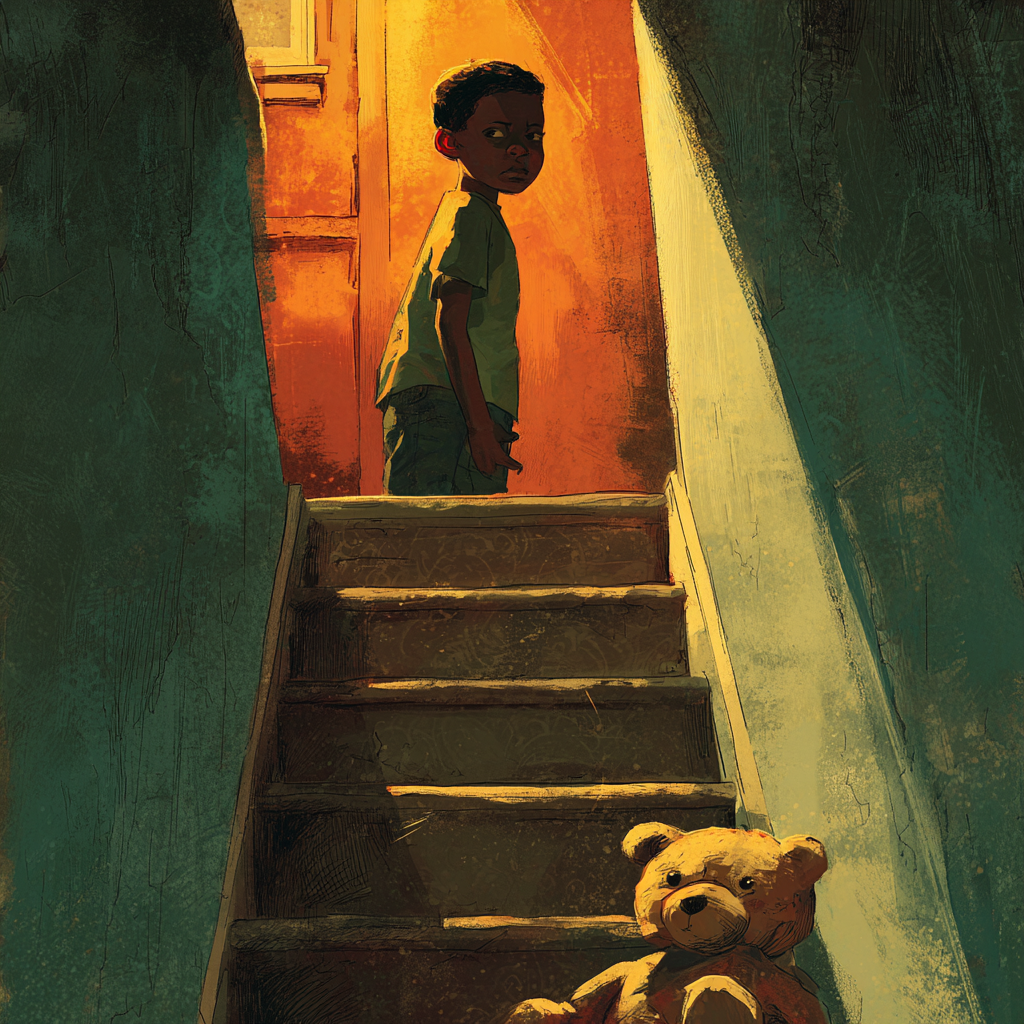
In the unapologetically American 1970s, you could spank a child in public — in broad daylight, in front of a school — and no one batted an eye. His step-monster’s friends could smack him for seeming disrespectful or for mocking their threadbare attempts at revolution. Even the nuns at school swung wooden paddles with a kind of bureaucratic devotion. Any adult could hit Melvin at any time, if they felt so inclined.
At his preschool, Catholic nuns were permitted to slap small hands with rulers or use belts on bare skin in front of other frightened children. Only his adult male babysitter — his fake-uncle Samuel — never hit him.
He did something far worse.
He taught Melvin that other people could not be trusted.
It’s important to remember that Melvin was a terrific kid. This was years before he learned sarcasm, or how to turn an adult’s words back on them. Before he discovered the art of telling jokes or talking back. Before high school. Before armor. Before standing up to bullies. Back then, he was quiet and obedient and helpful — hopeful that if he was good, people might treat him better. But none of that saved him.
Melvin’s mother dropped him off on alternating weekends with Uncle Sam — the man who drugged him and used him up. And yet it was still, somehow, a respite from the rages of Ankh, who felt out of control and far more dangerous. The choice his mother offered him was obscene in its simplicity:
Do you want bruises,
or do you want nightmares?
Home with Ankh and the black-booted false gods of anger, politics, and revolution — the black-militant army of the living room and the dinner party. The doers of nothing.
Or that dim, unsettling apartment full of plush carpet and penny candies. The drugs. The water bed that left him sleepy and nauseous.
Sometimes the quiet of the latter felt safer — and sometimes he preferred the beating.
His great-grandmother had died, and his grandmother had died, and his grandaunt was not a babysitting option, having cheated his mother out of her inheritance — or so the story went. His actual uncle was out as well; his mother never spoke to him again after the concert incident.
Panic sleeping. That’s what I’ll call it — the inadequate slumber of someone who knows they may be jolted awake at any moment by boots on the stairs and a man who believed himself a god.
“I’ll tell you what my old commander once told me,” Teddy continued. “During the great market battle of the cereal aisles…” The Professor trailed off slightly. “We lost a lot of tears in that tantrum.”
A single tear seemed to drip from the corner of Teddy’s left button. “So senseless,” he lamented. “Why, in heaven’s name, could we not have the cereal with the cartoon on the box? It was right there.” The professor gazed toward the proverbial horizon and retold the tale with an old warrior’s cadence.
“My commander was an orange-and-white general-store tabby who looked me square in the buttons and said, ‘Son, you’re a Beam, and that’s a name that stands for something.’”
Teddy imitated his commander’s voice respectfully as he spoke: “‘There isn’t a teddy bear in the world who wouldn’t hesitate strongly to switch places with you,’ she told me. ‘You are steadfast and strong, and you will survive this.’”
The professor fixed his face-fasteners on the frightened boy. He set his jaw and prepared to send the shaken lad downstairs to the front lines. His step-monster was calling. He repeated the words of his tabby commander while comforting the boy:
“You are steadfast and strong. And you will survive this. Nothing can hurt you,” Teddy whispered. “You’re a Beam.”
Melvin slept in a hall closet at the top of the stairs while every adult in the house had a room of their own. The light bulb in the closet switched off whenever he stopped moving or turned too few pages — as if stillness itself were punishable.
His only refuge was his imagination.
Melvin had two constant companions: an adult married couple from the Far East named Mary and Joseph. They were shadows at first. Later, they became beings of light who tutored him in quiet mysteries. Mary taught him movement — yoga poses, Kung Fu forms, and Tai Jutsu. He learned to move like water: flexible and fluid enough to respond to change, yet powerful enough to carve a path through a mountain.
Joseph taught him stillness. From him, Melvin learned focus, patience, and the art of being present. It sharpened his awareness and helped him hold his anger like a stone in the palm of his hand — something seen, something named, something not in control of him.
As far as Mel knew, Mary and Joseph were simply their names. Any connection to the story of Jesus — or the moon’s phases — was purely coincidental.
Together with Teddy Beam — who was not imaginary, but dignified and thoroughly stuffed — they became his real family.
Melvin left his teddy bear in the closet as he descended the carpeted stairs. It was always cold up there, and the light switched off the moment he stepped out of range.
Sometimes Teddy spoke like a professor. Sometimes like a general. Sometimes like a soft-hearted poet who had seen too many winters.
“You are steadfast and strong,” he would remind the boy. “And you will survive this. Nothing can hurt you. You’re a Beam.”
Melvin clung to that sentence the way some children cling to lullabies.
Today, though, courage felt thin.
Someone must have told his step-monster about the boy at the public pool — the one with the bright blue swim shorts and the mischievous grin. Maybe it was one of the girls who saw everything. Maybe the story just traveled on its own wings, as gossip does. To Melvin, the boy had a name out of myth — Loki — and he existed like a whispered story meant only for him.
For the first time in his life, someone had looked at Melvin not with irritation or hunger for control — but with recognition.
And he responded to that.
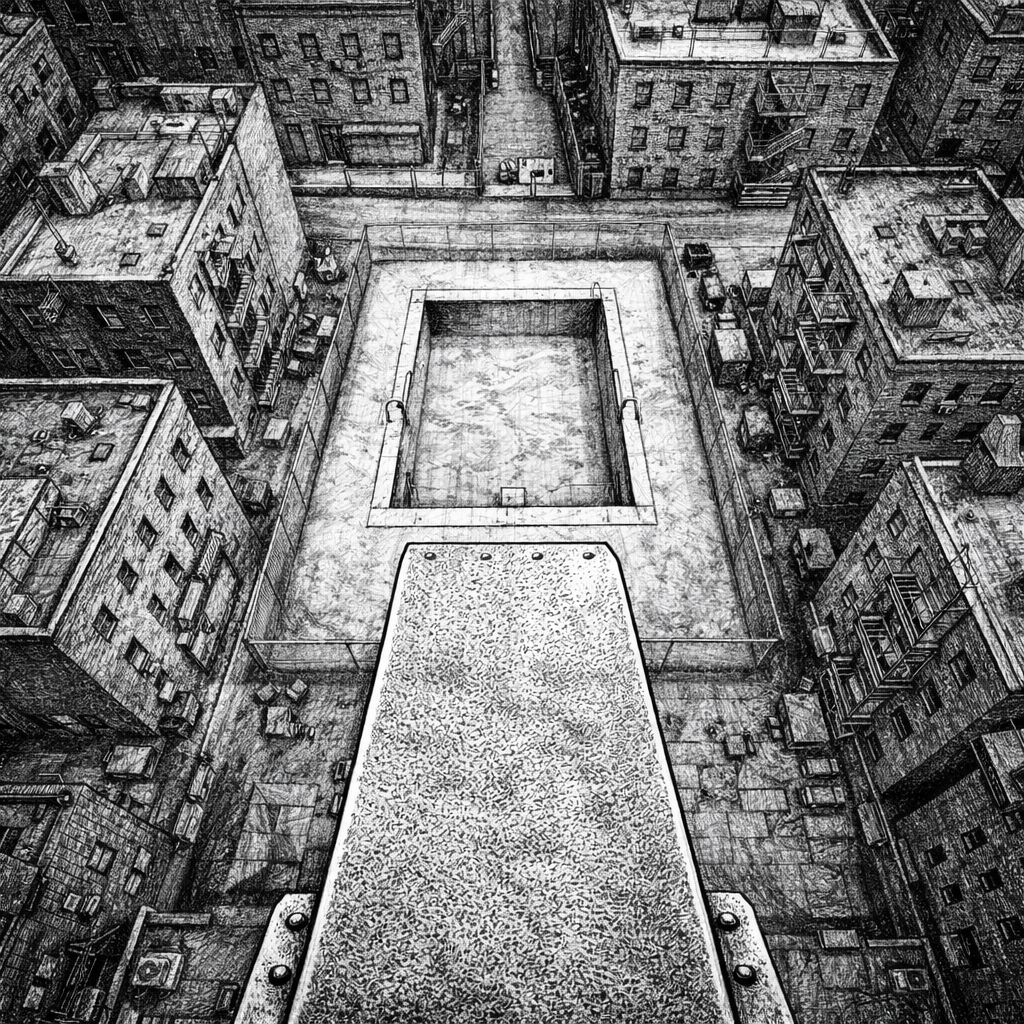
It was a reckless, aching, lonely kind of choice — the kind children make when the need to be seen grows louder than fear. He followed him into the echoing tile and bright light of the pool showers. What happened there took very little time. It lived somewhere between shame and relief, harm and tenderness, and it settled into his chest like a scattering of fragments:
The sound of splashing water.
Laughter down the hallway.
No one saying much of anything.
Counting to one hundred because he was told to —
and because it felt safer that way.
Melvin wondered whether he had ruined everything with his nervousness.
Whether he had crossed a line he didn’t understand.
Whether anyone would find out —
or whether he himself would shout it from the rooftops remained to be seen.
But more frightening than all of that — a part of him hoped the boy had meant whatever it was he hadn’t said.
When Melvin finally emerged, the girls whispered. They always did. The world turned. It never stopped. But something in him shifted quietly — and refused to shift back.

I didn’t do anything wrong, he thought. And of that he was certain.
In the far corner of the deep end of the pool, Melvin had his first of many epiphanies. Ah ha moments that made him stop and question. A lot of famous philosophers did their best thinking in the water. Kierkegaard, Kant, Archimedes.
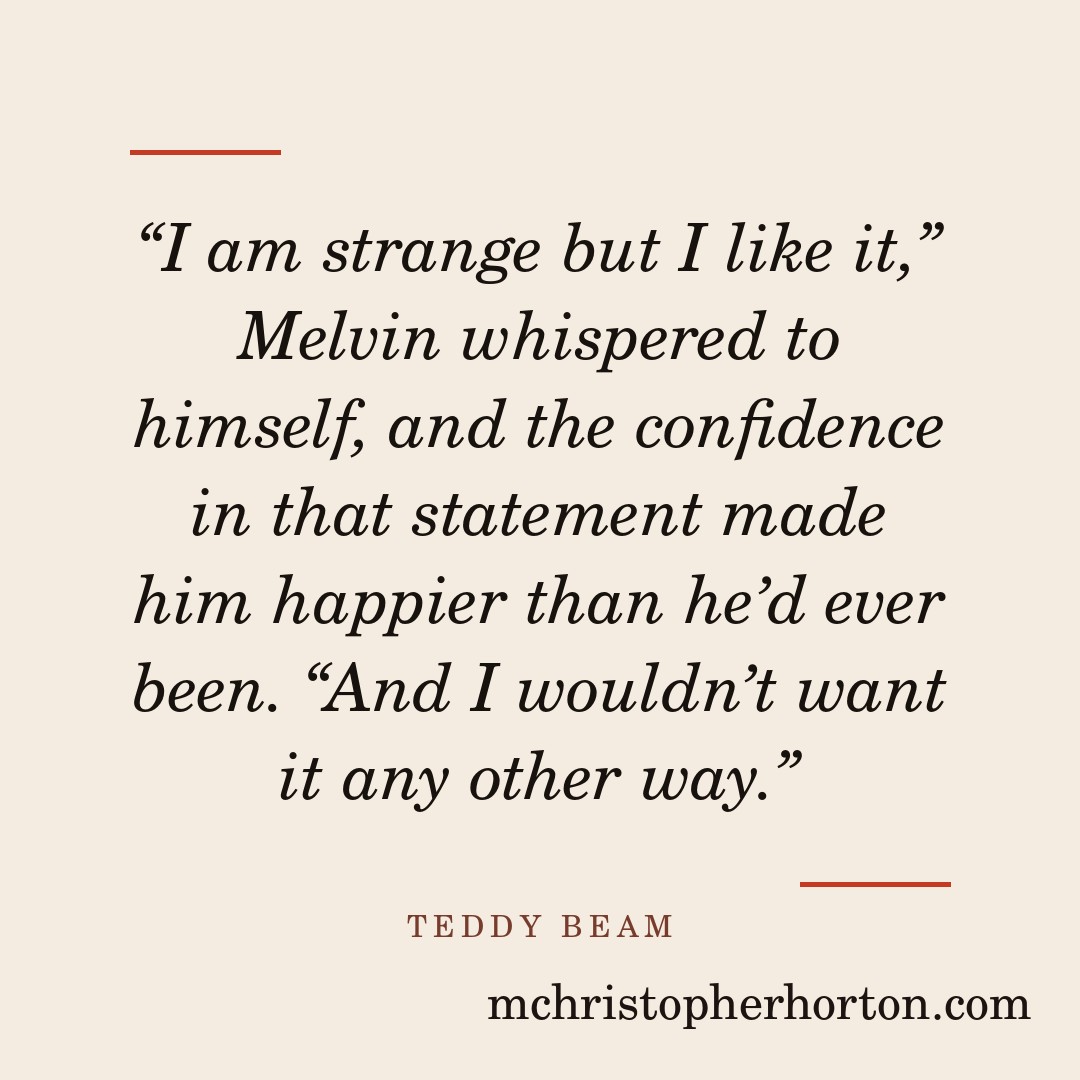
“I am strange but I like it,” Melvin whispered to himself, and the confidence in that statement made him happier than he’d ever been. “And I wouldn’t want it any other way.” Without warning, the feeling vanished.
Melvin had tasted curiosity with both hands, a robust mixture of pride and shame. The taste of which remained and brought waves of conflicting emotions that made him slightly smile with dread for what his auntie called his immortal soul.
Melvin felt cold. He hid for a while in the shower, reliving the moments, shaking, smiling, and squeezing himself until it passed. It was going to pass.
One of the girls smiled at him as if to say come talk to me later, and he felt perhaps he wasn’t as strange as he first thought. Perhaps he was both. He’d never heard of terms like pan, bi or queer, so he was unaware that there was a label for this feeling.
Back in the closet, Teddy Beam straightened his mismatched buttons and cleared his cotton throat like an old soldier gathering himself before a story turned tender.
Melvin’s knees trembled as he descended the stairs for what felt like the last time. He was wrong. Leave it to a psychopath like Ankh to make calling him down to eat feel like an execution.
“I told you not to worry,” the professor sighed to the empty coats.
He thought of all the battles they had fought together, the washer, the dryer, the cereal aisle, the long nights while Mary and her husband taught Melvin how to breathe properly and the mornings when survival itself was the victory.
Wherever Teddy ended up — wherever he was now — Melvin knew this much:
He was a good bear.
A warrior-poet in the classic sense.
The brother who stayed.
The witness who didn’t turn away from the truth.
Bears like him didn’t always get through unscathed.
But they survived.
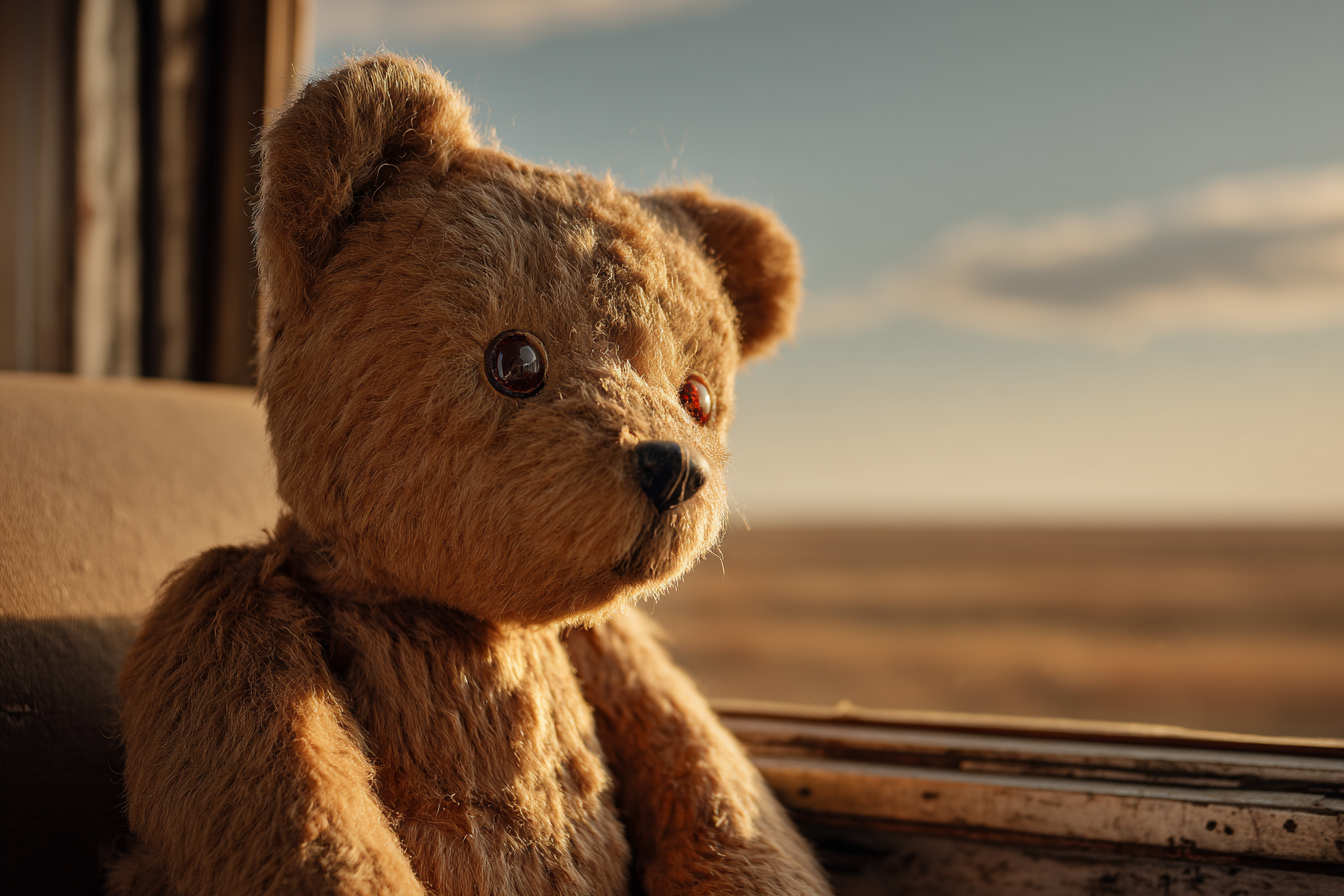
Theodore Melvin Beam was a tan, classic bear and a good friend. He was MIA, last seen somewhere over the Midwest — forced to burn all of his contacts and go into hiding. He was left behind enemy lines when Melvin and his mother fled in the night. Wherever he ended up, whoever he was with, Melvin only hoped they listened to his stories and treated him with the respect he deserved.
Melvin firmly believed that Teddy would be okay.
He was a Beam after all. ||
Read another story → · See all of M. Christopher Horton’s stories →
Share this:

I occasionally say interesting things. Sign up for the newsletter →
Comments are closed.