In 1909, a year after Mei Lubaba left her father’s farm, slavery was officially abolished on the archipelago near the East China Sea that Mei called home. Deeds of ownership were replaced with contracts, and slavery became indentured servitude. Life went on as usual.
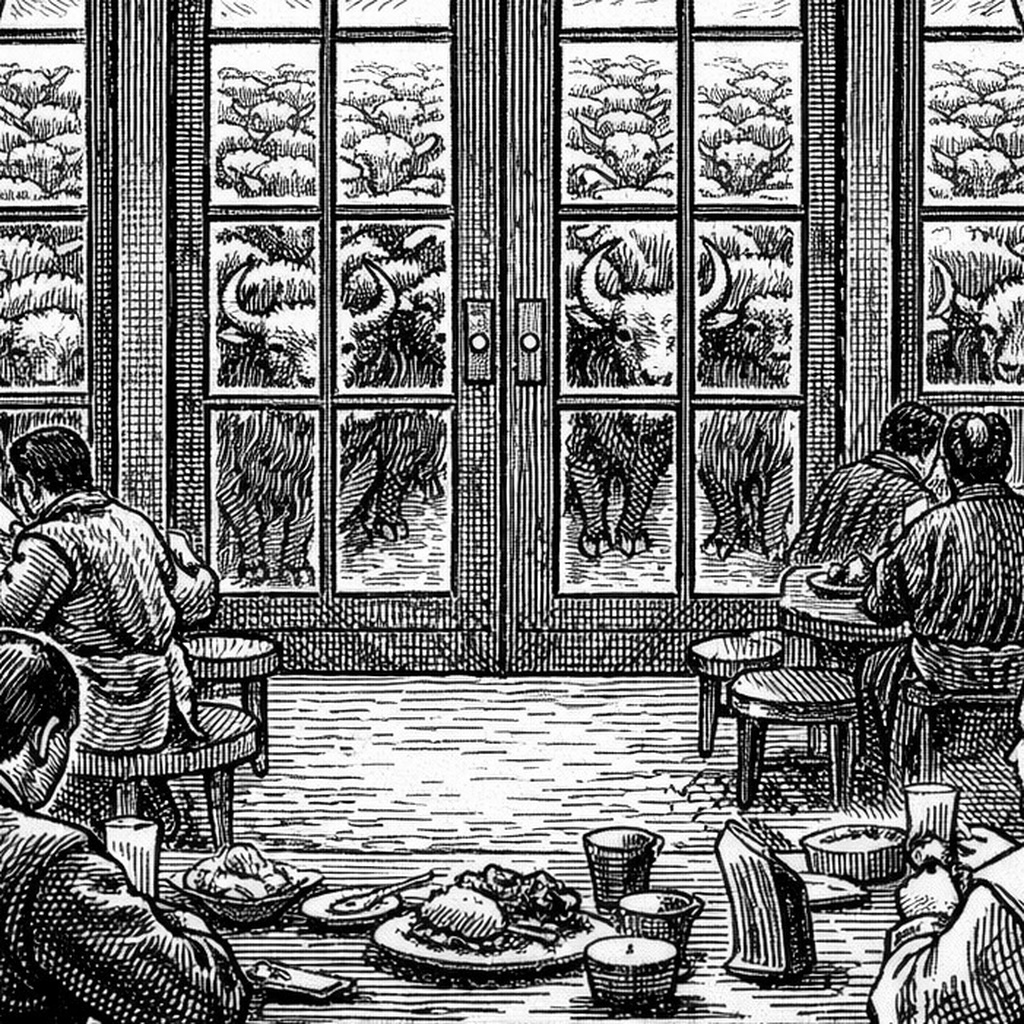
From her family’s table on the raised platform at the end of the great hall, with its long French windows and double doors looking out over fields where the oxen slowly gathered, Little Mei’s gray-haired betrothed, with his wonderfully yellowed teeth, chewed licorice bark and salivated incessantly, spitting the excess into an urn about the size of a small child.
A spry septuagenarian, he toasted his future happiness and expressed his desire for his new wife to push out child after child until she could not. Mei would be his fifth wife. The first one didn’t work out. She disappeared. No one talks about her. The other three produced nothing but sons, twenty or so, with lots of overlap. one of them was always pregnant. Most of their sons were killed in the cycle of endless violence called politics in this region.
To this old man, Mei represented the promise of a bigger workforce and a greater connection to her father’s business. It was believed that a large mother would bear large babies, and so Mei was quite the prize.
Mei winced at the mention of children. She stood quickly and spoke loudly. If it hadn’t been for the Captain’s new family and his honored guests — which included Mei for the first time, now that she had become a valuable piece to be married off — she would have flipped the table. Imagine plates and cups and cutlery and food, and Mei storming off into the fields with the yaks. That was how angry she was to be spoken about like livestock, but that is not what happened.
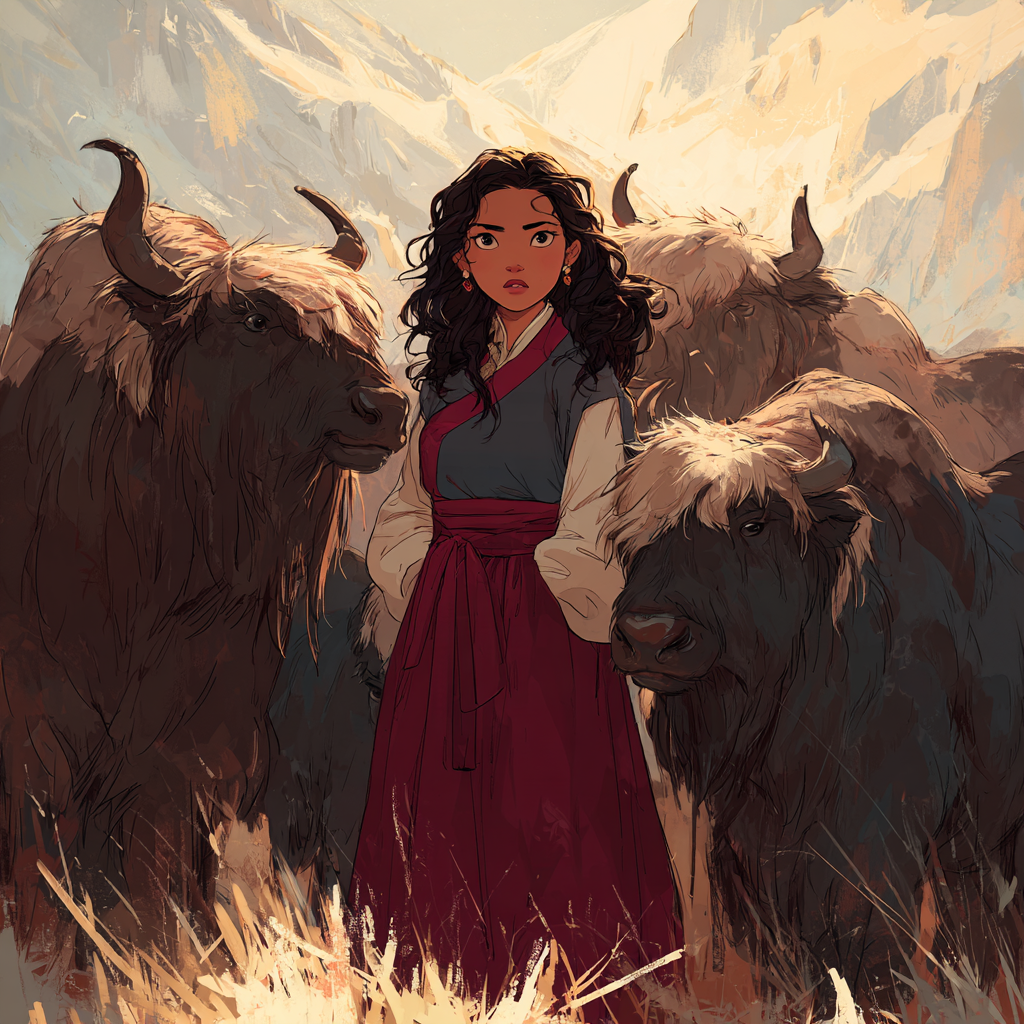
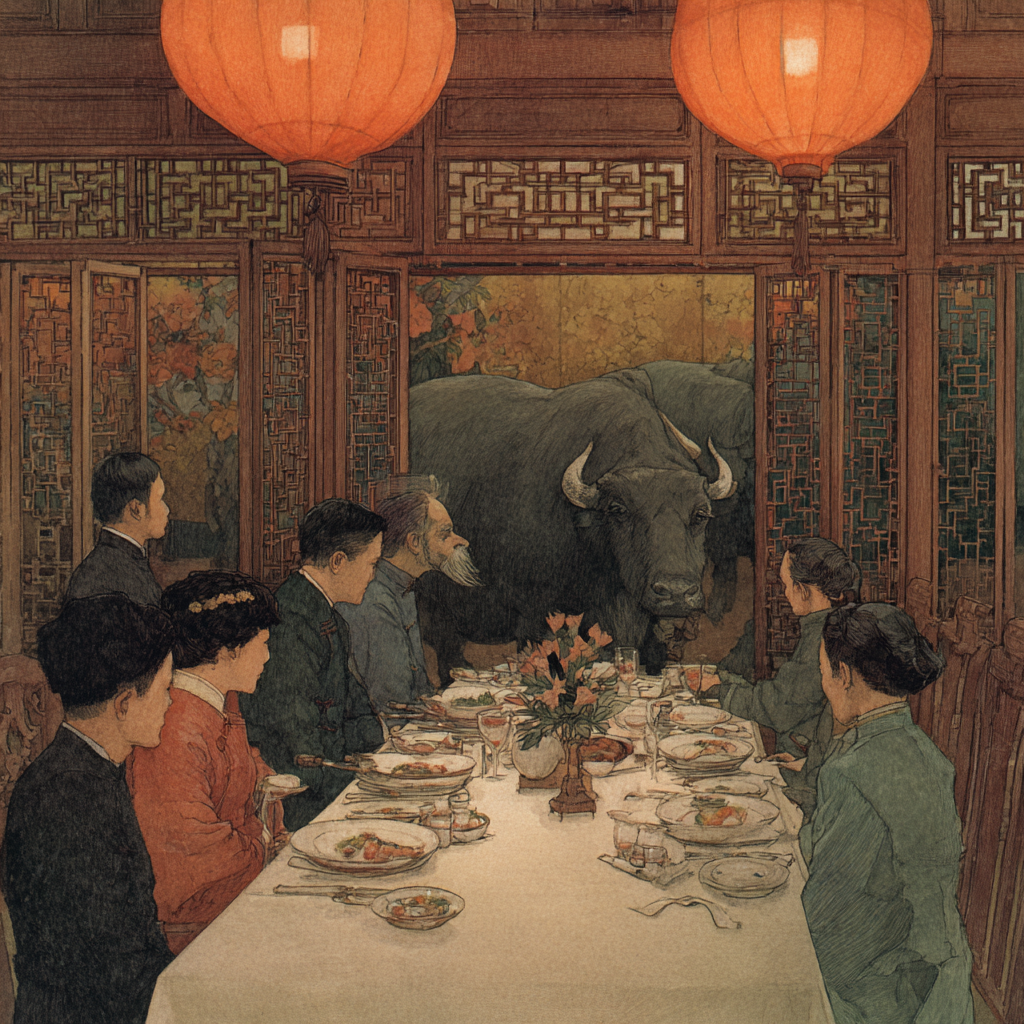
Little Mei was large and quick to anger, but she knew to keep her temper at bay because it frightened the little people. There was nothing she despised more than the uneasy looks of those who feared her for merely existing. She had animal friends who weighed more than a ton apiece, and they were gathering outside the windows and doors. That uneasy look was spreading through the hall.
Everyone except her father’s guest noticed the cattle. Seasoned ranchers fell into stunned silence as the enormous animals collected in alarming numbers near the thick glass and heavy wood.
Mei stood up quickly, and everyone inhaled sharply as she spoke out of turn.
“I cannot marry you,” she said, then turned to her father. “I’m leaving home tomorrow. I’m going to the city. I’m going to be free.”
There were three cities on the islands of Shanqui Jian: the capital, the walled city, and the seaport. But when someone said the city, they always meant the walled city of Kabe Ichi — the largest in that part of the world.
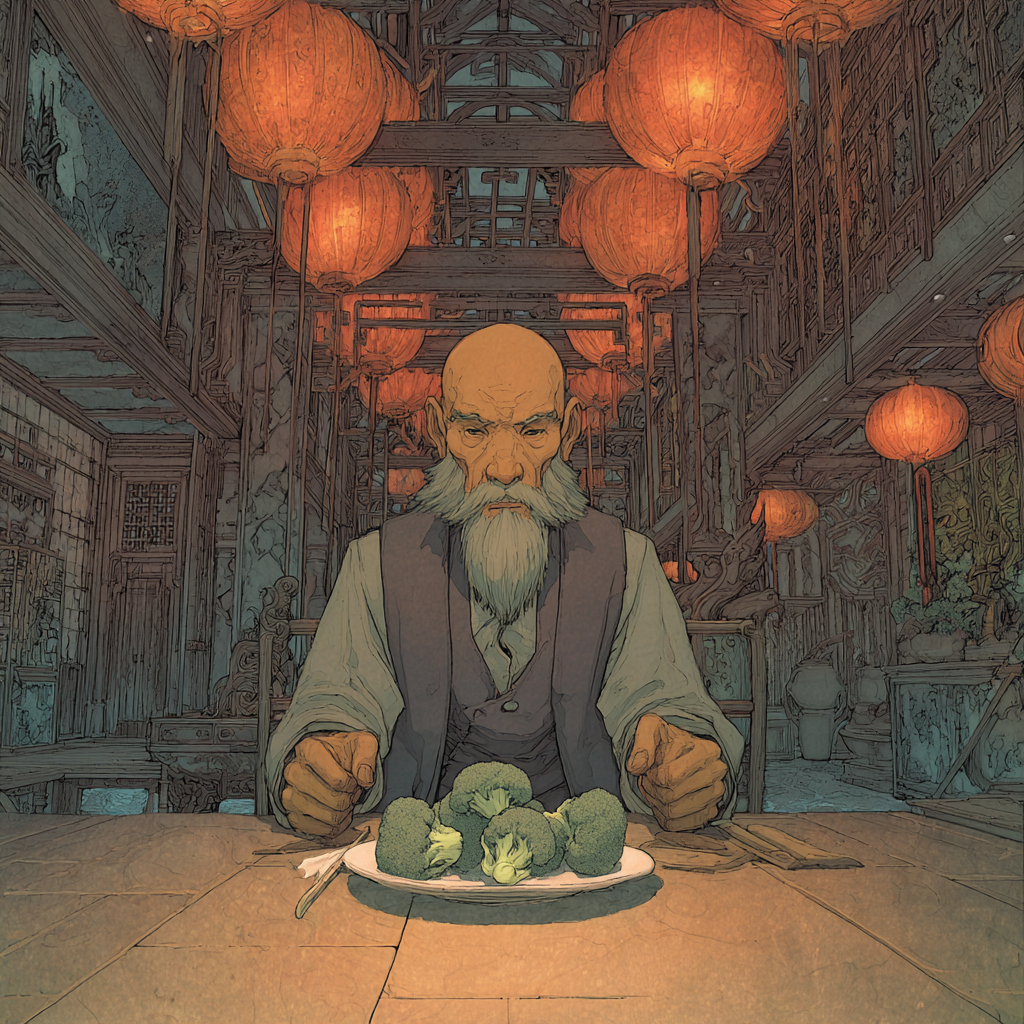
Sonny Lubaba moved a floret of broccoli from the edge of his plate to the center and breathed slowly before responding to his disappointing daughter.
“Don’t be dramatic,” he said calmly.
He was not afraid of the animals gathered outside. He owned them and was the only person in the room who could order every yak in the field slaughtered.
“You’re not going anywhere,” he continued, still measured. “Sit down. You’re going to be married because you have no choice in the matter. And that is the freedom I’ve given you.”
“I have no choice — but I’m not a slave. Thank you, Father, for clearing that up.”
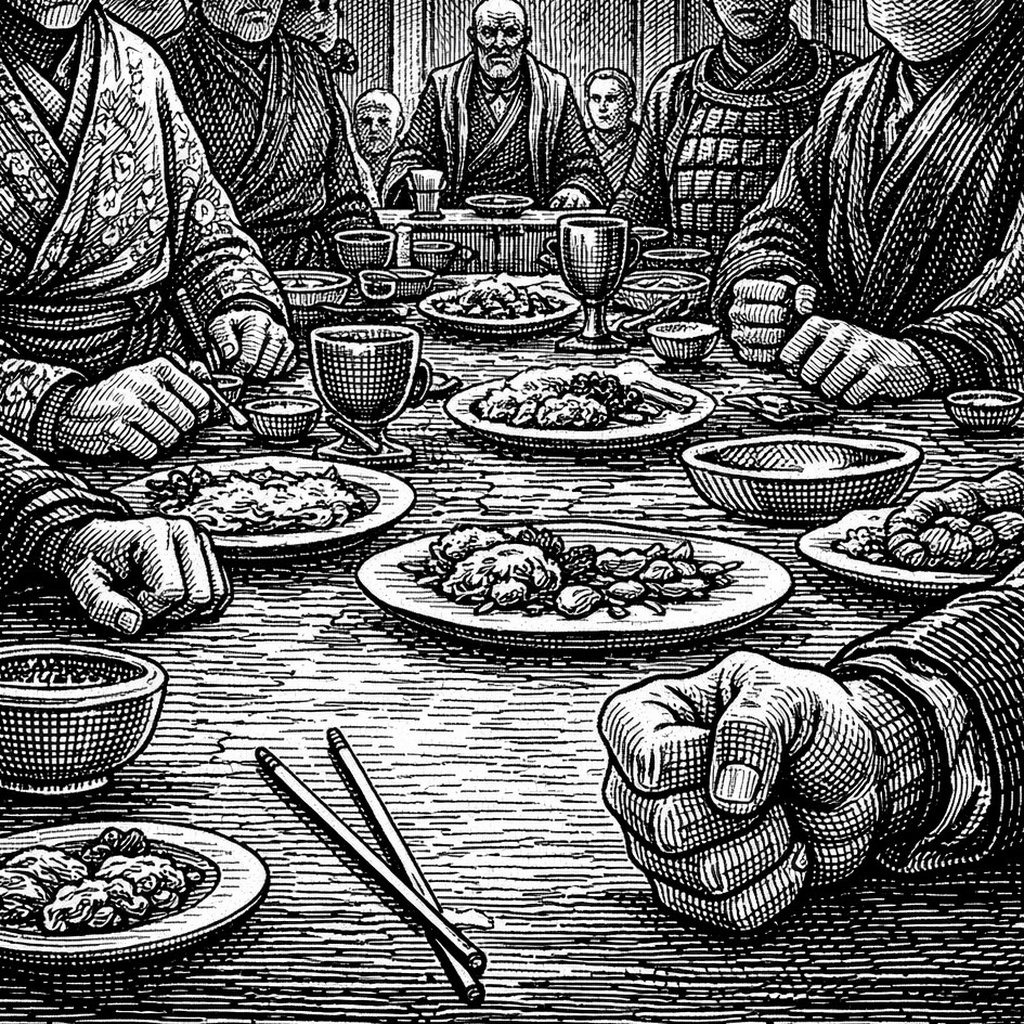
Sonjun Lubaba’s face turned burnt orange and strawberry red as he clenched his fists so tightly that those gathered half-expected blood to drip from them.
“You know what I mean. You’re twisting my words,” he said. “It’s your responsibility as a firstborn daughter to make a good wife in a good match that benefits the family. You’re either a wife and a mother or you’re nothing.”
The Captain’s wealthy guest squirmed at the spectacle — and at the mention of mothers and daughters and being nothing.
After two dozen children from four women, the honored guest had never had a daughter. That was either a mathematical anomaly, a tragedy, or a crime against nature. And Mei wanted no part of him.
“I am not your broodmare,” Mei said as the cows agreed with long, soulful honks and moos. “I’m not your slave.”
Her words carried swiftly through the hall touching the sympathetic ears of farmhands and workers and fathers with daughters.
Mei had done something her father despised: she had made a scene in front of the help. He was enraged. It was an act of open defiance.
The Captain sat at the head of his table, his business, his farm, his family, his land, and looked out over the people who worked for him. They were not neighbors, not friends, but employees. They were not all on his side, even though every drop of food they ate came from his mercy. He had somehow become the villain in his own hall, and the yaks outside were growing loud and impatient at the way their Little Mei was being treated.
Mei was sixteen — no longer a child under the law. No marriage contract had been signed. She had been born into freedom and privilege. Both parents were citizens, and when the sun rose the next day, she would have the legal rights of a woman of Shanqui Jian.
Women could not own property — but neither could they be owned as property. Sonny believed even forced marriage was simply an extension of freedom. Mei did not.
Sonny believed the only opinion that mattered was his. Mei believed in democracy — and felt that if votes were cast, she would win the room. And if the animals had a vote, she would win by stampede. The yaks outnumbered the humans inside two to one.
And if you believe yaks shouldn’t get a vote, you… you’re going to have to tell them yourself.
Sonjun Lubaba coughed loudly each time he was addressed, as if the word Father had lodged in the back of his throat and needed to be expelled.
“I don’t belong here, Father,” Mei said. “This has never been my home — not since my mother died. Not since the day I was born.”
The Captain spoke slowly, softly, and with authority so as not to awaken the fury of either the workers or the bovine beasts still gathering.
“Does this mean you are abandoning your responsibilities as my firstborn daughter, child?” he asked, still staring at his plate and rolling that single broccoli floret between beef and rice. “Is that it?” he asked again, something bitter creeping into his voice. “You’ll get nothing.”
Mei’s voice boomed like a charging bull. Her father’s voice remained low — yet the hall heard every word, like a breakfast bell tolling or the groan of a nervous cow.
“You’re a child,” he went on. His tone and posture made it clear Mei was not the most important thing in the room. Even his broccoli outranked her.
The word free left his lips like profanity. “Now sit down and eat your free food like the free woman you are.”
Mei smiled uneasily, but she did not back down.
“I’m going into the port town,” she said, loud enough for the back row. “I’m taking my horse, yes the one you gave me. The one that kicked me in the chest. I’ll leave it at the stable and you can send for it. I don’t want anything from you, not even your free food.”
She was going to address him by his Christian name, but thought better of it. She simply said, “Father,” and dropped her chopsticks like a tiny bomb.
The Captain’s new wife pushed her plate away without looking up. Her two young boys watched with open mouths. The honored guest continued chewing bark. If not Mei, then some other girl could be forced to bear him sons — and absolutely no daughters.
“Are you done talking?” Sonny asked coldly. “Some of us are trying to enjoy Sunday meal after a week of hard work, something you’ve never known a day in your life.”
“I’m still leaving,” she insisted. “I don’t need your permission.”
“I see,” her father said, finally lifting his eyes. “And what about the things I’ve already given you, my daughter?”
He struck those last two words like blows.
“What about the food you’ve eaten? The clothes on your back? You’ve got my grandmother’s skin, my father’s jaw, my first wife’s eyes. How will you pay us back? Working at the stable?”
If he hadn’t lost the room before, he had now.
Mei looked at her bare feet. “I’m never coming back to this awful place,” she whispered to them. She had said enough. And as she looked back up at her father, at his receding hairline, blooming gut, graying beard, he seemed suddenly small.
Even as he sat on an empire and she stood at the edge of exile, she towered over him, not just physically but morally, spiritually and in some ways intellectually, just as she had when she was twelve and had read every book he told her not to.
She still felt as she did at eight years old, seeking his permission to leave the table, but she would never again ask him for his leave, like she had when she was four, three, two or one.
“Can everyone hear me?” she asked the gathered crowd, here not for her birthday, but for a contract signing, a slave auction disguised as Sunday tea.
“I meant what I said. I’m leaving, even if he puts me in a cell. Even if this old man carts me off to some farmhouse near the graves of his murdered daughters. I’m leaving.”
The elder man spat licorice loudly at the old story about him killing his first wife and his daughters. He would have said something but he thought it was best ge kept his mouth shut.
“I don’t want this,” Mei finished — and the yaks howled in agreement.
The Lubaba farm held a small town within its borders — butcher, baker, soap and shoemaker, a train station, a park, and two hotels with restaurants and bars.
Leather built the town that outfitted the navy and the clergy alike. Priests, monks, and nuns wore Sonny Lu sandals. Soldiers and sailors wore his boots and belts. His bags reached East Asia, India, and North Africa.
“I don’t make weapons of war,” Sonny liked to say. “I make accessories. My products don’t kill people.”
As the last surviving son, Sonny Lu had never served in the military. He was no captain — just the heir to a working farm with twenty laborers before the industrial expansion multiplied his wealth.
He modernized the docks, factories, and slaughterhouses. Signed contracts with foreign governments. He was the first on the islands to import sugar cane, spices, lumber — and people.
And he did it all through debt, layoffs, and indentured servitude.
By the time his first wife suffered multiple miscarriages — each marked by a tiny stone in her garden — he was already an emperor of leather and quiet cruelty.
By the time Little Mei turned ten, he had broken her heart more times than she could count. She would never be the boy he wanted, no matter how many boys she beat in wrestling and war games.
She excelled at archery and karate — though she longed to study languages, sciences, theology. She wanted to read every book in his library and once she had, she wanted access to a bigger library.
After he remarried, she was scarcely allowed in the house. She would never be his son. Only his disappointment but that didn’t change the fact that nothing would be the same.
The Captain stood suddenly and violently. No spoon touched a plate. No word, no whisper. Just the boom of the wealthiest man between two hills losing control of the room, the herd, and finally himself.
“Then leave!” he roared. His veins bulged. His plate cracked. Scattered meat and business plans fell onto the hardwood floor, a stage built on exploitation and conflict.
“GET OUT!” He screamed.
The word struck every wall, table, and rib.
Mei and her father would never speak again.
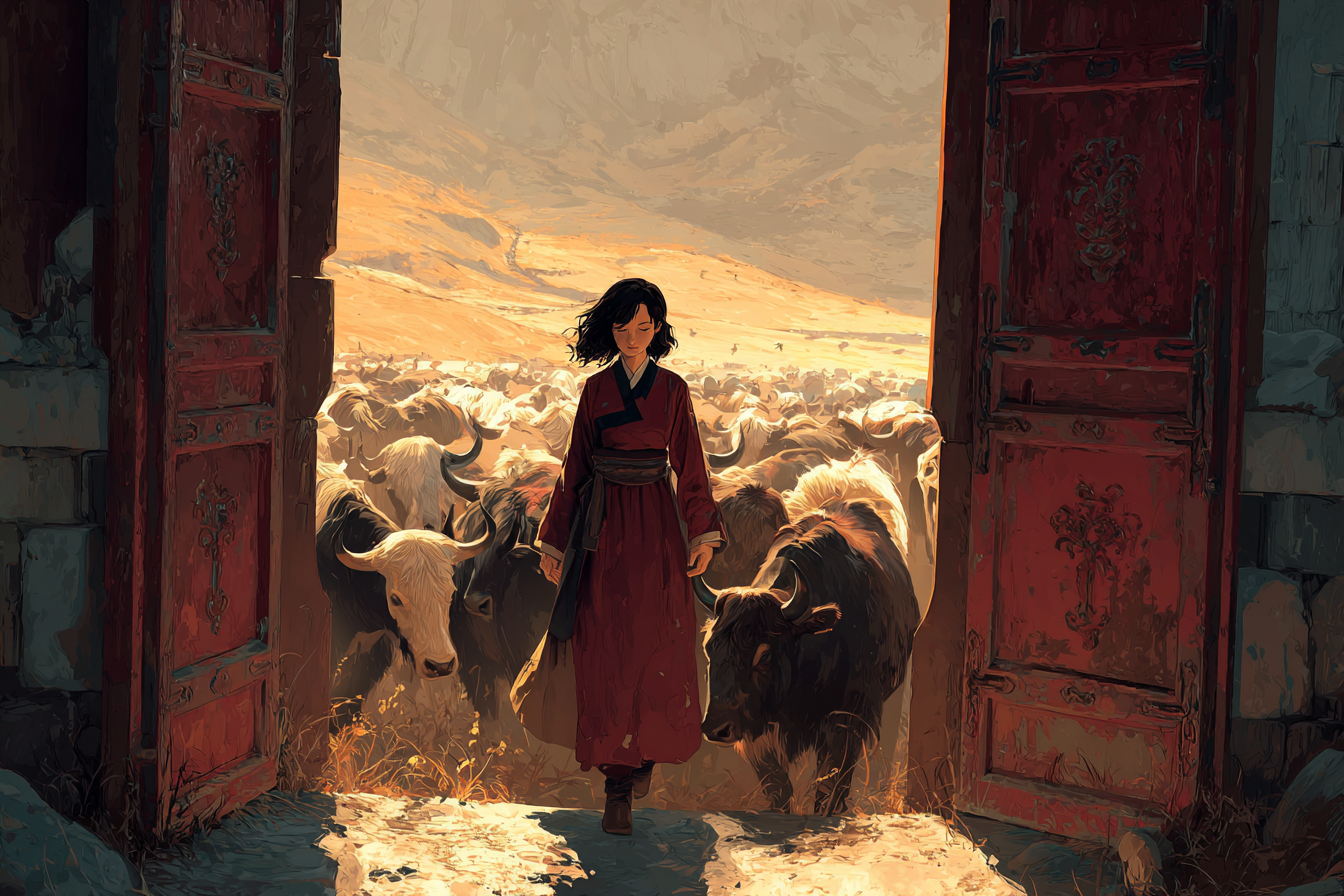
A bull’s low moan sealed the moment. Mei walked through the double doors and herd parted for her, folding her in, protecting her from predators.
Most religions preach that one must honor living parents. As the horse that nearly killed her carried her toward a new life, Mei left instead to honor the parental dead. To honor her mother’s sacrifice and the little lives buried behind the cottage, and for every girl who was ever sacrificed to a world at war with itself.
They never even touched the butter cake. ||
Read another story → · See all of Melvin Horton’s stories →
Share this:

I occasionally say interesting things. Sign up for the newsletter →
Comments are closed.