
The raising of a middle finger as an insult dates back to before the time of Jesus.
In Ancient Greece, the aristocracy used the raised middle finger gesture to denote silent disapproval in the halls of government.
For thousands of years, the gesture has meant many insulting things, but in the hands of Shine Greenbaum, the third love of Melvin’s life, it sometimes meant, I love you.
Shine Greenbaum could squeeze a cinderblock and make it fall in love.
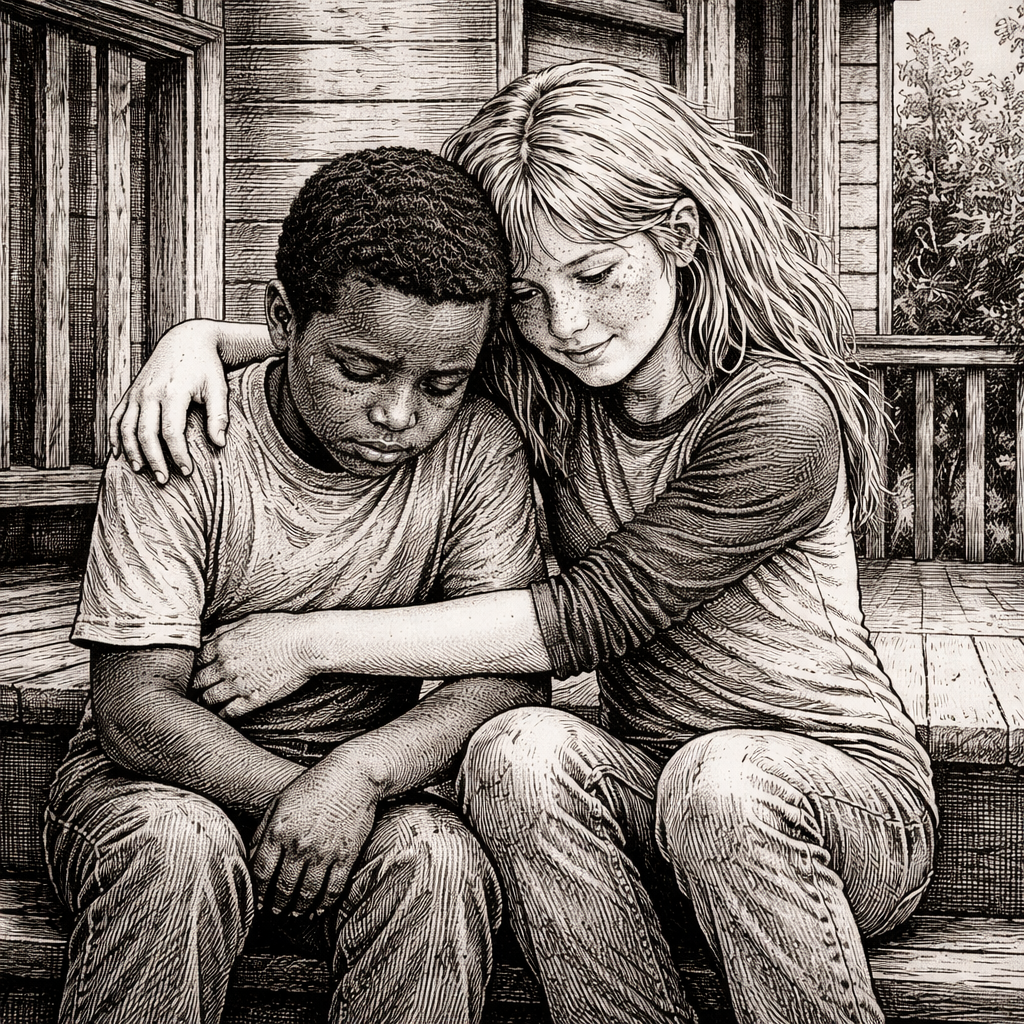
She wrapped her arms around Melvin when he was crying, and it was warm and sweet. It was delightful and moving.
“What is this witchcraft?” he thought. He’d never felt comfortable with someone touching him, but he didn’t want it to end.
Shine was the sweet little dirty-faced girl next door. She was cute, blonde, and a tomboy who loved horses and sports and flipping the bird at cars going too fast through the neighborhood, and people who pissed her off.
Faded, darkened, and in mourning, Melvin Hawthorne’s once sunny yellow house in upstate New York was all set for death and porches.
There was a back porch that led to the backyard, where they stored firewood next to a chicken coop with a dozen live chickens that were hard at work.
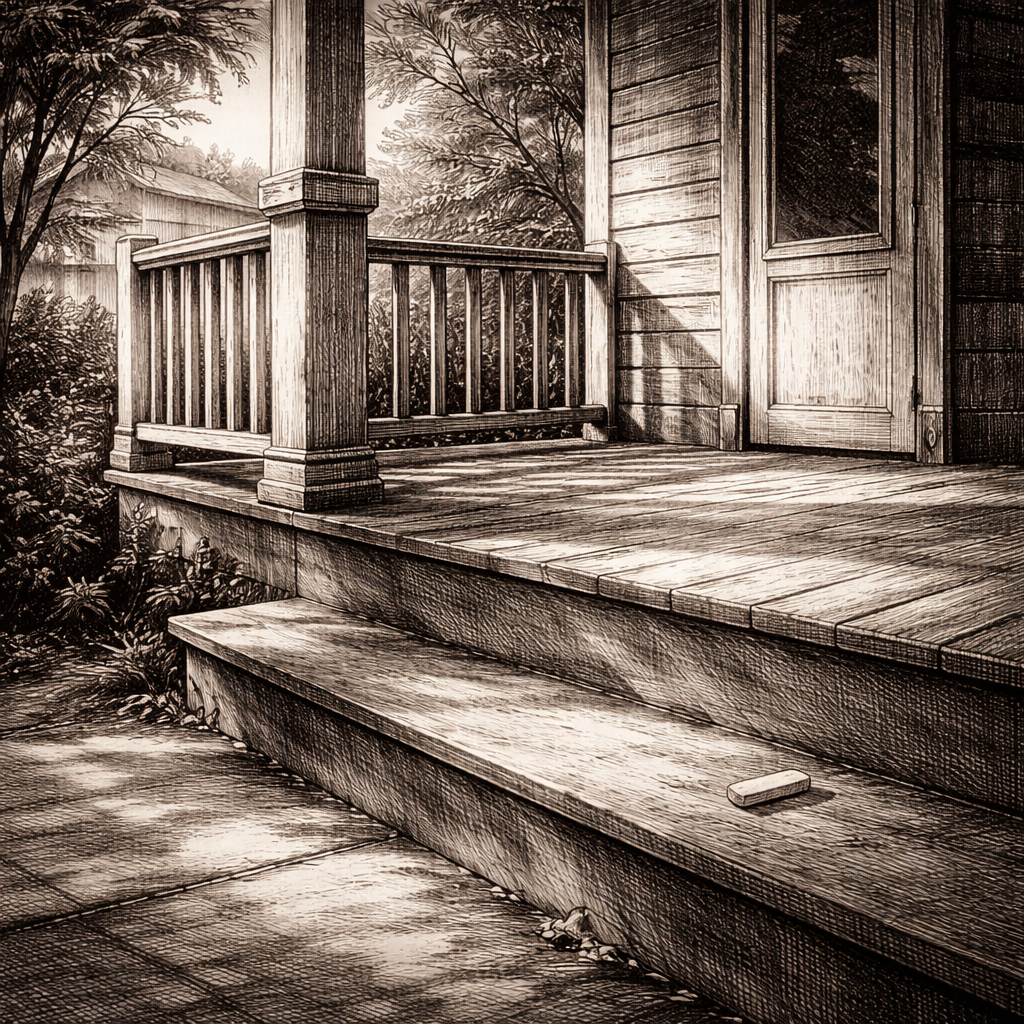
There was a side porch that faced the house next door where Shine lived. Melvin liked to play on that side, and it was also where he went to sit and think and hope for a glimpse of his pretty neighbor.
There was also a front porch that held newspapers, paper packages, and slips of paper taped to the door. Their puppy, Hannibal the Animal, also liked to spend the afternoons watching birds and squirrels from the front porch, passing judgment on their annoyingly busy lives. In America, the best moments happened on the porch and not the living room.
On a beautiful spring Sunday in May, Melvin sat on the side porch, while inside the house there was yelling and the cathartic smashing of the dinner plates that Auntie Eleanor had brought all the way from Chicago. Now they belonged to Melvin’s mother, and she was getting her money’s worth. They shattered like young hearts, broken promises, and fractured families, broken beyond repair. Her mother had died.
The Empress Josephine, Melvin’s grandmother, had she lived, would have loved the side porch with its four long steps and pillars on each corner for leaning and for shade. She would have sat with her grandson all afternoon, cursing at the naked neighbors and teasing him about his schoolboy crush.
Shine could hear the crashing plates and the yelling, but it was the crying that she could do something about. Shine sat down beside young Melvin, put her arms around him, and squeezed.
Shine Greenbaum was a year older than Melvin. Her parents were Druids, Wiccans, Celtics, and Jewish hippies, but those words have lost all meaning.
Her folks liked to dance around fires when the night was dark and sing songs in Yiddish and Gaelic when the moon was full. No robes, no towels, or bathing suits; they were nude nearly all of the time.
Her dad had helped to invent the personal computer, and her mom bred horses or something, and neither one had much use for clothing.
The neighbors got the city to make them put up bedsheets across their backyard fence. Melvin could barely see her mother’s breasts or her father’s dangling sack between breaks in the makeshift curtains pulled between the two backyards.
That was all he could remember about Shine’s parents, just the naughty bits swinging as they chased her little brother, Peanut, around the yard.
Still, he could remember every detail of Shine’s smile, every freckle on her face, and every shade of strawberry that her blonde hair would become beneath the warm summer sun.
Shine Greenbaum was no stranger to physical contact or showing affection. Her parents were big huggers, big naked huggers.
Young Mr. Hawthorne had rarely been held for anything other than questioning. So, it was the best birthday present.
A year later, Shine wrote, “I love you,” in cursive and white chalk on a tiny pink-and-purple chalkboard and presented it to Melvin like a gift—not the board but the words.
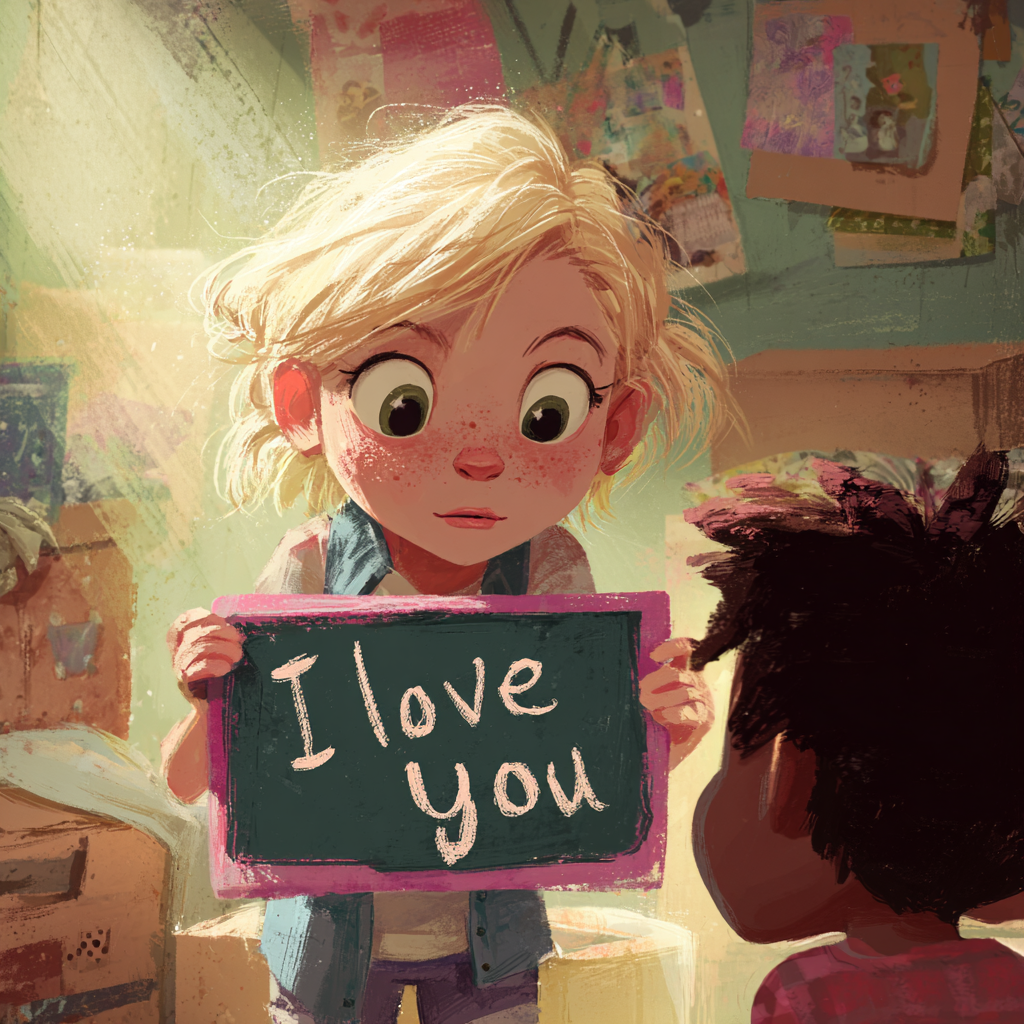
He didn’t know how to respond.
“Wow!” his voice trembled. “You write fast,” he said.
You write fast?!
I’ve known Melvin for a long time, so I’ve given this some thought, and I firmly believe it was the most useless thing he could have said, and he had so many good choices.
“I love you too” would have been a welcome response.
“Ditto” would have been cute.
“I know,” because she was his Leia Organa, spunky and forthright. He would have followed her into the garbage chute without hesitation.
“You’d better,” even though I forget what movie that line is from, still it would have been better than “You write fast.”
Granted, all of these movie lines were from movies that hadn’t come out yet, but anything would have been better than that as Melvin watched her face drop and her smile disappear.
It started with a hug and ended with something as fleeting as chalk on a plastic slate.
Captain Alexander Bollinger Sr., the man who owned half the town, had the true last word. The Greenbaums’ lease was broken, and Shine and her parents loaded up a minivan and a station wagon with everything they owned and moved away.
Florida, the Sunshine State, was a more nudist-friendly location, with fewer bears, fewer clothes, and hardly any snow.
“Would you rather,” Melvin began with a smile, “live your entire life waist-deep in poop, or—” He paused to let it sink in. “Live half your life with poop all the way up to your neck and the other half completely shit-free?”
“No shit at all?”
“None.”
Shine Greenbaum stopped packing boxes and stared down at her bare feet.
“This is for sure a shitty choice you’ve presented me with,” she countered, not yet knowing what her answer would be.
“Yes, it is,” he agreed, smiling. “But I think it’s an important question.”
“But how do you know?” Shine asked.
“How do you know what?”
“How do you know that life is going to honor the deal? What if you do your half-life covered in poop,” she asked, “and the second half is just as shitty?”
“It’s just a game,” he explained.
“No, wait, listen to me. This is serious. You feel like you’re covered in shit, right? And you think life owes you a shit-free second half, but what if you get to the second half of your life and there’s still more shit to shovel? What then?”
“I’m hoping the universe is more honorable than that.”
Melvin’s mother had threatened to kill Melvin periodically over most of his life. She threatened to drown him in the tub and to drop him from a five-story window. He reminded her of his father.
Shine Greenbaum had written exactly the three words Melvin wanted to hear on a toy blackboard, and they meant more to him than Star Trek, comic books, model trains… and hugs.
“It was supposed to be a game,” he said, trying to keep himself from crying.
Shine stopped buzzing around her nearly emptied bedroom and sat on the edge of her bed next to Melvin. She wrapped both arms around his shoulders.
“I suppose,” she conceded sweetly, resting her head on his collar. “There could be a fixed amount of shit for each person, and maybe we use it all up in the first half, then live shit-free. It’s possible.”
“I fucking hope so.” Melvin snorted and sniffed, then tried to smile.
Shine was the only thing that made life in this racist town bearable for Melvin. She could always cheer him up with a look, a word, or a smile. She didn’t have to be next to him. He could feel her sweetness from across town.
“Then I choose that one,” she said. Shine gave him another squeeze and a tiny kiss on the jaw. “And, I’m guessing, so do you.”
Shine hopped from the naked mattress of her childhood bed to fill the last of the large boxes with books and the remaining few stuffed animals.
Shine had a ton of stuffed animals, all of them clean, fluffy, and well-loved. Melvin had only ever had two: a rainbow-colored elephant and his teddy bear, Teddy Beam, who was a tan, classic bear who had seen some action.
Theodore Melvin Beam would have loved Shine’s room the way it used to be, with its swans, piglets, and horses everywhere.
Melvin imagined tossing his old teddy into one of the boxes bound for Florida and seeing a smile on his old friend’s face when he learned that he could go, too. What a lucky bear.
The constant pain of change was overwhelming to him. He sat on the edge of the bed and held back his tears with anger. “No one close to me can ever leave if I never allow anyone to ever get close.”
Melvin was angry. He saw the world as full of bullies, psychopaths, and wealthy sociopaths who owned everything.
They stole from the poor instead of competing with each other. They enslaved the desperate by ensuring that working for them was the only way to stay alive and feed your family.
They evicted the nice people who lived next door, and there was nothing a Black boy could do about it but get angrier and angrier and angrier over time.
His family would also be evicted.
The Captain owned both houses, and he didn’t like to lose.
“Do you still want to be a writer when you grow up?” Shine asked him.
“I want to write a better story for myself,” he said solemnly. “I want to be the hero,” he said triumphantly.
“I wouldn’t want to be anyone else,” she disagreed.
“Why do I have to be someone else to be the hero?”
“I know you wish you were white,” Shine said bluntly.
Melvin didn’t know what to say.
“All your heroes are white,” she told him. “When you think hero, you think white man. Admit it.”
Shine and her family were the least racist people he had ever met, and deep down he knew she was right.
“No, I’m serious,” she said. “You don’t read Power Man. You don’t read Black Panther,” she continued. “You don’t like Shaft or Luke Cage.”
“Luke Cage is Power Man.”
“You like Spider-Man,” she said. “The Fantastic Four and The Incredible Hulk.”
“I like the X-Men too. Storm is Black. The whole X-Men story is about segregation and civil rights.”
“I’m not accusing you of anything bad,” she explained. “I’m just saying that it’s messed up that you never learned to like the way you look.”
Melvin Hawthorne thought about how much he would love to be James Bond, Han Solo, or Rick from Casablanca with Ilsa by his side, but he had never thought that he would have to be white first.
“Fuck you,” he said playfully.
“But am I wrong?”
Melvin paused until her words stopped echoing off the bare walls of his heart.
“I can still be the hero,” he said.
Shine slid her empty bookcase to the side and reached for something pink, purple, and plastic that was trapped behind it.
“Wow,” she said.
“What is it?” Melvin asked.
“You write fast,” she whispered.
“That’s fair,” he replied, thinking maybe his musings had gone too far with the shit question and the race swap.
“No. Here. I found this.” Shine pulled a tiny chalkboard from the space between her bookcase and the wall.
“Here,” she said again, calling him over, as she stared at it intently. It still had the words “I love you” written in cursive, in chalk, and in haste. “I want you to have this.”
She handed the board to Melvin, and his emotions came flooding back. Her graceful scribblings were fragile and fading, and he feared they’d be gone forever.
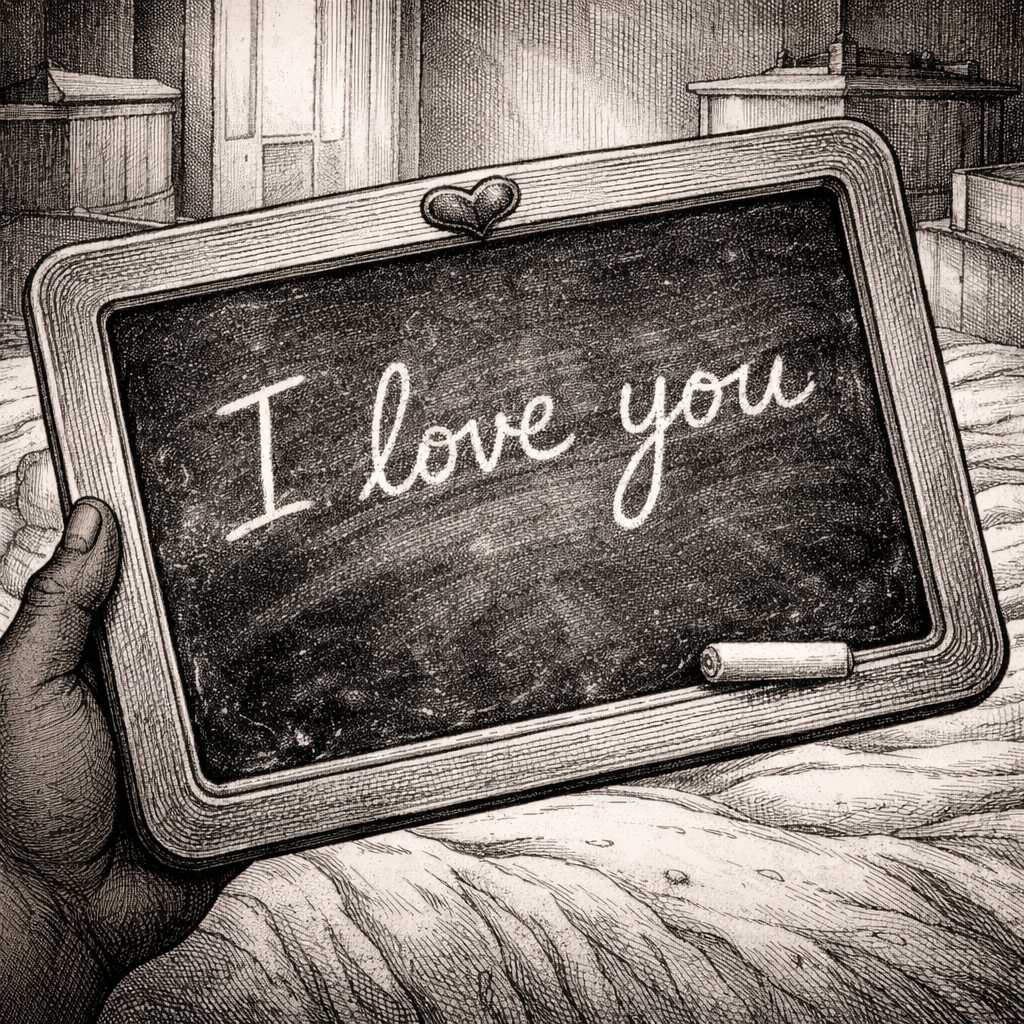
He held it at arm’s length as if it were the source of his pain or as if he were afraid to get it wet with tears.
Melvin looked at what was left of the three words and daydreamed of replying well to the pink-and-purple plastic message. If he had responded better, perhaps they would have dated. Perhaps things would have been…
Shine taped the last box shut.
“Shine was here,” she wrote on the wall in purple crayon, and before Melvin knew what was happening, she was gone.
Shine flipped her friend the bird through the wagon’s window as they drove away.
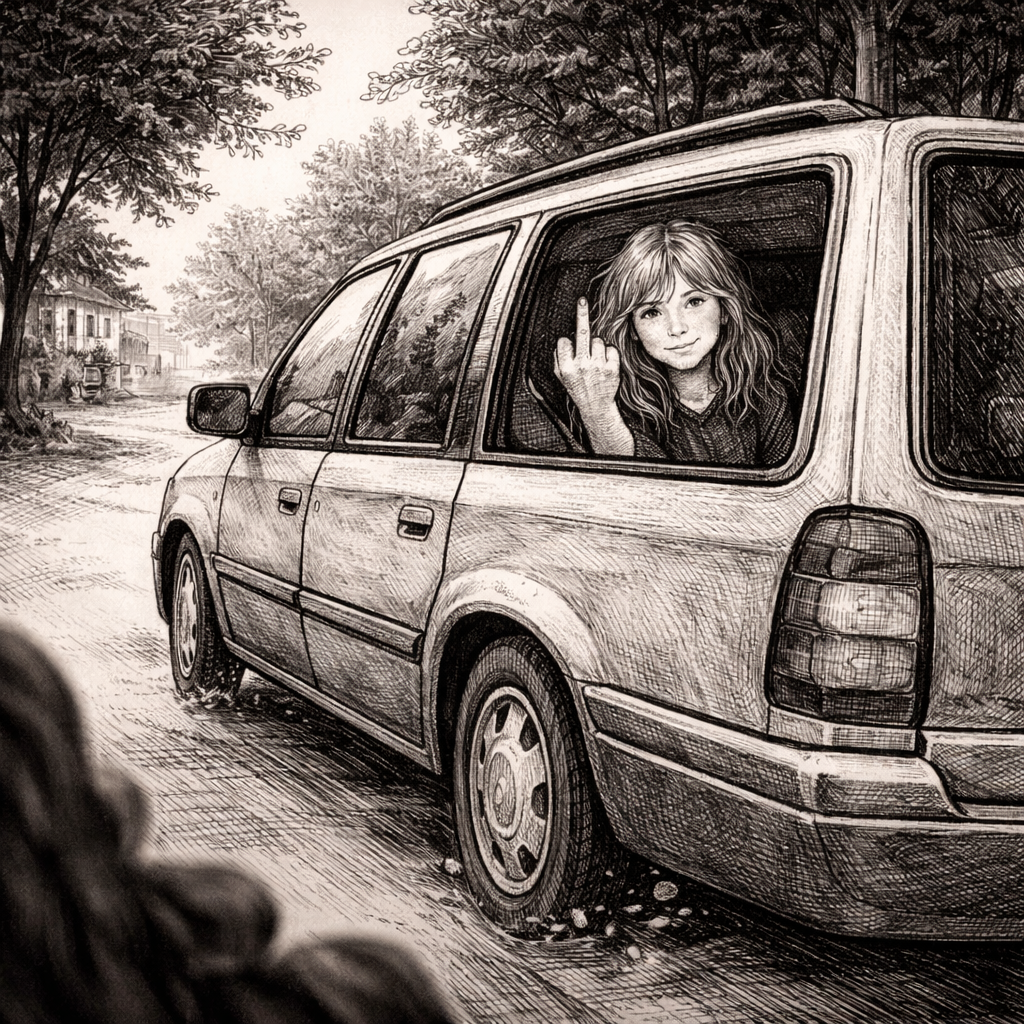
She was not angry. She had that same worried smile on her face when she looked at him. It was the same look she had on the day she first hugged him on the side porch.
She wanted Melvin to be okay. Whether he was covered in shit or not, she wanted him to be open and honest with everyone and to face each day naked and unafraid.
She loved him and knew that everyone else would love him if he let them get to know him.
Her smile, her hug, her chalkboard, and her middle finger were just another way for Shine Greenbaum to tell Melvin Hawthorne that she loved him.
Melvin raised his middle digits on both hands in response because he loved her too, twice as much, as the wheels on her parents’ minivan drove her away. ||
Read another story → · See all of M. Christopher Horton’s stories →
Share this:

I occasionally say interesting things. Sign up for the newsletter →
Comments are closed.