Mei Lubaba was awake before the sun, before the cows, before the milkmaids and the farmhands. She was awake before the roosters, the housemaids, and the field laborers who slept with heavy hearts.
It was 1908, and Little Mei Lubaba awoke on the opposite side of the world from Chicago, Illinois, in an island chain on the South China Sea. It was her sixteenth birthday, no less, the anniversary of her mother’s death. It would also be her last day on the farm. It began with a full moon, an obstruction, a mystery, two visiting mothers, and her father’s favorite butter cakes.
Mei Lubaba, the big-boned daughter of a wealthy yak farmer, was up before most of the inhabitants of her little archipelago nation, pouring milk and churning butter for the special cakes that would be a parting gift to her disappointed father.
Mei was not a petty girl. She was not a spoiled girl or an angry girl who had grown tired of being told what she couldn’t do. She was the firstborn daughter in a century that hated women. She was a big girl, but everyone called her Little Mei, and Little Mei liked baking little cakes for the busy workers. It was the only thing she did that made them smile.
During her sixteen years of life, naïve, neglected, and self-absorbed, Mei Lubaba let her circumstances dictate her happiness. The yaks on her father’s farm did not.
An adult yak typically weighed about two thousand pounds, and although friendly, it would never be mistaken for something light enough to be blown by the wind. Whether Mei Lubaba lived the rest of her life as a free woman was inexplicably dependent on the weather, the clouds, and the wind.
The farmers, ranchers, and wranglers who worked Sonjun Lubaba’s land and tended his livestock joked that the yaks had raised Our Little Mei. And it was true; she’d spent most of her young life being ignored by her father and stepmother. She spent most of her free time playing in the grass with the giant baby calves, who would follow her around until the sun had set and the cows had licked her face clean.
The neglected daughter of the third wealthiest man on the island chain was not allowed to read the books in her father’s library. She knew that books were how people learned about the world, and she had read, or tried to read, every single one. She learned about the outside world from books, from the yaks, and from the enslaved workers and not from her father’s hired tutors, who were more concerned with how she stood, smiled, walked, and poured tea. They would rather put a book on top of her head than in it. She had the carpenters build her bookshelves, and traders brought her books whenever they found something they thought she might like. They all feared her father.
Little Mei Lubaba was the eldest of Sonjun Lubaba’s three children, She was her mother’s only child and her father’s only daughter because Big Mei, her mother, died in childbirth.
On the morning of her birthday, much like the night before, she had a visitor. There was a full-grown yak smack dab in the middle of her late mother’s kitchen.
“How did we get here, girl?” she thought.
The door was shut, but that wouldn’t have mattered, because an animal as large as a full-grown yak could not have entered through the relatively tiny kitchen doorway without demolishing it, and it was still intact.
Mei preferred baking to sleeping. She liked horses more than yaks, but preferred yaks to people. She also liked girls more than boys, and women more than men. That wasn’t much of a secret. Even by the time she was nine, everyone could see that it was always the girls who made her heart race and her face flush. Boys, yaks, and men made her mostly angry because she lacked the patience to lie to them. Boys, yaks, and men required a great deal of tolerance, assurance, and pretending. Such was the way of boys, yaks, and men.
Mei had risen early to bake, but that was looking more and more unlikely with an impossibly large and powerful creature dividing her late mother’s kitchen in half.
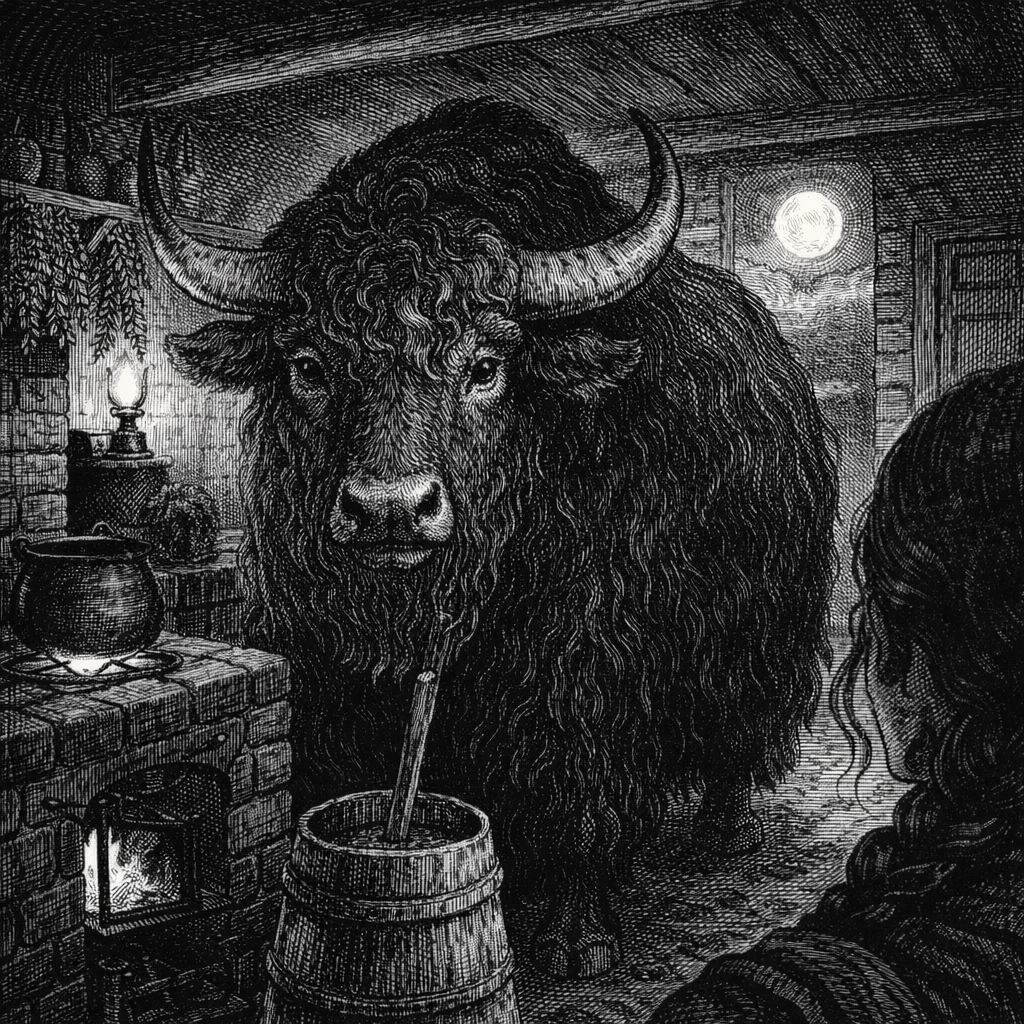
“What are you doing in here?” she asked the animal, but got no answer.
Her logic was sound. If it could teleport through solid walls, then perhaps it could talk — but no.
“You’re throwing off my schedule,” she said. “I need to get these cakes baked before breakfast,” she lamented. “There’s a lot to do today.”
Tonight, she planned to run off to the city. It was a long trip, and she needed to be gone before anyone knew.
She wanted to be free from her father’s expectations. She wanted to be free from her father’s ire and her step-monster’s disdain. But mostly, she wanted to be free from her sixty-three-year-old husband-to-be: his wrinkled face, his desire for a litter of boys, the way he couldn’t keep his tongue in his mouth when he looked at her. Well, that was the plan anyway.
The faintest ghost of her mother would have called her naïve for thinking there was anywhere on earth she could be free from the shackles of womanhood. You take them with you she would say but Mei Lubaba could barely hear her muffled voice anymore.
Her mother was more like a sliver of heavenly light that visited during the days of the full moon than a body she could hug and kiss, or a voice that was warm and comforting. Big Mei would appear as a trick of light, and her voice was nothing more than a muffled palimpsest of things she had once said to Mei en utero, echoing on the wind from before she was born.
The yak in her kitchen was not a trick of light. It took up real space like a real yak. It felt real. It even smelled real… really real.
Contrary to popular belief, yaks smelled great, at least in comparison to other farm animals. However, no one wanted an animal of this size in their kitchen. Yaks were relatively clean, but what they weren’t was polite or graceful. A large animal of this kind, in a house this small, where nothing was broken or even jostled, was quite strange.
When a full-grown yak didn’t want to move, it did not move. Pull it. Push it. Yell at it. Pray to it. Bos taurus indicus! The only trick to making a stubborn yak move was waiting until it wanted to move, and then claiming the victory.
On the other hand, when a sizeable horned cow or bull wished to leave a room, a party, or an untenable situation, when a yak thought it needed to be somewhere else or felt unwanted, it was a good idea to get the hell out of its way.
Moonlight hit the butter lamps on the top shelf, making them easier to see. Mei struck the flint twice, and the flaming lamp lit up her mother’s kitchen with its pots and pans, its brick oven and potbellied stove, and its oversized, uninvited inhabitant.
Perhaps a couple of stealthy farmhands were playing a joke. They had removed her wall, built a ramp, and like ninjas, gingerly guided the giant creature into her mother’s kitchen to make a cruel point about the poor rich girl who spent more time with the yaks than with her family.
The confused and emotionally abandoned teen climbed out the window and made her way around to the back of the animal. She was going to make this work.
Amazingly, all she’d ever had for a family was her mother’s ghost and the little calf she’d named Bug, that followed her everywhere.
Bug was the name she had given the yak when its mother died giving birth to it. She felt an affinity for him. They had something in common.
Bug, however, had never been in her kitchen. He was still a baby, and already too big to fit inside. Bug was likely off enjoying the safety of the herd under the hunter’s moon.
Wild dogs roamed the hills to the north and would come down to hunt in the moonlight shadows. The herd was far more qualified to protect Bug from hungry canine than Little Mei was.
Bug was a sweetheart. Mei had witnessed both his birth and his mother’s death. She’d fed him milk from a bottle and washed his face with a wet towel. The two shared a maternal absence and a bond she didn’t have with anyone or anything else. She loved him the way she loved the covers of the books she was never supposed to read in her father’s library.
Captain Sonjun Lubaba was the third wealthiest man between two distant hills. Every person on the volcanic island chain of Shanqui Jian — from the capital to the port, from the walled city to the great temple, from the fertile farmlands to the harbor — depended on the products of Sonjun’s farm for meat, leather, milk, and butter. Everyone Mei had ever met either worked with him, worked for him, or was visiting. “A good man,” to a man, was what they called him.
However, Sonjun at age fifty-four was not a good man. He owned more than half the southern island, nearly a third of the people, and every single yak as far as the eye could see. His animals and his crops were his only genuine concern, and he had personally sent more men to the lash for poaching, or hanged for stealing, than the regent, the king, or the church. There was only one law in his little corner of Shanqui Jian: you work, or you die. They called it the Island of Practice, and there was no prison here. To Little Mei’s well-read eyes, it was all a prison.
Little Mei would have had an easier time removing the house from under the yak than removing the yak from inside the house, so her kitchen remained divided as she prepared to bake.
The butter churn was on one side, but the herbs were on the other. The stove was on the long side, but the bowls and pans were on the other. The spoons and spatulas were on the window side, but the only counter space was on the other. She would have to do it the hard way.
Little Mei had extraordinary courage with a minimum of common sense. From an early age, she climbed, hiked, and adventured alone across the vast expanse of her father’s land for days on end with nothing but a sharp knife and a walking stick. She couldn’t read very well in the dark, but she could find her way through the woods with her eyes closed.
Though Mei had never set foot off the island, or even past the fields and the hills beyond the cattle to the shore, she had seen the covers of magazines about epic voyages and great explorers. She dreamed of sailing to the Caribbean or the North Atlantic and meeting Europeans with round eyes and Africans with woolen hair, like in the illustrations in foreign magazines and newspapers.
Little Mei was a child of the new century and did not believe that forced marriage or forced labor should be part of the moral livelihood of a progressive state. Countries to the north, northwest, and as far away as the Americas had abandoned the practice of enslaving other human beings entirely. It was past time for her independent island chain, nestled safely between what was now called the Philippines and the East China Sea, to do the same.
“You wouldn’t stand in the way of progress, would you, my new friend?” she asked her bovine obstruction.
The yak said nothing.
There was no getting around it. Mei would have to exit through the back and climb in again through the window to reach the herbs she needed on the far side of the large land mammal — as gentle and stubborn as he was.
“You’re ruining my going-away party,” she said.
Little Mei wanted to surprise her father with butter cake, just as she did for the first time when she was eleven. It was a recipe her mother had apparently taken to the grave, but there they were, fresh out of the oven. Mei had never seen her father’s face so wide before; nothing she did ever made him smile but that. He called her Butter Cake after that. It took only a few days before it no longer sounded like a compliment. Butter Cake is all you can do.
The secret, you see, to Big Mei’s old-fashioned butter cake was flavoring the butter with sassafras and sea salt before straining the mixture into a butter batter and topping it with lemon honey. Regular honey was fine too but Mei’s customers preferred the sour bite of lemon.
Everyone loved her dead mother’s butter cakes.
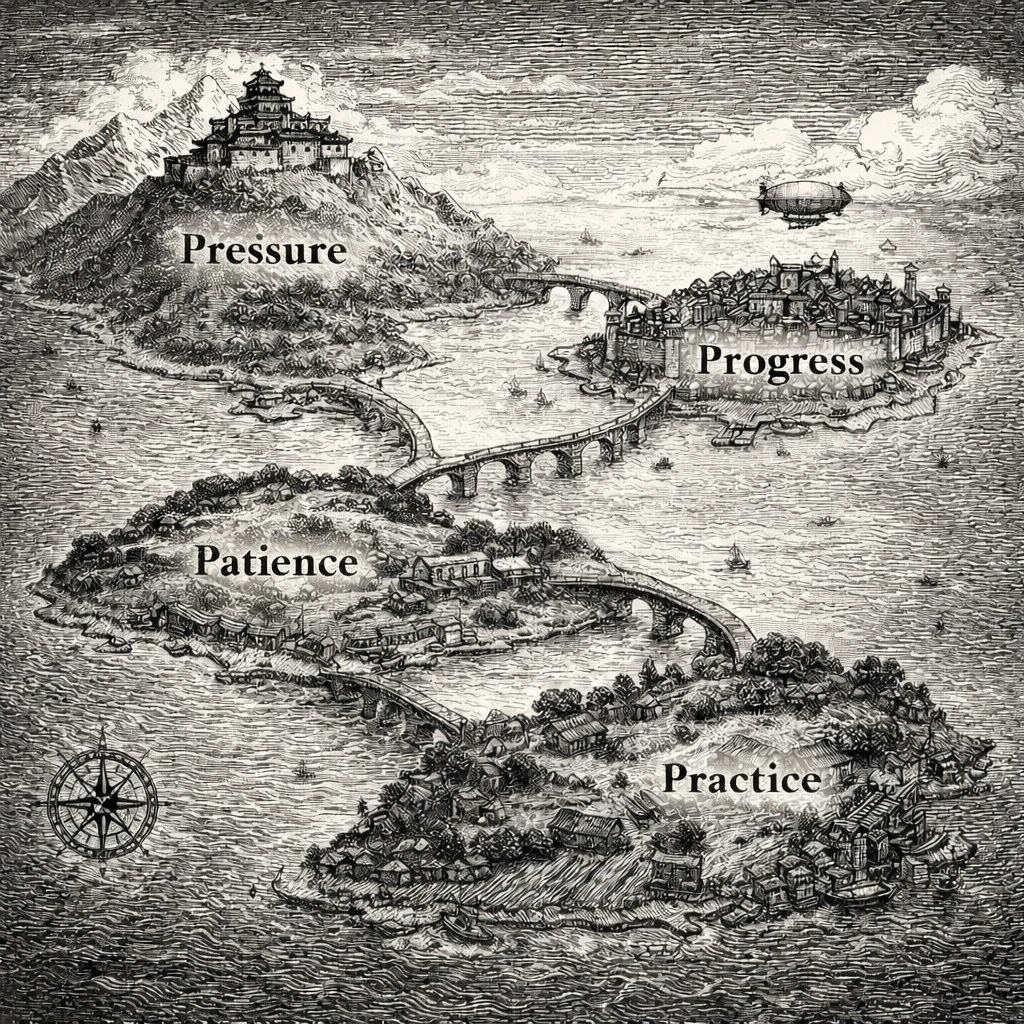
Decades before she was born, Mei’s paternal grandfather built his fortune supplying leather goods to the militaries of the four great island states that shared the volcanic archipelago she called home; the islands of Pressure, Progress, Patience, and Practice.
Her father increased the family’s holdings with enslaved laborers brought from the southern parts of the world to work in the fields and the factories. Everyone needed boots, belts, and bullet straps for their war efforts, and Sonny Lu was happy to oblige.
Mei’s island home had been invaded, first by the Japanese, then by Korea, and by Chinese pirates and then raiders from places we now call Indonesia, Micronesia, and Malaysia.
Her nation’s dependence on warmongers and their accessories; the belts, boots, holsters, horsewhips, and saddles her father made, was matched only by Little Mei’s intolerance for the stubborn ignorance of boys, yaks, and men.
Mei wanted to be lost in the worlds of Carroll, Doyle, Verne, and Wells. She wanted to devour the poetry of Shakespeare and Dickens in their native tongues.
Mei wished she could study languages, sciences, and world religions with teachers who rode trains from as far away as the Island of Progress, or have private lessons with the nephew of the man who had invented karate on the Island of Patience.
Mei’s noteworthy life experiences were few enough to count on one hand. She had tasted Coca-Cola from a bottle that breathed when she opened it, and she had once held a photographic plate of the Statue of Liberty all by herself without dropping it. It wasn’t much — but she told every yak who would listen.
Mei’s mother’s spectral form followed her out the back and around to the shelves of freshly cut herbs. Like a ghostly kitchen helper, she motioned intently toward a pungent pile of dried leaves wrapped in butcher’s paper. Little Mei tossed it over the back of her giant kitchen companion into a large wooden bowl, then went back around.
Little Mei added several leaves to her churn and agitated the mixture with muscles made of midnight plunges, butter-flavored treats, and epic adventure.
“Thank you, Mother,” she said to the pleasant glow that followed and seemed to smile. She jabbed repeatedly at the mixture of yak butter and crushed leaves, and the aroma drifted out the open window and onto the midnight breeze.
The full moon was just a day on the calendar, and the dead had no use for days. But on the nights of the full moon, she could see her mother’s light when no one else could. Then again, she saw a lot of things that no one else could.
Under the moon’s last light, with her mother’s spectral image fading, she churned and mixed and poured. Under the watchful eye of her giant kitchen obstruction, her butter cakes baked briskly as the industrial farm sprang to life.
Cows were waking up to the cold hands of milking. Breakfast was being prepared in the great hall, featuring eggs, bread, and milk, and all the while the instruments of industry were being fine-tuned, fixed, and sharpened for the day.
A symphony of labor on the Island of Practice began with butter as its featured performer. Butter was ubiquitous. It was oil, it was food, it was fuel. Farmers used the oil to lubricate wheels and gears for equipment pulled by animals and men. Local artisans used the butter in candles, lotions, and soaps — but the lion’s share was set aside for tanning, with a little left over for tea, beer, and Big Mei Lubaba’s bittersweet butter cakes.
Mei turned to her houseguest, once unwanted and unwelcome, and now a beloved member of the family. “You remind me of Bug’s mom,” she told her. “She had the same coloring. But she’s been dead a while.” And for the first time, the cow looked at her with eyes of recognition and gratitude.
“It is you,” she whispered. “I named your son Bug,” she told her. “I take care of him when I can. He’s a sweetheart, but he’s outgrown me.” Mei’s eyes began to tear. “He’s so big now.”
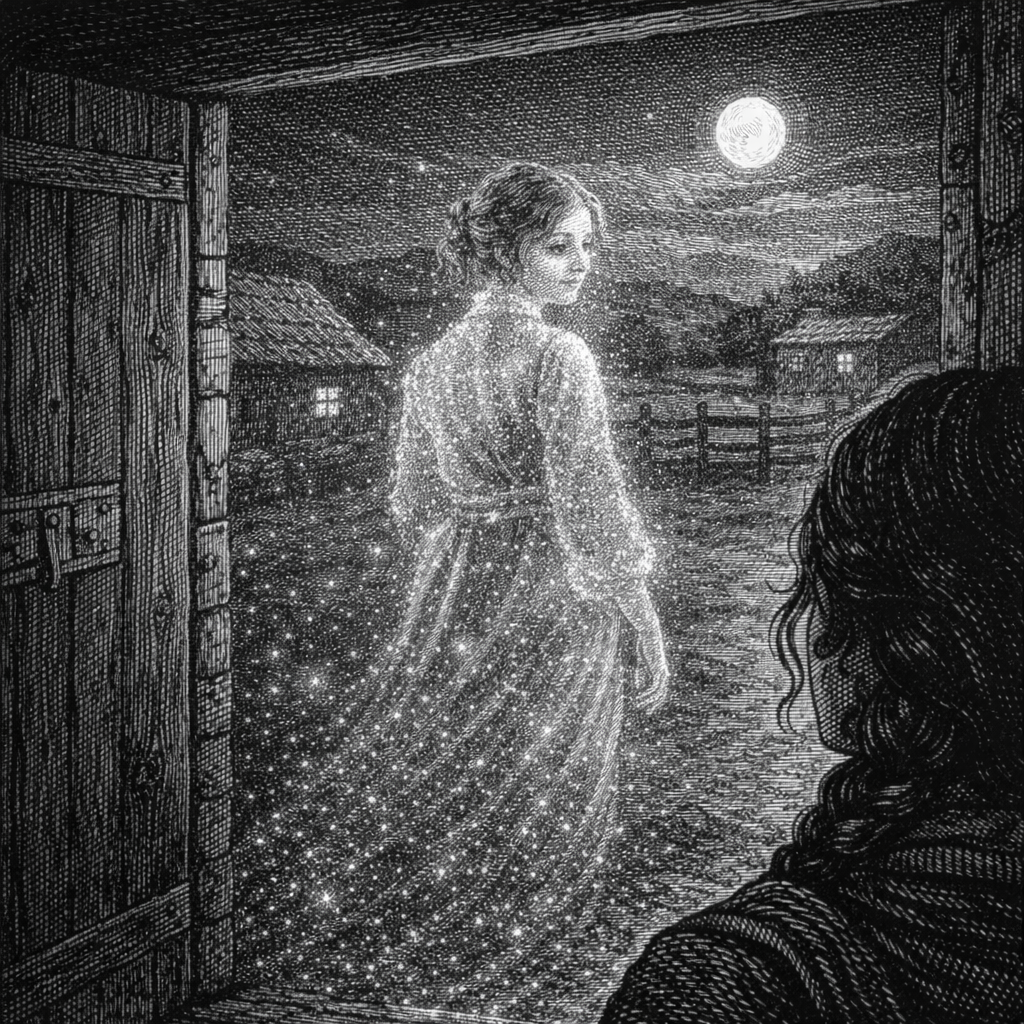
Light from the moon dissolved into the first rays of the rising sun as they touched the honey-glazed surfaces of freshly baked butter cakes on the counter near the still warm pot-bellied stove.
The sun’s antecedent glare meant saying goodbye to absent mothers for at least another lunar month, maybe more.
“Good morning, Mothers,” she said to the new light as she stepped through the now-incandescent body of Bug’s late predecessor and out the kitchen door into the soft luminescence of twilight with her own mother’s ghost.
“I hope you come to see me in the city, Mom. I’m going to be happy there,” she said. “And don’t you worry, Mrs. Bug. Your boy’s staying here.”
Big Mei’s ghostly apparition dissolved into the waves of breaking dawn, and for the first time it took the shape of a young woman.
Little Mei saw her mother as a moon goddess of unlimited light, and her eyes moistened further as her mother’s form faded along with the pure light-body of Bug’s mom.
A loving mother will always find a way to watch over her children. ||
Be First to Comment