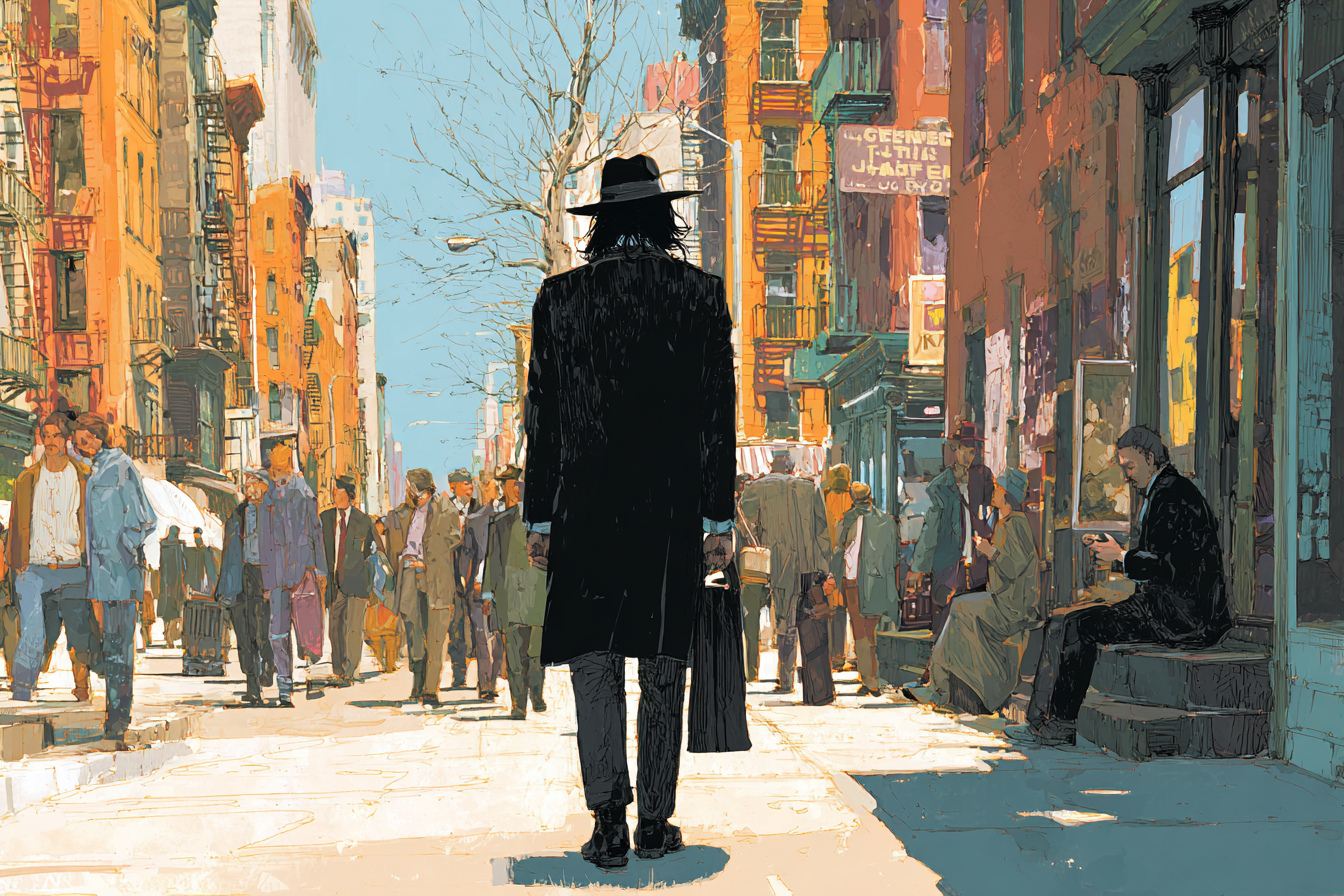
A collective of dolphins is called a pod. A group of ravens is known as a congress. A parliament of owls. A sangha of Buddhists. A murder of crows.
But did you know a collection of beggars is called a taxation? A taxation of beggars. It’s from Shakespeare. And a gang of crack smokers is known as a chaos. A chaos of crackheads. Reagan era. A hedge fund of coke fiends. Bush Senior. An enclave of opioid addicts. Obama. A diatribe of domestic terrorists.
You can’t make this stuff up.
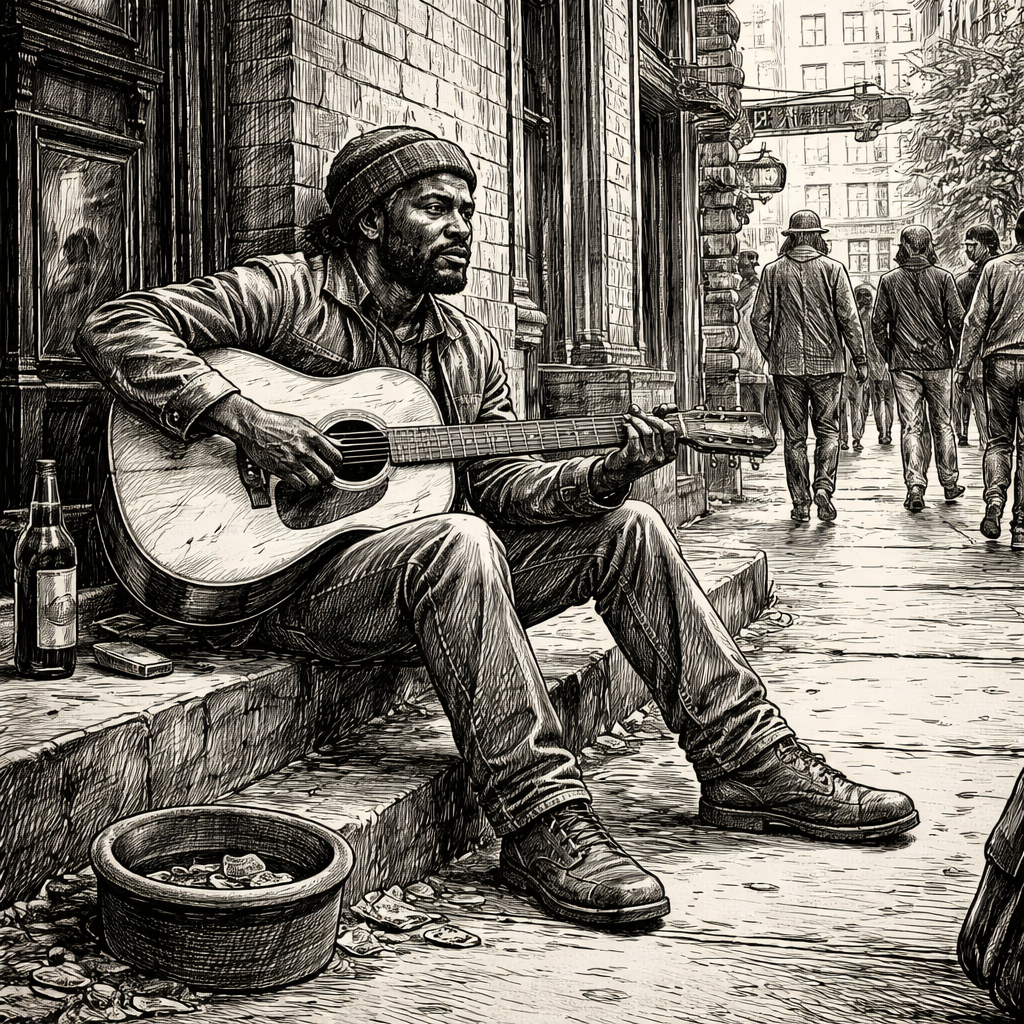
On the Lower East Side of Manhattan, Melvin played an old acoustic guitar for spare change on the weekends. He was an upstanding and responsible addict.
He worked full-time at a bookstore to buy his drugs. He managed sex workers and crack dealers at night to keep his friends high. And on weekends, he played music near the park because he genuinely liked people-watching and hanging with the homeless on the Lower East Side.
Melvin was an addict with three full-time jobs. He refused to steal and didn’t like to beg. He lived out of hotels and flop houses. He slept rough occasionally but most of the time he was indoors.
Melvin played guitar on the street for beer money. He played the blues, some classic rock, and Christian hymns from his days in the church. He sang a little. Held a crowd. He was friendly and appreciative.
A group of ecstasy takers is called a euphoria (sometimes a romance).
A romance of ravers. A euphoria of exes. A gang of friends who drop LSD together is collectively known as a Melvin. A Melvin of day trippers and Sunday drivers. Timothy Leary coined that one back in the fifties, though I might be wrong. Don’t quote me on that.
According to census data, nearly 80% of all people in the world take something to numb the pain. It could be just cigarettes and coffee, or sex, love and drama. It could be crack, heroin or meth. Most humans are addicted to something, even if they can’t afford it.
It’s comfort food, daytime TV, self-pity, doom scrolling, newb trolling. It’s putting yourself in grave danger to feel your heartbeat and your adrenaline rush. Everybody needs something to hold onto.
Melvin played the part of a human being to perfection. To Melvin, every moment of pleasure was a spiritual experience.
Josephine, was an addict. She injected heroin daily, destroying her life and the lives of her children and grandchildren.
Her sister Eleanor was an alcoholic. And also addicted to self-righteous indignation. What a friend we have in Jesus… and wine.
Josephine’s daughter took pills and smoked hash, but her true addiction was to bigotry, lies and hatred.
Melvin had come from a long line of spiritually strong but weak-willed women with enviable work ethics.
He was raised by a community of witches, bitches and addicts. They worked hard for their addiction.
No one hustles like an addict. No one cuts corners like an addict or lies so badly and blatantly. No one does math like an addict. It was impressive how fast they could subtract and divide. An addict could calculate how much of your money they could spend in the time it took to find another friend to fleece.
No one had as short a memory as an addict. Or as blind an obedience to their drug of choice. Addiction brought out a religious sense of righteousness like nothing else.
An addict can rob you blind, come back to stare you in the face as if nothing had happened, then rob you again.
No one is more reckless.
Every addict’s epitaph could easily read:
Here lies Donny the Dope Fiend. He died doing something dumb for a hit. He is survived by his debts.
Melvin hosted potheads, crackheads, dope fiends and dealers. He fed the chronically homeless when he could buy them a slice—and bought whole pizza pies for the working girls whenever he had the money. He secretly wanted to save them all, but knew he didn’t have the wisdom or compassion to save them from their cycle of addiction as he too went round and round.
On weekends, weather permitting, Rook would play his guitar all day with other homeless musicians who stopped by to hang out and share a bottle.
He drank, smoked and talked politics, philosophy, relationships, food and religion with some of smartest and most creative people he’d ever met.
People would stop, give him money, give him drugs. They offered him places to stay, odd jobs and spiritual guidance. Everyone knew exactly where to find him. He met three of his girlfriends sitting on that stoop, just waiting for them to find him, I guess.
“Hello. Have you met Brother Rook? He’s very nice.”
Hello Rook. I’m Death.
Death came to him one warm spring day, but before that, it was all drugs, hotel rooms, sex, music, poetry and songs written by musicians who didn’t make it to fifty. It was all hanging out with friends, going to bars and meeting girls who liked guys who liked guys, or played music, wrote poetry, and did drugs with them.
For a long time, Melvin’s life of being homeless on the Lower East Side was a wonderful experience for a while, and then came Death.
The morning sun lit up the corner of 8th and Avenue A. The birds sang, and children laughed while the streets of the Lower East Side filled with tourists who spent money, told stories, had song requests, accents, and opinions.
A tall white man with a cleanly shaven face, with a head of long black hair, and a tattered black suit sat down beside Melvin at the crossroads of beggar and artist. He said his name was Death.
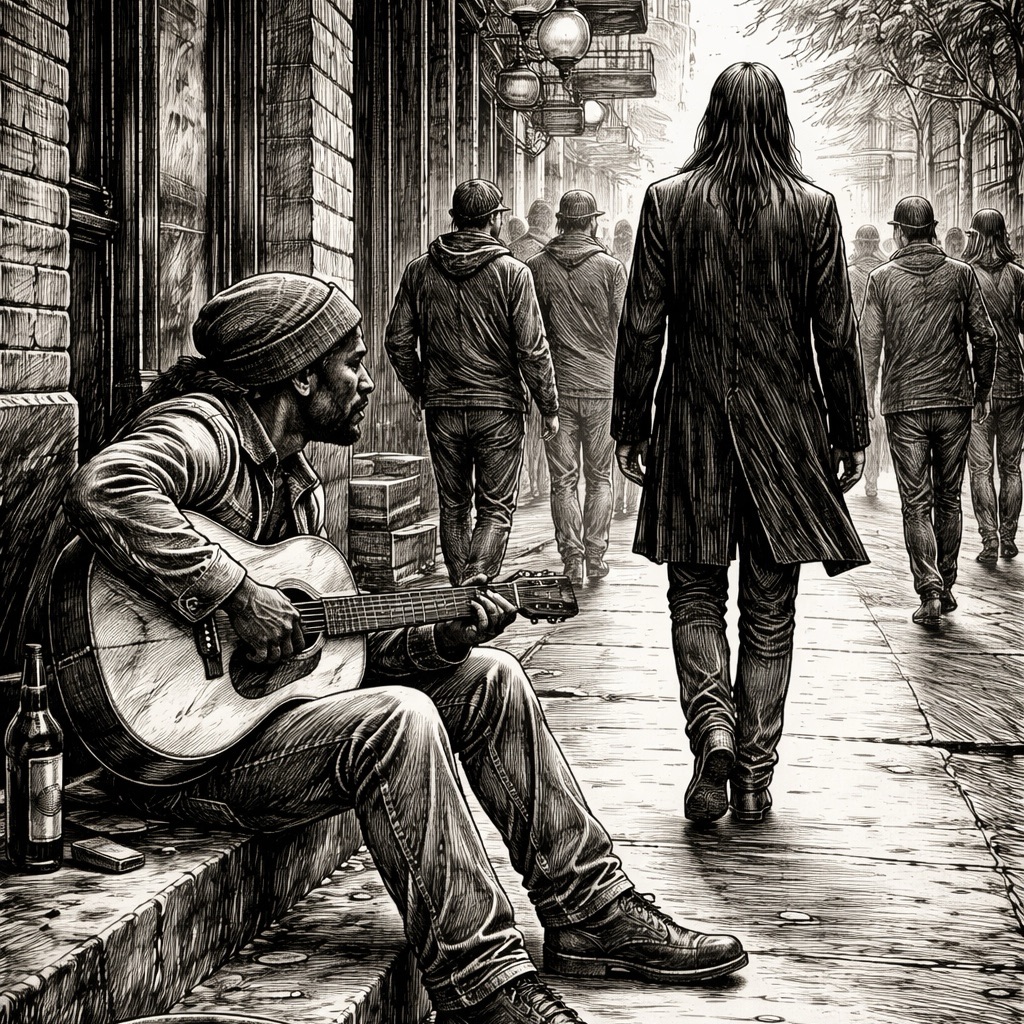
Melvin just assumed he was one of the many street creatures you could meet on the sidewalk with a creative mind and a tentative grasp of reality.
It was daytime for one. Doesn’t death usually travel at night?
No. People die all the time in the day.
It was a busy weekend in the Village. Doesn’t death like to lurk in the shadows?
Only sometimes. Half the people who die see it coming, only half are taken by surprise.
Melvin sat on the front step of a small apartment on the corner of affluent and destitute. There was a park, a school, and two churches within sight. Surely, death would not frequent such a place.
What am I saying? Of course, he would. Death was welcome everywhere.
Death was like a nagging pain in Melvin’s chest that didn’t go away or a ringing in his ears that only got worse every time he tried to stand.
“Hello, Death.” Melvin greeted him apprehensively.
“Do not fear me, my child.” Death said.
The thin older man in the tattered black suit with the pale blue eyes told the young black musician with his flush red cheeks not to fear him as he looked upon his face as white as frost.
“Everyone fears death,” Melvin replied.
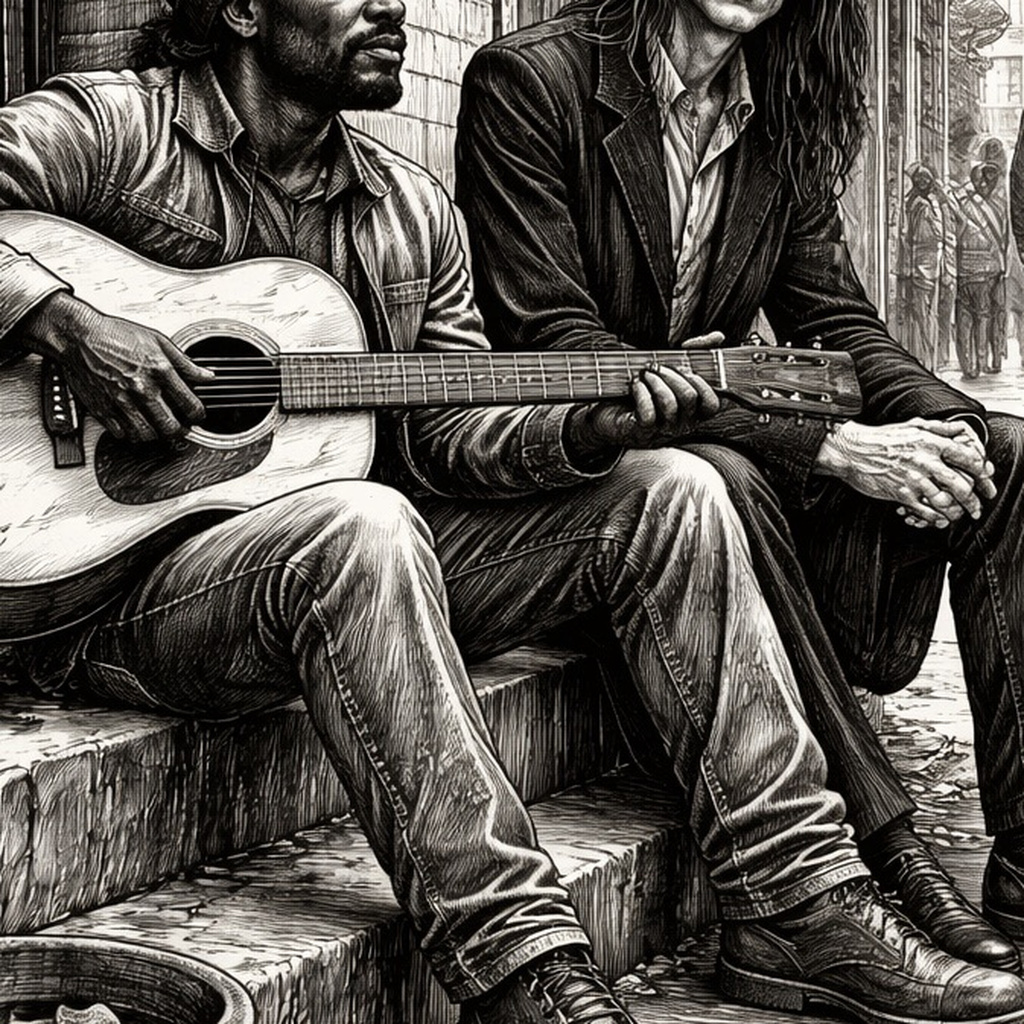
Death sat with him on the small single step of an apartment next to a bodega, across from a pizza shop overlooking the luscious greenery of Tompkins Square Park across from the bustling sidewalks of Avenue A.It was a beautiful place to die.
Melvin felt the danger that was everywhere. Weirdos, traffic, people with guns, on drugs, air conditioners poorly installed but high enough to kill, desperate lovers, and lonely artists with too much time on their hands.
“Everyone has to die,” he said bravely, checking the man’s hands for weapons. They were incredibly white and incredibly old. He looked ninety nine if a day but spry, pale and fully animated. He was thin as a rail.
Perhaps he was Death, Melvin thought. Or maybe he just needed a slice of pizza.
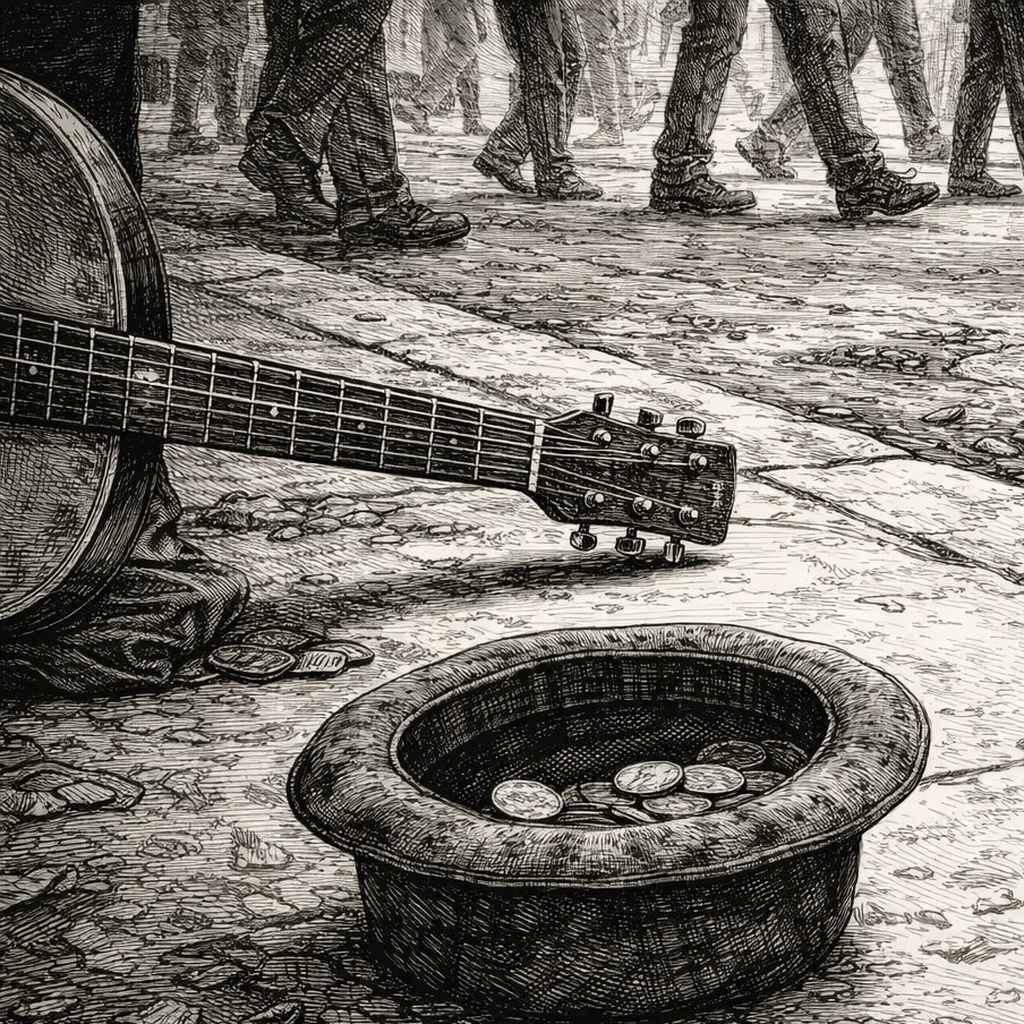
Melvin checked his busker’s cap to see if he had enough money to buy the man a slice. He did not.
“I am the personification of death.” the man said again. “That isn’t something you see every day.”
Both of his grandmothers died addicts. Both of uncles died young. His father died before he was born. Melvin thought. “Death is everywhere,” he explained. “So yeah, you could be Death, but I seriously doubt it.”
“Is that what your mother told you, that your father died before you were born?” he said.
“She told me he died in somewhere Africa,” Melvin said, wondering how he had heard him think that.
He did.
Melvin hadn’t thought about his father since he was little. Melvin laughed politely.
There was a long pause, and the pale man in the tattered black suit continued in a whimsical tone.
Melvin breathed out sharply through his nose and fingered the devil’s chord an Eb diminished fifth on his tan acoustic and strummed it gingerly. It wasn’t exactly the devil’s chord, but it was close enough.
On a lovely weekend in the Village, there were loads of tourists walking and spending, but there were only a few coins in Melvin’s gray derby cap.
“Oh god, no.” Death exclaimed. “You’ll be long dead before your father dies. Long long, long long, long long, long dead.”
“I get it. He’s practically immortal, and I’m a tsetse fly in comparison.”
“Like you said, everything dies.” Death looked out at the smiling people, living in the afternoon sun like an impatient baker opening the oven too soon.
“I was thinking about living another hundred years or so, Mr. Death.” Melvin offered.
“Just Death,” the man said. “Mr. Death was my father.” Death smiled, and it sent a chill through the space between them as if Melvin were suddenly sitting next to a block of ice.
“But I’d aim lower,” Death said. “If I were you.”
His words hung in the air like a winter chill in the springtime.
They say before a recovering addict should even consider dating again, they should first get a pet and a plant. See if they can keep those alive.
The addict had no time for relationships. If he couldn’t sell it fir drugs it was of very little importance.
Melvin looked across the street at the couples in the park. The trees. The kids, running, dancing. Their parents, sitting talking. And Death right around the corner or, in this case, right across the street.
Death sat on a stoop in Lower Manhattan Brother Rook played his guitar on the bottom step, and Death bragged about his work.
“The average life expectancy,” Death explained. “For people who look like you,” I think he meant race. “Is somewhere around 60 years or so. Give or take an earlier visit.”
“Yeah, I read that somewhere, Rook replied. “And the retirement age is 65. So it doesn’t even out. Most black people die before they ever retire. The system is rigged.”
“No one ever said death was fair.”
“I know,” Brother Rook said. It’s just disappointing.”
Two of Rook’s best friends from high school had died within a week of each other. Every one of his family members were dead or dead to him. He sometimes fed stray cats who knew better than to depend on him for survival and he couldn’t keep a plant alive to save his life.
“The right plant could save your life,” Death said. “For you that’s a salad.”
How did he do that trick where he could Melvin’s mind Melvin wondered.
“I don’t have to read your mind because you think much too loud.”
The most significant difference between a professional beggar, and a genuine homeless person was the smell. That smell of desperation could not be faked.
When homeless people begged, it was for a cup of coffee or a slice of pizza. It was all about their immediate need: Beer, food, coffee, a day bed, or a pair of shoes. They wanted just enough money to get into a diner, buy necessities, or sleep inside.
Sadly, come the holidays, the professional beggars consistently pushed the real homeless aside, the seasonal grifters who sucked up all the tourist’s money worked three months a year and they earned a full year’s salary sans benefits.
Another difference between the professional beggar and the day-to-day basic needy soul was the work ethic. There was no comparison. A day-to-day beggar had a clear goal: an account, a bounce, or a forty-ounce. The professional knew that begging was a numbers game and they moved from person to person, collecting whatever they were given, never taking a break, and never stopping for almost sixteen hours a day, every day for three months straight.
During the holiday season, they made over two hundred dollars an hour. Rook was confident the cops were in on it and probably took a huge slice because it was the police who took care of the competition by locking up the folks who were on the street all year round. They never touched the professionals.
The drug addict beggar was a hybrid of the two. Sheer desperation with an addicts work ethic. Beg until you’d earned enough to get a fix. The do it and then repeat. It was an endless cycle that was difficult to stop. Jail, rehab, or the hospital were all just temporary stops. Death was the only real full stop. Death was the most common way for the cycle to end.
No one gave more to their art than an addict. They wrote their stories in the mud.
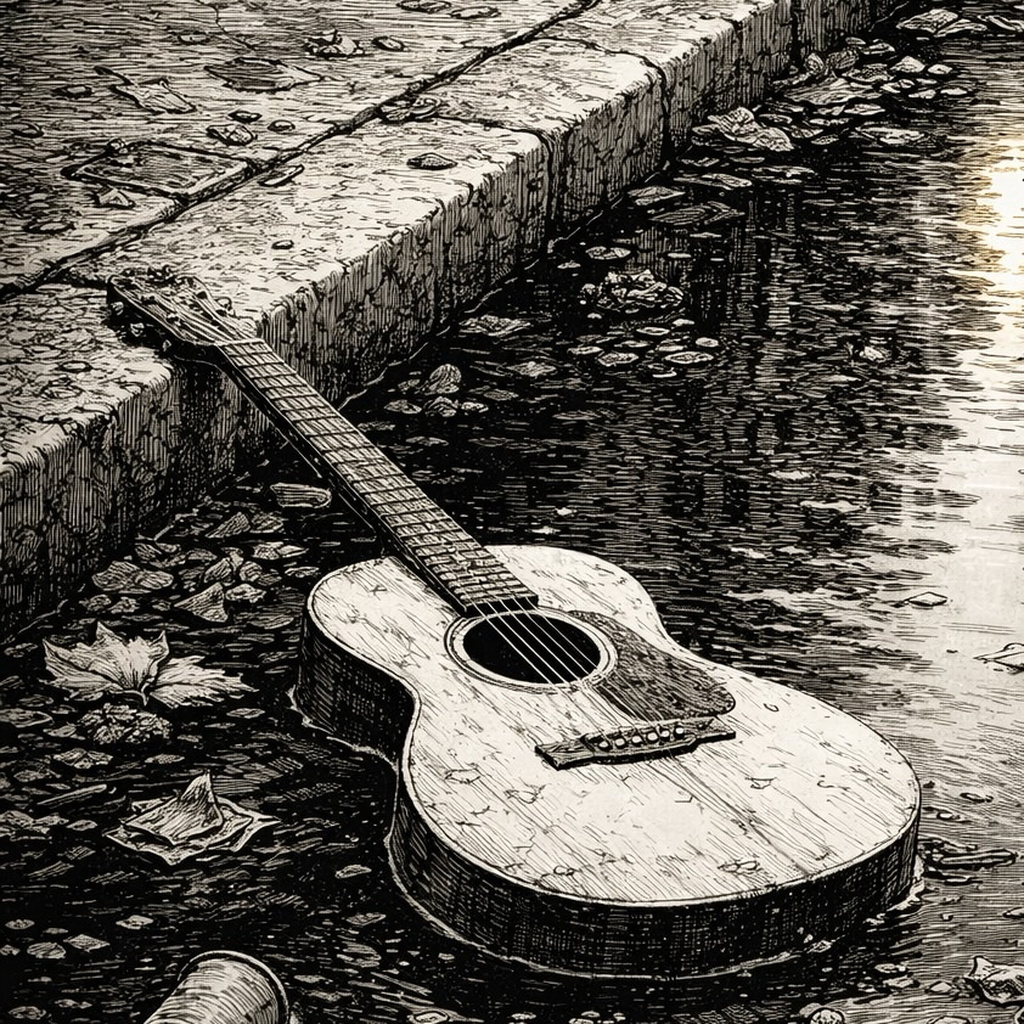
A still life in the gutter with guitar. A public waltz on a wire in the wind without a net.
The addict read monologues of lies to everyone to whom they were in debt. And gave command performances to benches and robes. They pleaded their lives before juries, before friends and family, and before god through crocodile tears and Oscar-worthy speeches.
No one nearly died on the stage like the addict. Finding creative ways to almost die was their life’s calling. And dying was their life’s art.
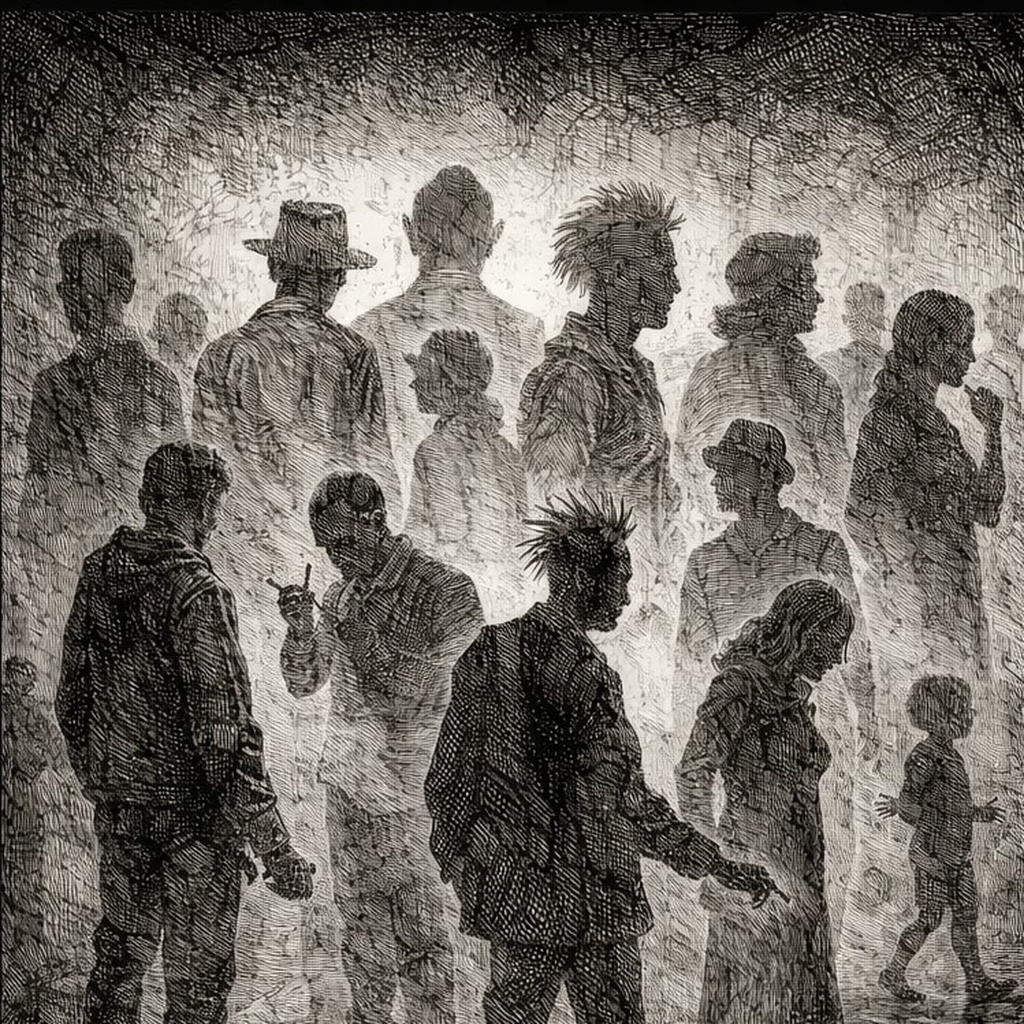
“All men are the children of death.” the man in black told Brother Rook calmly. “In one life, one man kills countless beings.”
Death proceeded to count the ways men killed on long, bony fingers.
“You people kill to survive,” he said. “You kill for fun. You kill for food. You kill creatures for their skin, flesh, and bones. You kill yourselves both fast and slow. You kill each other by the thousands. You even found a way to kill the planet. That’s impressive.”
The man’s voice sounded incredulous. “The damned thing has been here longer than I have, and you found a way to kill it,” he said.
“Of course, Women balance out the scale,” Death continued. “By giving and nurturing life, but you lot are, by your very nature, the children of death, and I’m so proud.”
Rook was a little freaked out by the man, or it could have been the cocaine in his system, the beer in his empty stomach, or the tightness in his chest. “I should probably get back to playing. It was nice meeting you.”
“Did you know your mother wanted to kill you before you were born?” Death said.
Rook cocked his head to one side. “what the fuck did you just say to me?”
Brother Rook raised his voice, but he wasn’t so much angry as he was frightened. His mother had told him many times that she wanted to abort him when he was a child, but how did this stranger know that? Or was he just being racist?
“I tricked that young human into giving birth to you.” Death told him. “So, in a way, you owe me your life.”
“Okay. No.” Rook was furious and practically growled as he spoke. “First of all, you can’t kill something that hasn’t been born.”
Rook was annoyed by how much time he had wasted with his new friend as the day slipped by and his heart beat faster.
“Everybody wants to do things backward,” Rook insisted. “First, you’re born, and then you die, not vice versa. I can’t stand that shit. Who knew death was anti-abortion?”
“Of course I am,” he agreed. “And thanks for not calling it pro-life. It’s such a hypocritical moniker for a philosophical position held by some of the angrier members of a race of such creatively spectacular killers.”
“I think my mother may have wanted me to kill myself.”
“Of course she did,” Death agreed with a smile. “She hated me, and you look just like me.” Death stroked his bald chin like a cartoon villain.
“Why does she hate you?” Brother Rook asked, ignoring the obvious fact that they looked nothing alike.
“I lied to her.” Death said sadly. “I said I would marry her if she gave birth to you, and once it was too late to abort, I married someone else. I have a lot of wives, but I’m very particular about who I marry. She really should have known. I lie to everyone. Death is a liar. But why didn’t you?”
“Why didn’t I lie to my mother?” Rook asked.
“Why didn’t you kill yourself?” the man corrected him. “You were miserable. The rape. The beatings. The psychological torture.”
Brother Rook took a deep breath and began preaching, “I had help from people. People who were angels in disguise. People who shined in the darkness,” he said. “Besides, being miserable is temporary, just like everything else.”
The afternoon drifted as a woman in a blue dress with a small child holding a tan teddy bear threw some spare change into Rook’s cap even though he wasn’t playing any music at the time. He thanked her and continued.
“I know sometimes it doesn’t feel that way, but it’s true. There is always something exciting about to happen. Even when it’s awful, it’s heartbreaking, entertaining, or breathtaking. It’s like Shakespeare. It’s a tragedy or a comedy until it’s history. Being alive is one of my favorite fucking things,” Brother Rook testified. “Even when it’s miserable, it’s wonderful.”
Death nodded in agreement and felt ashamed. He began to list his favorite things about life. “My favorite things are touching, hearing, seeing, tasting, and feeling. Even when it tastes or feels like nothing, it‘s still more interesting in comparison to what I normally get.” Death reached his hand out as if to shake and said, “Touch my hand.”
“Am I gonna die?”
“I didn’t say take my hand. I said touch my hand.”
“No. The touch of death is a metaphor.”
“That’s only in the movies.”
Rook touched him. “You’re ice cold,” he said.
“I’m not only the lord of death. I’m also a client,” Death teased. “Being alive is never boring,” he told The Rook. “Sitting around doing nothing is damn sight more exciting than being dead ever was.”
Melvin Hawthorne swallowed and released a giant burp that felt sharp from his stomach to his throat. He suddenly felt lighter. He felt like opening up to his new friend.
“I had a girlfriend in high school who always tried to get me to make a pact with her,” he told Death. “We didn’t date. She was just a friend who was a girl. She tried to get me to go first. I don’t think she was going to do it, so I chickened out. I wanted to fuck her so bad, she could have convinced me to do nearly anything.” Rook lamented.
“I would have done anything short of killing myself to get in there, but she aimed too high.” Rook tapped the body of his guitar with his fingers in rapid succession. “It took me a lot of years of chasing after her pencil skirts for me to realize that she was never really my friend. It was all an experiment. She was testing her power, seeing what she could make me do.”
“You’ve done it.”
“I have and I’m not proud.”
“Now you see them for what they really are.” Death held his frail and color-drained hand up to the sky and pretended to toast with an invisible glass. “To the death of friendship,” he announced, then he threw the imaginary shot glass back and swallowed hard.
“She was a racist cunt who fed off my misery.” Melvin said. “I wonder how many black men she convinced to off themselves.”
“That’s horrible. Do you want her dead?”
“What?! No. Everybody’s already miserable enough. She’s probably lost in the desert of adulthood, slowly killing herself with cigarettes and alcohol.” Melvin imagined. “Let her suffer,” he said.
“Did you know she ditched me on my birthday because I had a broken foot, and we couldn’t get into a club? She went in by herself and left me outside in the rain.”
“That’s awful. You want me to end her?”
“Stop asking me if you can kill people for me. Is this what you do? Try to get your children to off each other?”
“YES!!!”
“You’re horrible.”
“And now you get it.”
“Now I get that you’re awful?”
“I never said I was a role model.”
“You’re not the lord of death. The lord of death is brutally honest and empathetic. Death is a transition from one state to another. Death is like a taxi that takes you to the airport and onto your next flight, be it heavenly pure land, reincarnation or eternal bliss, limbo or the bardo. I’ve met death many times, and you are neither honest nor kind.” Melvin told him. “You are the devil.”
“Now you’re getting it!” Death shouted.
“And you’re a bully.”
“We have a winner, folks!” Death proclaimed with a flash of his wild blue eyes. “We have a winner.”
“Winner of what?” Melvin asked. He was agitated and confused. Death had angered, bothered, and frightened him. His t-shirt felt tight around his neck and his chest, but now he was ready for the challenge. He was ready to box with this devil. It felt good to be alive. “What did I win?” he asked.
“The game of death, silly.” Death smiled. “What do you think we’ve been playing this whole time? You were scheduled to have a cardiac event, a fatal heart attack. A heart failure in front of that woman and her child. I was only trying to get your heart pumping to clear away the danger, and I did.”
Brother Rook didn’t quite believe him, but he’d felt tightness before, and it was gone. “So now what?” he asked him.
“Four more years of living.” Death told him. “Four more years of life.”
“That’s all?”
“That’s enough.” Death said. “You’re a homeless addict who sleeps with multiple partners and has done more drugs than most people have ever seen in their life. That’s more than enough.” Death admonished him. “And eat a salad. You’re not the main character. It’s not about you. You could live an entire life In four years, but you probably won’t.”
“I haven’t had one of those, you know,” Melvin said soberly.
“I know, son. You’ve been too busy getting high, giving advice and buying beer and pizza. You were counseling runaways and playing songs on your guitar between bumps of cocaine. You need to help yourself,” the man instructed him.
“If you see something you like, you need to help yourself. If there’s a slice of cake on someone else’s plate, help yourself. If a woman falls in love with you and she’s already got a boyfriend, don’t be the good boy who sleeps alone; be the bad boy who sleeps with her. Help yourself.” Death told him. “You’ve only got four more years.”
”Why are you trying to help me?”
“I may be Death, but I’m still your father, and contrary to popular belief, Death wants you to be happy.” He said. “I want you to live a good, happy life before you die. I want you to be successful, popular, and genuinely happy before I take it all away from you.”
“You’re evil.”
“That’s what they tell me.”
“What am I supposed to do?” Brother Rook called to him as the man in black sauntered away.
“Breathe,” he said, disappearing into the weekend crowd on the crossroads of St. Marks Place and Avenue A. The corner of addiction and recovery, progress and stagnation, life and death, hero and villain. “Breathe,” he said. “You’re supposed to breathe,” he called back at him. “You’re supposed to breathe.” ||
Read another story → · See all of M. Christopher Horton’s stories →
Share this:

I occasionally say interesting things. Sign up for the newsletter →
Comments are closed.