Mei’s journey to the Walled City began when she was sixteen, on an old Riwoche with solid knees and a pleasant disposition. She remembered hating that old horse when she was a kid. It was light brown with reddish spots, and it had nearly killed her.
Every year on her birthday, her stepmother put one silver coin in Little Mei’s coin purse. She had fourteen pieces of silver because she got nothing on her first birthday and left home on her sixteenth.
There were three kinds of currency on the island: copper, silver, and gold. Only the banks handled gold coins, and they were worth one hundred silver. Every person on the islands had to have at least one copper, or they could be subject to arrest. One hundred copper coins could get you one silver, and Mei had fourteen.
Little Mei gave the livery stable one silver coin from her birthday money to keep the old mare with her father’s brand. He would have done it for nothing.
She caught a ride out of town on the back of an ox-drawn wagon full of crates with new leather belts and pouches that bore her father’s name. The belts were headed north. They left before sunrise.
She tipped the driver a coin and spent another silver on lodging for one night at a sleepy little roadside inn.
After a complimentary breakfast, Mei found transportation with a bird catcher and his elderly mother who were heading to Kabe Ichi. They hadn’t planned on making any stops. She gave them five silver coins.
It took several days to reach the Walled City, so Little Mei shoved some sugared berries from the breakfast bar into her rucksack, along with a loaf of bread and a hunk of dried meat.
The Island of Practice was a gorgeous country with fields of multicolored grains, groves of fruit trees, miles of empty roads, yaks and more yaks, and houses tucked away on private estates.
Her native island sat upon a hill at a much higher elevation than the Island of Patience, and all four islands were formed by the same volcano.
“Gwanhaengseom, Innaeseom,” Mei sounded out the symbols on the far side of the sign as she left her home island for the first time.
The Island of Patience was a population explosion compared to where she was from. There was town after town of identically modest homes, schools, and temples with middle-class values and commuters on bicycles.
The wagon only stopped to water the horses and let them stretch their legs. It was only a couple of days before another sign announced their departure from Patience before crossing the bridge to “Jinjeonseom, Gwanhaengseom,” and Mei read it aloud as they descended to the Island of Progress.
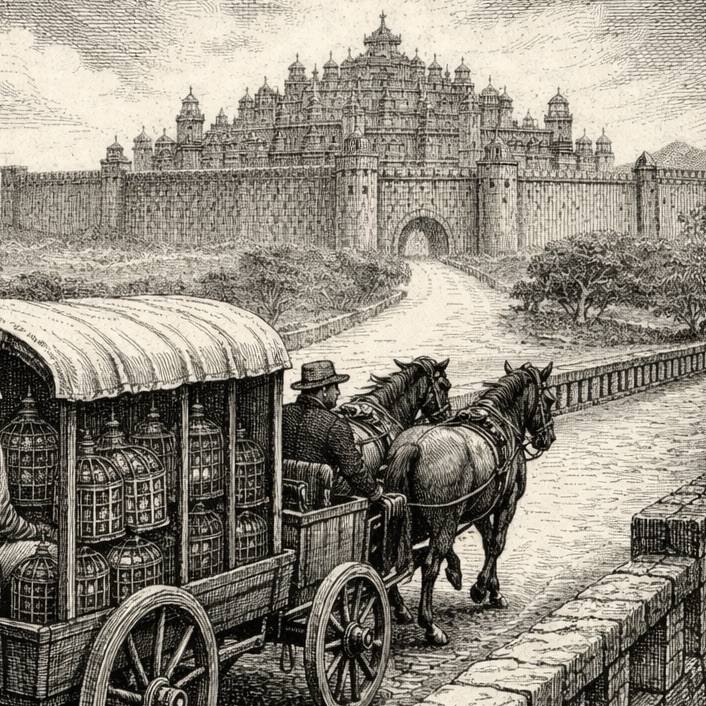
Three thousand years ago, the four islands of Shanqui Jian did not exist. The island nation’s emergence was the result of an undersea eruption. Kunlun, the ancient volcano, formed the archipelago two hundred years before the first settlers turned these fertile lands into one of the wealthiest countries in the region.
Giant walls formed by massive stones grew taller as the wagon got closer to the city. It stood surrounded by water and stone, a marvel of engineering, with walls tall enough to keep the sea at bay and a population of millions protected from the waves.
The religion, language, food, and fashion on the islands were a mixture of Chinese, Japanese, and Korean cultures. Their religion was a potluck of Zen and Tibetan Buddhism with considerable Catholic and Christian influence. The most successful invaders didn’t bring weapons; they brought bibles and books.
A majestic and welcoming sign read, “Kabe Ichi, The Walled City,” with a smaller sign and an arrow showing how to get through to the capital. It was twenty miles straight up the side of the mountain to the capital city, “Joukamachi Tongjeungseom,” Mei read aloud, the last island, the Island of Pain. Most people stopped at Progress before they got to Pain. For most travelers, Kabe Ichi was their final destination.
The city spanned most of the island from shoreline to shoreline. There was a copper mine at the center, several huge parks like forests, factories, an airstrip, a theater district, a red-light district, several residential districts, and a bustling downtown area.
Little Mei parted with five more silver coins at the city gate. She was told it was for entry. She was a woman alone who had no job, no prospects, and no family in the city. They counted her money before telling her how much it was.
Little Mei breathed easily, taking in the spectacle of paved roads and covered wagons, sidewalk shops, four-story buildings, and women in fancy hats.
She had one silver left in her purse, and everyone stared at the girl, for she was the most confident young woman they had ever seen.
She needed work and a warm place to sleep, so the monks at the gate pointed her downtown to where the rival gangs were always looking for new blood.
Little Mei found work in a Bangpai pleasure house with a dancing stage and a kitchen. She was too green to cook, too young to drink, and much too big to dance, but there hadn’t been a show there in years. The drinks were watered down, and the kitchen was only open on Sundays.
They let her sweep in exchange for a place to sleep. They let her clean, and she was big enough to intimidate the weekend rubes.
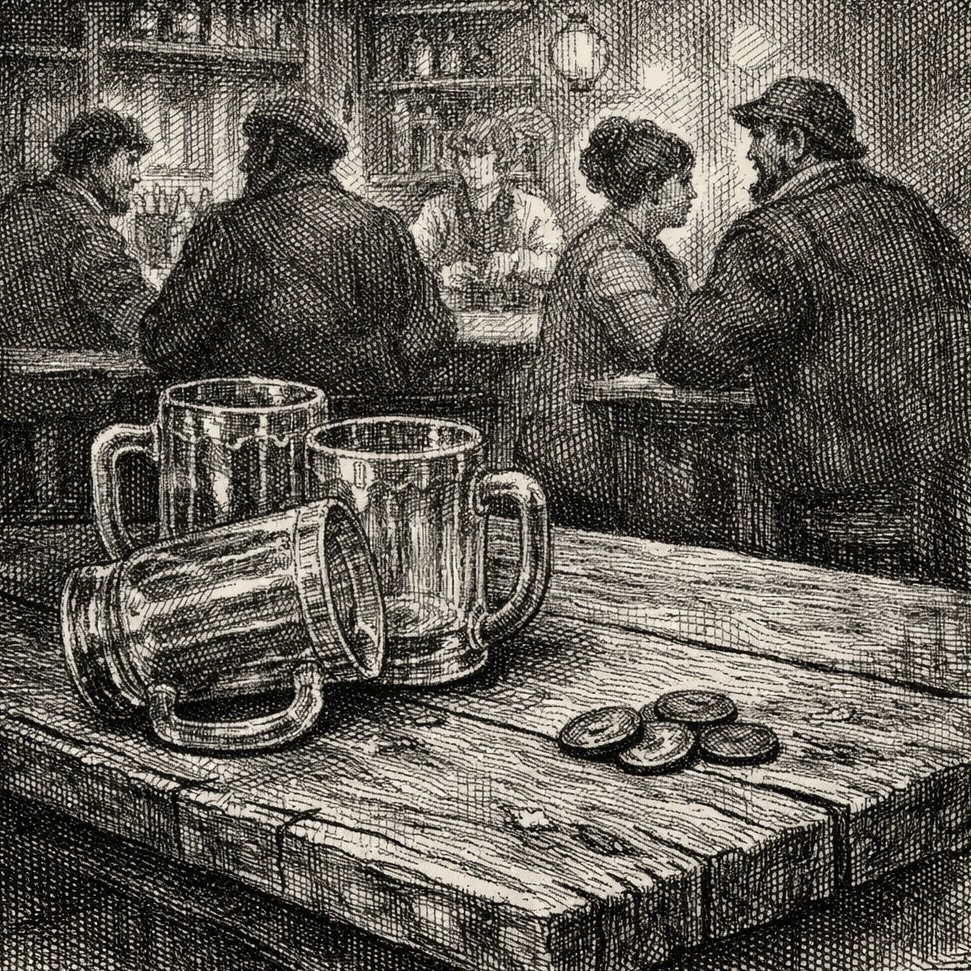
There was drinking out front, where she worked, working girls upstairs, and gambling in the basement. Every weekend, the copper miners rolled down the hill to spend their pay. Mashed whisky, rice wine, and mediocre massages were all watered down for profit.
There was zinc and copper in the soil and in the water, and the miners tracked minerals over the wood, so it was Little Mei’s job to sweep the floors, clean the vomit, wash the swill out of corners and cups, and roust the tramps away from paying customers.
She became irreplaceable. It was Mei who did the laundry. It was Mei who added water to the beer and to the wine. Before long, it was Mei who gave the place color and personality.
“Where’s Mei?” they’d say. “Sweet Mei.” “Little Mei.”
She was twenty in the blink of an eye. She was there for a year, and another, and another. She had planned to eventually make her way up to the capital and the university, but like so many before her, she got stuck in the cycle of familiarity and contentment.
The Bangpai and Xindjia gang leaders competed for every inch of territory downtown. They would steal, gamble, drink, smoke, fuck, and fight nearly every day of the week, and then on Sunday morning they would confess their sins to a local priest or a monk, and then do it all again.
They bought forgiveness with a few coins.
Enter Rebecca, the unapologetic sinner.
Rebecca had a face that was round and flat, like a wheel of cheese or a full moon. Gang leaders said she was far from pretty and didn’t want to hire an ugly whore when she arrived from the capital in Mei’s eighth year with the gang, the same year the city installed sodium street lamps that lit up the avenue and made life a little safer for the unaffiliated street walker.
The skinny teenage hoodlums with their leather clubs and tiny switchblades called her Lady MacDeath because Rebecca was addicted to street drugs, street drama, and was always in crisis.
Charlie called her bad for business, because Lady MacDeath had an expensive habit, an upper-class demeanor, and a temper that scared away customers.
Mei would chase her with a broom like she once chased a bat that had gotten caught inside her mother’s house.
Mei was envious of Rebecca’s beauty and the way she reset each day like nothing had gone wrong the day before.
“The past is the past,” she’d say, and Mei thought that was beautiful.
By year nine, the capos entrusted Mei with collecting dues from local shops. She became their enforcer with widows, women, old people, and the working girls who owed rent.
She never came back empty-handed. She was large, had a bit of a temper, and even when she smiled, it was scary. She was sweet, but no one wanted to see the other side.
Only Rebecca’s opinion mattered to her.
Rebecca was a goddess with a round face like a moon disc and a long, wide mouth full of teeth that never fully closed. When she was with Mei, she wasn’t an addict with stringy arms and uneven eyes that went off in different directions. She was a black light illuminating the fluorescent lessons from the shadowy parts of Mei’s early education.
When Rebecca looked at Mei with her wonky eye, she wasn’t looking past her and to the left but looking through her, to the next stolen dream and the subsequent hard lesson Mei would have to learn.
Becca was an angel when they were alone, then devilish, like a universe unbalanced. She was Mei’s greatest teacher even when that same universe seemed to want no part of her.
She was an addict and always in pain with an empty pipe, so the feeling was entirely mutual.
There was a boarding house above a laundry. The laundry girls slept four to a room, but Mei could afford a single. It had a rear window to escape the heat and the smell of soap and bleach from underneath.
Rebecca moved in like a stray cat, and together they would sleep off the night’s activities. In the steam of the stained sheets, scorched clean, they became lovers.
Becca, or B, as Mei called her, told the neighbors they were sisters, because homosexuality, like witchcraft, was punishable by castration for both men and women.
Little Mei’s “sister” had been educated in the capital. She could read and write in all four languages spoken on the islands. They said she was writing a book, and that’s why she kept strange hours.
The two women feared being overheard, so they exchanged love notes and letters from inches away, handing slips of paper back and forth, writing down dreams and proclamations and poems, then eating them to seal the covenant.
Mei and Rebecca borrowed novels, poetry, and paperbacks from local libraries and failed to give them back. Little Mei smiled at work as she strong-armed shopkeepers and intimidated delinquent street girls.
Rebecca and Mei lived pay to pay and sometimes day to day, and neither one saved a coin. Mei went deeper into debt to the gangsters, and Rebecca became further indebted to the pipe. They worked nights, slept days, and hardly saw each other out of bed.
Mei hollowed out a brick beneath their bedroom window, where she thought to stash coins they would save. There was nothing in it but love letters and messages of desire, enough evidence to convict them both.
One note said: B plus M equals Love. And one note would be their last.
B was always high or she was not, and they would fight, or she would leave, and M would forgive and buy more drugs.
There was never any copper, and they would never get their fourteen pieces of silver unless Mei embraced the villain in herself.
There was always money in the strong box. Rebecca knew where Capo Charlie kept it.
“You’d be dead without me,” Mei would write.
“I don’t need you to take care of me,” B would answer.
It was upstairs behind the bar, right next to his desk.
“You’re better than this life?” M would write.
“I know what I’m doing,” B would answer.
They could sail to China or the Koreas and smoke opium for months, depending on how much coin was there.
“You’re going to be the death of me,” M would write.
“I thought you wanted freedom,” B would answer.
All they needed was the key and an opportunity.
“Money doesn’t buy freedom—” Mei said.
“It buys opium,” – the last note. ||
Be First to Comment