In the fall of 1920, the first cars came to the islands of Shanqui Jian and to the streets of the Walled City on the Island of Progress. The cars had four seats and a hand crank to start. They were slower than the oldest horse Mei had ever ridden, and she did not enjoy the ride.
There was too much jostling for her liking. She moved back when it lunged forward, forward when it stopped, up and down with every bump, and side to side with every turn. The ride was chaotic enough, even had her hands been untied, her face uncovered, her fate unclear, she would not have recommended it.
A burlap sack that smelled of old snap peas had been placed over Mei’s head. The people who had employed her were not happy. She was about to be fired.
Along with, “I’m sorry but we’re going to have to let you go.” a firing came with a retirement package that included a shallow grave.
There were fourteen pieces of silver in the junior capo’s strong box. Capo Cha Li, believed that either Mei stole them or Mei’s nasty roommate. Either way the coins were missing, the girls were the only suspects, and the gangs gave no second chances.
Little Mei found it hard to breathe through the burlap with the gag. She couldn’t see, but she thought they must be taking her somewhere remote, for her last day, and it wouldn’t be romantic.
Her first experience in a fancy new motor car was undoubtedly a terrible one, but when the car stopped, her day would get worse.
The car stopped with a jolt, and Mei immediately missed the movement. Stopping meant the destination had arrived. The taste of bile and salt, the smell of trees and death, the desperation and the tightness, all marked Mei’s end as she was dragged from the backseat and lowered onto the ground. She would never return those books to the library.
They say that when someone is near death, their life flashes before their eyes. This happens because Kalaparusha, the Lord of Death, reads the book of their life and they see what he sees as he sees it.
Mei loved to read and couldn’t help but wonder what the death lord thought of her story. It was the story of a fiercely independent farm girl who moved to the big city and became a criminal. She wasn’t exactly the hero but there was sweet love story and a solid third act.
“So how did we get to this point?” Capo Li asked her. “Why are you making me off my best girl and she’s not even a whore?” He was visibly upset. “How did we get here?”
The day began with Melvin Hawthorne and Mei Lubaba’s battered and broken hearts beating together from miles, decades and worlds apart. They lived at different times but their heartbreak occupied the same space on the same page that death was reading, and he hated when people broke the rules.
Mei felt cold on the third floor of an old warehouse by the northeastern dock of the Walled City as the sun broke over the East wall.
Melvin felt alone in his childhood bedroom on the second floor of his family house in Woodstock, New York as the moments before morning crept in to remind him of school.
She could barely see the central mountain on the fourth island, her original destination, as it loomed like the Sword of Damocles over Kabe Ichi.
He could barely see a future in a world that mistrusted him for his skin color and hated him for the way he shared his misery with others.
The blood orange sun washed the colors from everything it touched as it rose in both their worlds. To the North, dirt roads and paved walks, horses and horseless carriages brought judgment and death as they searched for Mei’s hiding place. In the West, broken promises, abusive parents and boxes of stuff, still unpacked, were fading away with the last of the hope and the boy’s salvation.
Their lives were anything but parallel.
Little Mei would soon be found hiding on the top floor of an old warehouse that had once held a famous martial arts studio, long before she was born.
Melvin hadn’t been born yet when he entered that same warehouse and occupied that quiet, dusty room with a shared mind.
Mei wiped her tears and seemed unfazed by the sight. Melvin was, to her, a young African boy whose body had passed through dozens of boxes of festival decorations, masks, and streamers. He wore Central African tribal clothing and seemed unaware of his surroundings.
Apparitions and phantasms could not feel the very real air, but she watched as Melvin passed through solid objects that remained undisturbed yet bounced sun rays off of clothing and skin that could not be.
Before the car ride, before the confession, before she knew whether Rebecca was alive or dead, she felt betrayed and heartbroken, but instantly better when she saw the young African boy walking toward her. It felt as if everything had been decided long ago, and it would all be okay.
“Strange dream,” Melvin thought. It was like watching a movie but from inside the screen. It was an old Kurosawa period piece from the Far East with no subtitles, and absolutely everything was filthy.
Melvin could feel his heart in the room. He was no longer in his bed in his house in his hometown. He was not in his area or his normal era. Perhaps not in his right mind.
“Hello,” he said tentatively, unsure if she could understand him.
He knew how to say hello in thirteen different languages, but she was not Chinese, Japanese, or Korean, Hawaiian, French, Spanish, Italian or Hebrew. She wasn’t English, German, Swahili, Cherokee or Elvish and that was the extent of his vocabulary.
“Are you alright?” he asked the older Asian woman. “It’s okay if you’re not,” he added quickly. “I think I may be having a dream and things don’t always go well in my dreams.
She did not respond.
Melvin’s breath visibly quickened as Mei Lubaba moved for the first time. It was hers, not his. When he exhaled, she inhaled, and vice versa.
Melvin briefly considered bowing but didn’t get to it as Mei stood quickly and bowed deeply three times in his direction.
Melvin was neither excited nor afraid. He possessed a pleasantness that was delightfully dull and meaningless. It could only be described by what was absent: anger, anguish, anxiety, frustration, and that all pervasive hormonal emotional imbalance. He felt nothing negative at all, but that was impossible. He was thirteen
“I could float in here forever,” Melvin thought—or maybe said aloud or it didn’t matter.
Mei finished her prostrations and moved from the red banner blanket to the dust-covered floor. She crossed her legs at the ankles and lowered her eyes.
“Are you ignoring me?” Melvin asked her.
“No,” she said. “I can hear you in my head. It’s like you’re speaking from inside me.”
“You’re Mei,” he told her. “Little Mei Lubaba.”
“And you’re Mel Rook.”
“Melvin.”
“From the future.”
“Woodstock.”
“And you’re here to save me.”
“I’m not really here,” Melvin explained. “I’m in my bed in New York State and this is a dream, and I’m not a hero. I’m nothing.”
“Did she tell you that?”
“Who?”
“The goddess,” Mei replied, “because I see you with my own eyes, and you do not look like nothing. You look like a young prince from an African tribe who was born to be the hero.”
“I’m thirteen,” he said. “And I’m not African. I’m black.”
Mei knew African people ranged in pigment from high yellow to purplish blue, but she had never heard this term before, and did not understand the implication.
“I wouldn’t say that you’re black,” she corrected him. “We all have darkness in us, but the sun warms everything including the shadows.”
The goddess Ekajati had the darkest skin Mei had ever seen—darker than the boy in the warehouse—but even she was not black. She was flesh and blood, living. Black was charred. Hidden. Evil. Death was black. The end was black. Black was what we faded to when there were no more words. Black was not a category of person it was an uneasy feeling.
“I’m a Black person,” the boy corrected her again.
And again she said, “I wouldn’t say that either. To my eyes, you are a bright and shining lord.”
The woman in the warehouse made him nervous. “Are you fucking with me right now?”
Mei didn’t answer him.
At thirteen, Melvin Hawthorne assumed every dream was a sex dream and had dressed the older Mei Lubaba inappropriately. In his mind, she was a hula girl from a 1950s musical—something with Elvis Presley or Frank Sinatra.
“Isn’t it funny how dreams always have a backstory?” he said. “They start in the middle. Like right now—I know dangerous people are looking for you because you stole their silver.”
“I didn’t,” she said.
“I know. But they’re going to kill you anyway and that’s an unfortunate backstory.”
“And you’ve been thinking about giving up because you don’t believe the misery will end, and the little girl next door has moved away.”
“I’m not gonna do it, you know. I’m just being dramatic in my head.”
“I know,” Mei said. “You’re only thirteen and we cannot lie to each other, because only one of us is dreaming.”
“You’re going to be shot. I think that’s how you die.”
“Well, that’s depressing.”
“I’m sorry.”
“Don’t be sorry,” Mei said. “I brought this on myself. It’s my karma. It’s my death.”
“I’m not as strong as you,” Melvin told her.
“A body or a mind can be as strong or as weak, as circumstances dictate, but we could both use a little self-compassion.”
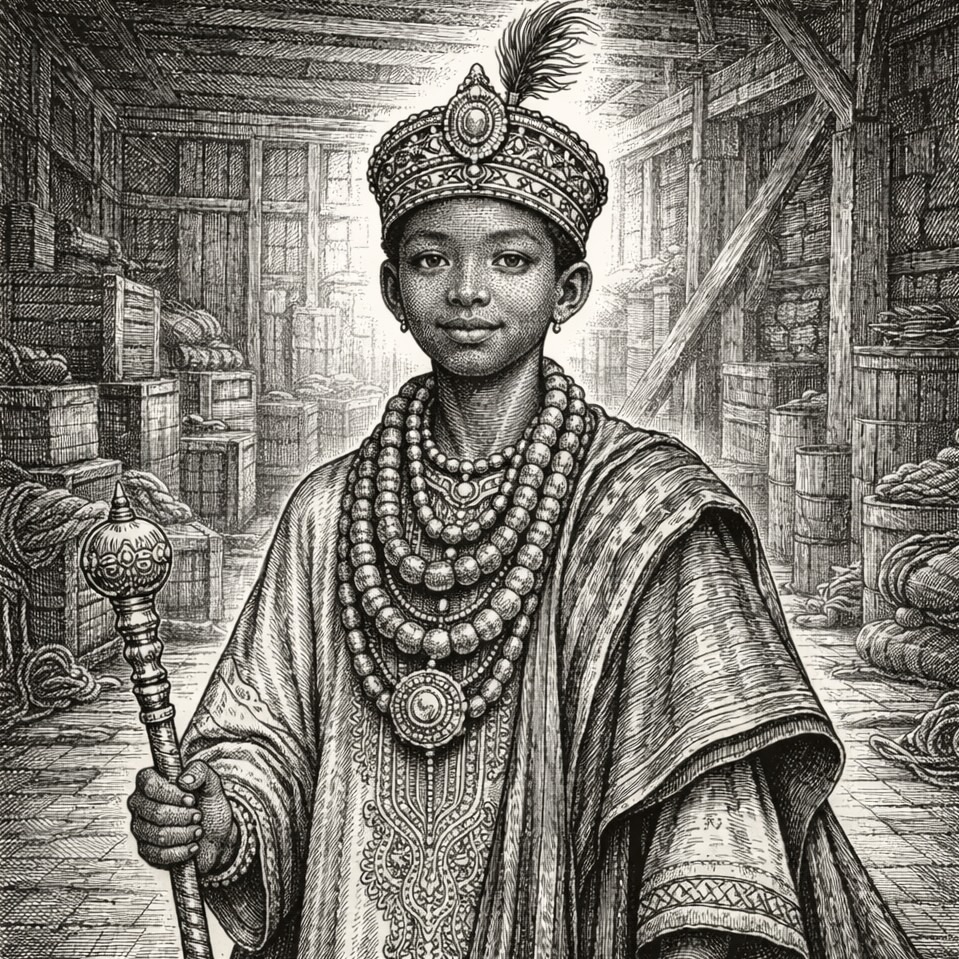
She looked down at the image of her body and the clothing that Melvin had projected onto her.
“I wanted to picture you naked,” Melvin said. “This was the compromise.”
“I’ve met goddesses who wore less,” she replied. “And look at you. I’ve made you wealthy and important. I’m no better. At least you made me pretty.”
“Miss Haddigood says, ‘The way you look doesn’t define you.’”
“She sounds brilliant.”
“She’s my teacher, but she doesn’t make enough money.”
“I apologize for imagining you wealthy, Melvin Hawthorne,” she said. “Your coin purse doesn’t define you as a good or bad person. Capitalism favors the sociopath.”
“You’re really smart.”
“I read a lot.”
“Me too.”
A closed loop of consciousness, they sat together in silence, each the other’s past and possible future.
“You think about death too often,” Mei said. “You’re too young for that shit.”
“Here’s to absent mothers and horrible fathers, or absent fathers and horrible mothers,” he toasted her.
“And so few positive role models.” Mei agreed.
“We both fell in love with the first girl who was ever nice to us.”
“That’s all it takes sometimes.”
“We both fell in love,” Melvin said it again.
“But love left us,” Mei added. “Perhaps we shouldn’t have based our happiness on things we don’t control.”
“You never answered my first question.”
“What’s that, kid?”
“Are you alright?”
“You’re the second god to ask me that,” she said. “But tell me, did I create the gods or did the gods create me?”
Dreams were a lot like time travel because paradox was the enemy of both. If this were a dream, it would depend on whether I was dreaming you or you were dreaming me. Or we were both a part of someone else’s dream on top of that dream.
“It’s turtles all the way down,” Melvin replied.
“Why turtles?”
“It would take too long to explain.”
His thoughts made Little Mei laugh out loud. “I like the way you think,” she told him. “You must be dreaming of me because I couldn’t be dreaming of you. I can’t even imagine you. You don’t even exist yet.”
“I don’t think that’s the way time travel works,” Melvin insisted.
“You still have books in the future, right?” Mei asked him.
“Yes, we still have books, but people don’t read.”
“Have you read The Time Machine by H.G. Wells?”
“No,” Melvin told her, “but I’ve heard of it. I tell people I’ve read it.”
“It’s very popular,” Mei added.
“It’s about time travel?”
“No, it’s not. It’s about dreams, the vivid dreams of a man named Hillyer about a time traveler that did not exist.”
The second thing that dreams and time travel have in common is that neither have a past. There is no time before time travel. If time travel will exist then it has always existed. In the same way there is no moment before a dream. It starts in the middle and it has always been as beginning-less as consciousness itself.
“They call it science fiction for a reason,” Melvin said. “I’ve always liked Star Trek.”
“Is that any good? I don’t know it,” Mei admitted.
“Time travel, space battles, dreams, aliens, you’d love it.”
“But you’re still from the future, so the fact remains that you must be dreaming about the past while I’m dreaming about you,” she told him. “It’s the only thing that makes sense.”
“That’s absurd,” he said.
“It’s turtles all the way down,” she stated proudly.
They both laughed, and their laughter was so similar in sound that it made them laugh even more.
“I won’t remember this when I wake up,” Mei realized, suddenly acknowledging the law of cause and effect. “You can’t remember something that hasn’t happened.”
“How do I know you didn’t make me up?” Melvin wondered. “Maybe I don’t exist.”
“You can feel the air,” she said. “You can feel your heart is here, in this room. She touched a hand to his chest. “I can feel your emotions and the turning of the world beneath your feet,” she told him. “If you are my creation, then I am of this world and the physics and feelings tell me—”
“We’re not in Kansas anymore.”
“How right you are, Toto.”
Melvin smiled. “You know The Wizard of Oz?”
“Finally a book we’ve both read,” she said.
“I’ve only seen the movie.”
“They’re going to make a movie?” Mei said.
“Yes. And it’s going to be perfect. You need to stick around for that one. I’ve watched it a million times.”
“I’ll do my best,” Mei said.
“That’s weird to me,” Melvin explained . “Because I was going to suggest you do the opposite. Whenever I’m being bullied, I do nothing. I don’t attack. I don’t deflect,” he said. “It makes the demons very angry, and that’s when they make mistakes. Don’t fight. You didn’t do anything wrong. Just give in and wait for them to make a mistake. You’ll be alright.” His voice became cartoonish. “I know this,” he said. “Because I’m from the future.”
“You need to get back to your own time, future boy.”
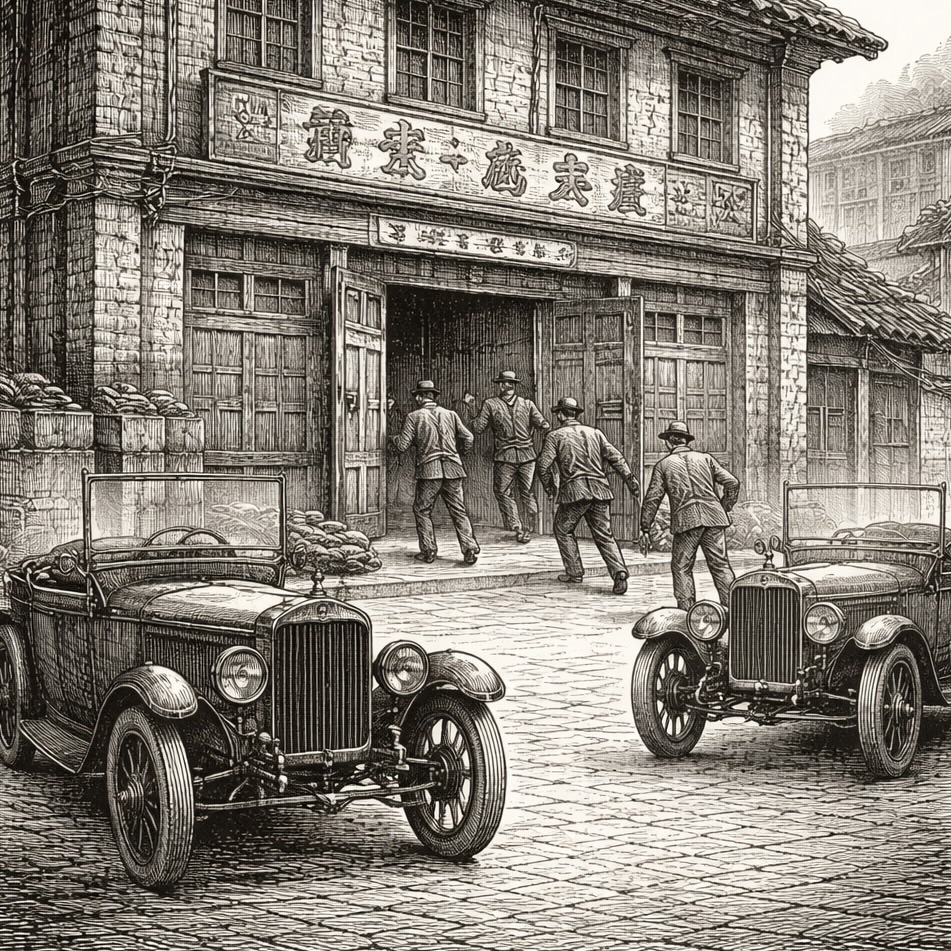
The screeching of disk brakes, heralded the coming of four men with club, gag, rope, and sack. And gun and gun and gun and gun. They left two vehicles and forced the double doors downstairs before stomping their way up the steps to Mei’s little hiding place. How did they find me? I guess it doesn’t matter but we’ve been here before.
She had weapons. She had planned ahead. She had high ground. She could take them. They were punks.
“You have to go,” she said. “You have to wake up. I don’t want you to see me do this.”
“I’ve seen death before.” Melvin told her. “I saw a girl get shot right in front of me.”
Mei had a death grip on an old sword. The plan was to bottleneck them at the warehouse door with their backs to the stairs and a fall back position. It would be as easy-
“As what?” Melvin asked her, his heart racing, his nervous system firing, and the pain of too much adrenaline in his solar plexus making it harder to breathe.
“My death,” she said. “You need to wake yourself up right now.”
“I can’t,” he said. “I’m trapped in Kabe Ichi just like my father said I would be.” He rubbed his hands, feeling blisters forming in a place that gripped no sword. It was surprisingly sharp after all this time.
“What do you know? You’re just a kid.”
“I know I love you,” Melvin said.
“There you go again, falling in love with the first girl who’s even a little nice to you. You said it yourself. I’m already dead.”
“I could help.”
“Wake up, Melvin.”
Mei was startled by the crashing sound of a battered door and she was fully awake. These guys were not the sharpest knives in the armory. The door was unlocked and it was a sliding door, but the knuckleheads proceeded to smash the wooden frame.
“I’m already dead,” she whispered to herself as the dream slipped away, but her life didn’t flash before her eyes. She couldn’t stop thinking about turtles as she tossed the sword aside and raised her hands in surrender.
The young men stumbled in. They bound her hands and gagged her mouth. They were the ones who pulled the old grey sack over her head.
When the automobiles arrived, when the footsteps echoed up the stairs, Mei told Melvin to wake himself up. So he woke up in his bed with no memory of the dream.
Melvin had scrawled the list in a thin layer of dirt on the hardwood floor of the warehouse. Three words written in English, one under the next: Time, Wizard, Alice, like a reading list from an English writing class he had attended over the slumber.
Mei Lubaba had been a farmer. She had been a criminal. And now she was a teacher. Melvin’s middle school English teacher surrendered without a fight.
The barrel of a pistol was pressed against the back of her neck, and the thirty-year-old Mei prepared for the bumpy ride that could be her last.
If she took the money or she didn’t, they still drove her out to a clearing in the woods and it was there that her life would end.
It was there that she uttered the only other words that would delay her final curtain. The only other thing besides ‘I know where the money is’ that would give them pause.
She raised her eyes to Capo Lee after they had removed her bag and her gag and softened her up for a while. She said, “Bring me a priest to hear my confession.”
They could not refuse.
For at least another hour, death would have to wait to turn the page. ||
Be First to Comment