“While the heart is awake, the ego is asleep.”
Bitter old men in ancient temples have always found a way to elevate human beings into gods. Buddha, Jesus, Moses, Muhammed, Mary, Mary Magdalene — all of them human, all of them miraculous, all of them used as proof that you could never be what they were. Garbage people, like you or I, need not apply.
Instead of worshipping them like they’re something we could never be, we should be more like them. Become them. And change the world.
“It starts in our dreams.”
Hidden in the cosmic slop of the unconscious mind. Unrequited love. Unfinished business. Fear. Hope. Lust. The hallucinations of a worried soul.
“The heart practices one discipline and achieves a hundred,” the master said. “The ego practices a hundred disciplines and does not achieve even one.”
Enter the Daughters of Mara.
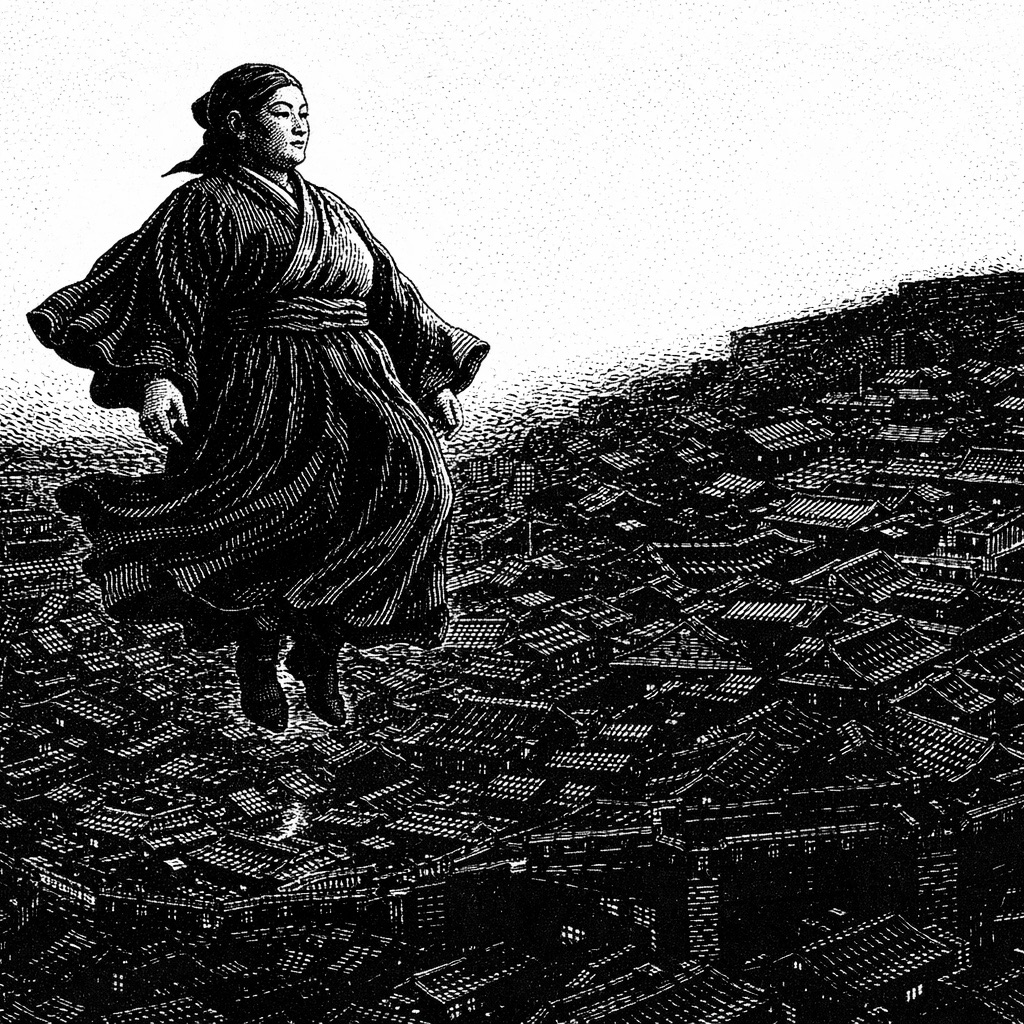
By the end of the second world war, after long days of classes, meditation, prostration, prayer, and chores, Mei Lubaba, the big boned daughter of a yak farmer, learned to take advantage of her time spent asleep to train her mind.
She had vivid dreams populated by old friends, bosses, acquaintances, and colleagues.
She rarely dreamed about the nunnery, the university, her teachers or classmates. She was never a monastic in her unconscious state. She was always a gangster, like back in her days living in the walled city. That was before she joined monastic community, before the university, and before her vows.
In her dreams, she wasn’t Sister Ruth. In her dreams she was still Little Mei. Helpless to the temptation of Mara.
Mara was the king of temptation. Ignorance was his weapon and the unconscious his playground. But he left the juicier work to his luscious and lascivious daughters — Trisna, Rati, and Arati. Beings of myth that transcended time, space, fashion, and pop culture. The Kim, Khloé, and Kourtney Kardashians of the desire realm.
Trisna, the Kim of the trio, helped poor souls covet what they did not have. The first twin, Rati, inspired the wayward to grasp onto what they already held, while her sister Arati could flip desire on its head until you hated everything about it and hated yourself for ever wanting it in the first place.
Wanting, having, and then realizing it doesn’t make you happy — that was the repeated path of the desire realm.
And underneath all of it, their father promoted fear. Fear of losing. Fear of never having. Fear of your own unfettered desire for even the most destructive and unwholesome things. Fear, above all, that you were never good enough to deserve any of it.
“Magic is nothing without the mind,” the master said to Little Mei in a dream. “We don’t discuss it openly — not because it’s secret, but because naming it kills it. Like dissecting a frog and then expecting it to jump up off the table when you’re done. These rules do not apply in dreams.”
This is special. This is evil. This is an illusion. This is miraculous. This is mundane.
The labels mean nothing. This is just some shit that happens. Don’t build it up. Don’t tear it down. Don’t do anything with it except help others cope with their shit. Label only what you don’t want. Everything else — let it be, let it happen, let it go.
If you must put a label on it, call it love. I dislike what I dislike but everything else I love.
While Sister Ruth slept, she learned to stay inside a dream when she recognized it as one — and to pull herself up to the surface when it turned dark. She learned to make small changes. Objects first, then places, then the motivations of others.
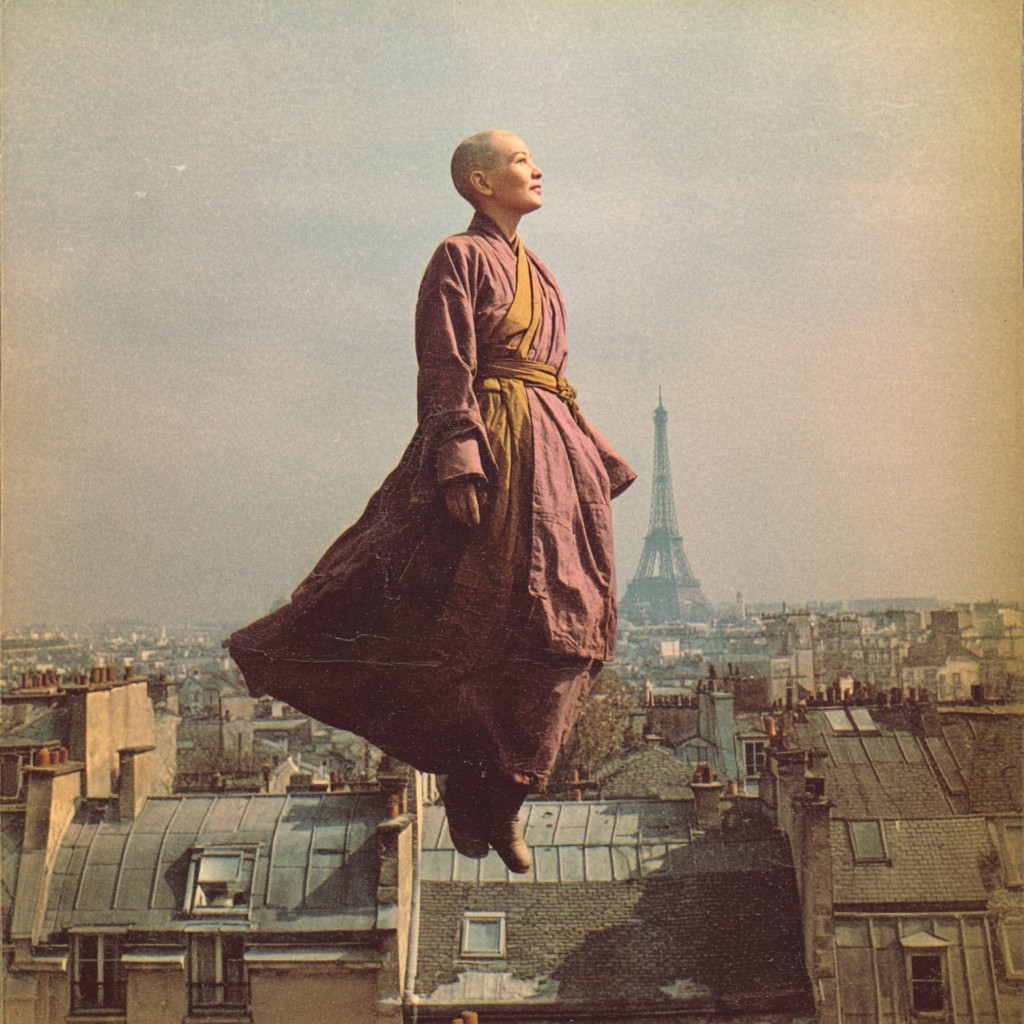
She taught herself to fly by simply refusing to come down.
Too many changes at once and the dream would lose its texture. The unconscious mind would smell the interference and reject it — not dreaming anymore, just thinking with her eyes closed.
“Knowing that something is possible,” the master said. “Not just thinking — knowing. That alone is more than halfway there.”
“And doubt?”
“Doubt is a cockroach,” he said. “Shine a light on it.”
Mei smiled. “Old bitter men have tried to take away your magic. Don’t let them bug you.”
The master laughed.
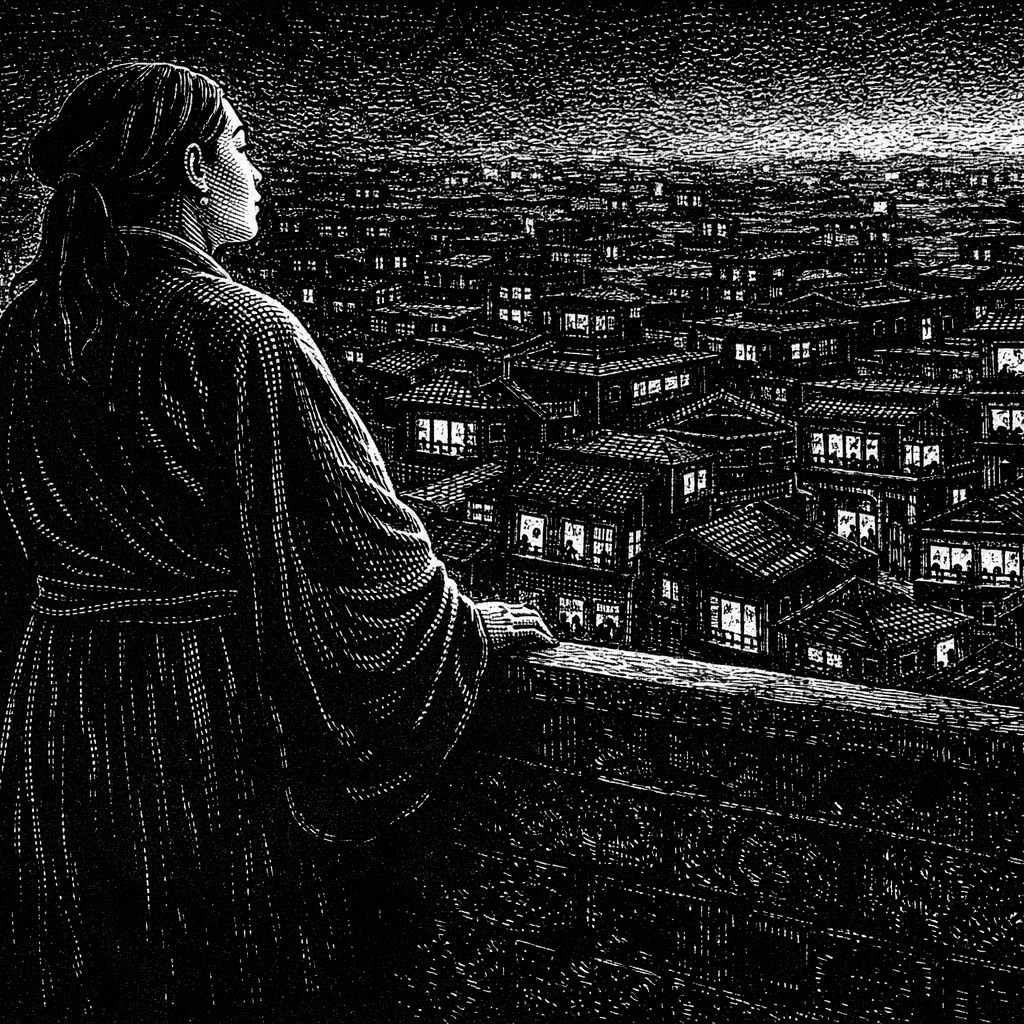
At four o’clock every morning the master taught a class on emptiness and the true nature of phenomena. He hosted gatherings of celestial beings from different times and realms — the kind of crowd that didn’t need to be introduced.
Most teachers in the waking world repeated concepts in pre-approved terminologies from traditions run by bitter old men. They spoke as experts about things they did not fully understand, but they spoke from great faith, and that alone can be beautiful.
Then the institutions added local superstition, deep seated misogyny, and senseless dogma, and suddenly it wasn’t a religion anymore — just a monumental waste of a life spent chanting and looking down on others.
“I don’t know about your other teachers,” the master said, out of respect for her tradition. “They’re probably some of the good ones. I’m just saying that the truth can stand up on its own.”
It can stand up against science, physics, mathematics, history, magic, and emotional baggage. Against changing political regimes and vastly different minds. You can tell a six-year-old child the same truth as an eighty-five-year-old skeptic.
“The truth does not waver,” he said. “It does not change.”
Mara and his daughters were the royal court of the kingdom of desire, and desire covered everything from birth to death, from chapter one to the finale and all the tiny vignettes in between.
Once Little Mei could travel anywhere in her dream or astral forms, the daughters began to whisper destinations and situations that would make any nun blush.
Little Mei, all grown up as a pious woman of the cloth, could now go places and see things. Lustful, carnal things.
She could eavesdrop on beautiful women. Or see humble farmer’s wives bite their lips and close their eyes, climbing higher than their husbands had ever flown them and then free-fall back to earth.
Trisna, the oldest, showed her what she didn’t have — the lives of beautiful women in cities she had never visited, pleasures she had renounced before she’d ever known them.
Rati took her to the places she kept returning to. The farmer’s wife in the dark. The honeymoon suite on the tropical island. The things she found herself wanting to see again and again until wanting became needing.
Arati showed her the underneath. The married men in rented rooms. The transaction without tenderness. The face of someone who had everything they desired and felt nothing.
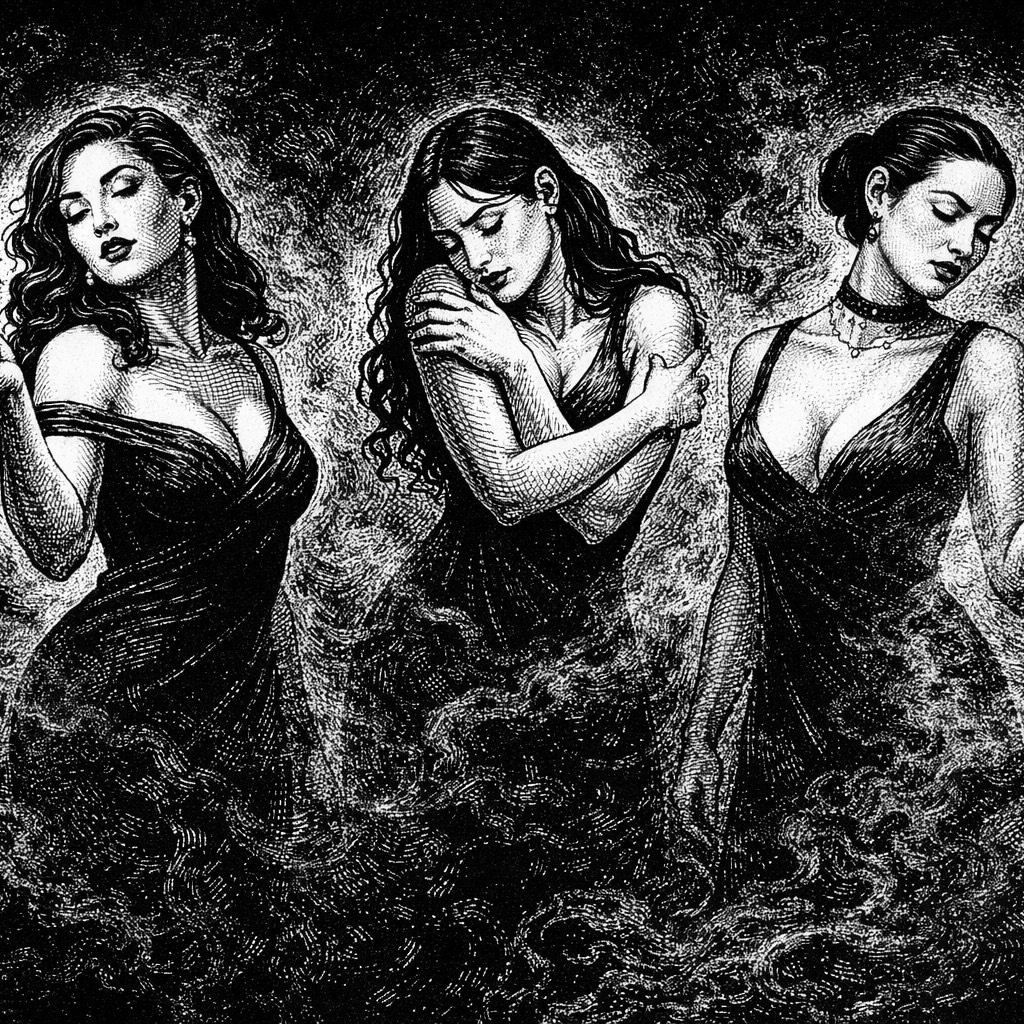
Mara’s daughters showed her the dirtiest places to visit in major cities around the world. Mei was becoming addicted to the lifestyle. Mara’s daughters were the worst influencers.
Sister Ruth took naps in the middle of the day and started skipping classes and leaving her chores half done. In Hong Kong, she entered the rooms of married couples, unmarried lovers, and strangers who had met in bars.
The one thing nearly every human adult had in common was an urge for physical contact in its various forms, from a light touch to the deepest joining.
In Singapore, Mara’s youngest showed the wayward nun the orgiastic gatherings of the wealthy on yachts and in castles and villas in exotic locales.
While her twin sister showed her the joys of romantic wedding nights and honeymoons on tropical islands, remote locations, and getaways.
Mara’s oldest brought her to the darkest places in New York, London and Tokyo, where married cheaters met with working girls for unenjoyed trysts with guilt and sexual addiction.
Mei had discovered an attraction to the sensuality of voyeurism but failed for a moment to recognize her growing attachment to it.
Her newfound freedom enabled her to come and go as she pleased, enter places she was not allowed, and see things she would otherwise have never seen.
To the uninitiated it appeared as if she had succumbed to the temptations of Mara’s girls, and though they had not trapped her, she believed the only way out was further in.
The holy scriptures tell us that the best meditation to counter the lust of the physical form is a contemplation of the horror of the human body.
The bones and organs under the skin are grotesque when uncovered. The smell of the body, when left unwashed for more than a few weeks, is horrible.
The hair and nails grow out of control if not brought to heel with scissors and combs. And the bodily fluids that collect inside our organs and excrete through our pores and orifices are gross.
Yet those organs and bones gave the body such a beautiful structure. It was that blood and bile that gave color to the skin, both thrilling to the touch and electric to the tongue.
The holy sutras tell us that contemplation on the impermanence of the human body can work to counter the attraction toward the young and the pretty because everything dies. Everything changes and decays. Nothing is permanent.
But years and experience attracted Mei to older women, and it was the immediacy and fragility that added beauty to the young.
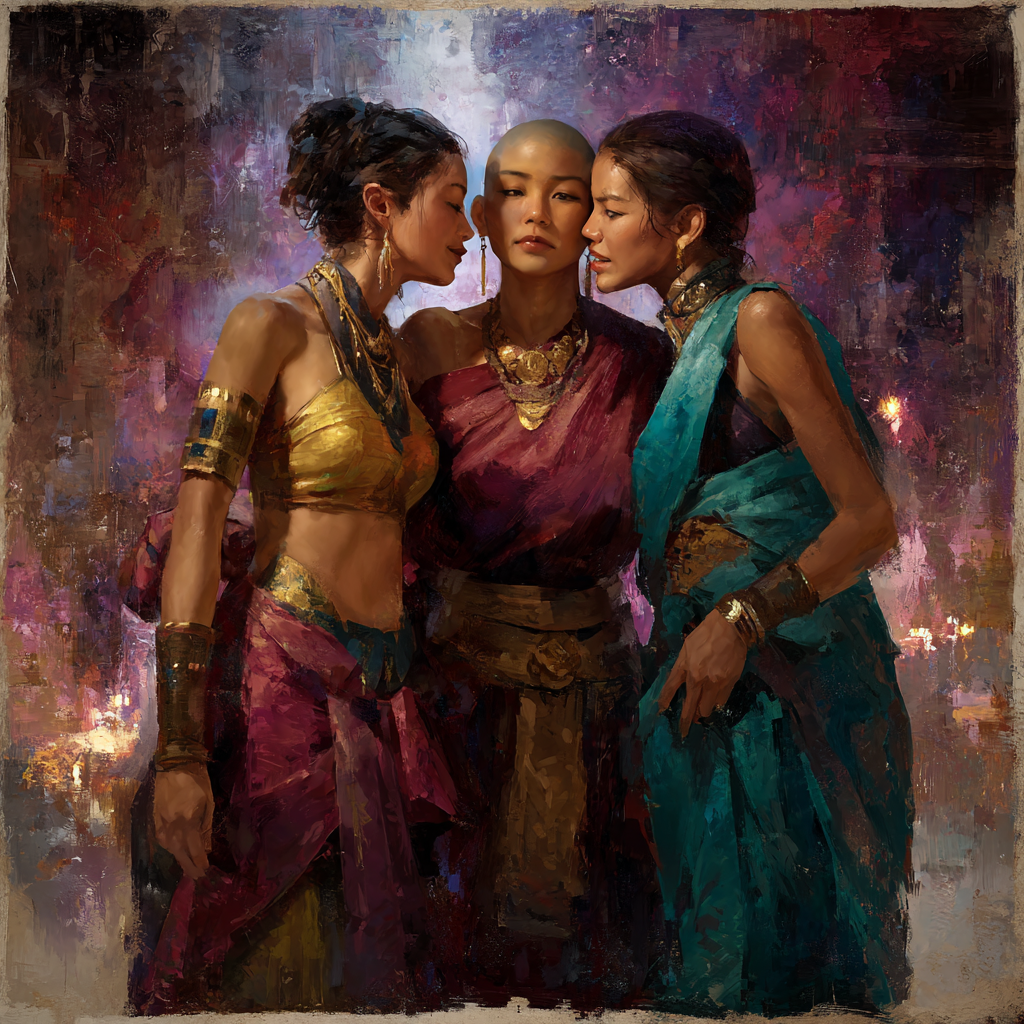
Her chores were changed. The new ones couldn’t be left half done — and one in particular left her alone in a room with Sister Somi, a Korean nun, a Christian sister, her spiritual crush. A test of will against the Daughters of Mara.
Sisters Ruth and Sister Somi had alphabetized and boxed every file and student form in the cabinets. They sorted, reordered, and re-filed every student by year, gender, month, and name in the new administrative offices in the rebuilt wing of the old building.
They swept and mopped the emptied office clean from the floor to the walls and the ceiling.
Exhausted from filing, cleaning, and smiling, they sat closer than was appropriate on the floor of the empty room against the far wall facing the door.
They touched their feet together more than was necessary and rested in the comfort of each other’s company longer than should have been allowed.
Djinn Somi glanced at her senior sister. Even in noble silence, a look and a look away would say volumes.
When Ruth spoke, her voice rang through Somi like a bell — authority and confidence, the things the men in her village were rumored to have but failed to embody. She had an emotional depth they didn’t. When she smiled, she never covered her mouth. She let it shine.
Like Sister Ruth, Somi had fallen behind in her studies and commitments to the practice. Unquenched desire had disturbed her mind and meditation as well. They had many encounters over the years during moments stolen between tasks, but the only person she could talk to about her feelings was the person upon whom her desires were focused. Who lived in the same building and slept less than a hundred paces away.
“I want to tell you that I’m proud of you,” Ruth told her in a dream. “I’m impressed by your progress, and I love the way you laugh.”
Somi thought little of it because it was only a dream. “I love making you laugh, too,” Somi said.
“But that’s not all,” Ruth added in the dream. “I also love making you smile. I love talking to you and being near you. And if it didn’t break our vows, I would love to make love to you. If I could spend the rest of my life making you happy,” Ruth continued. “It would be the single best use of my time.”
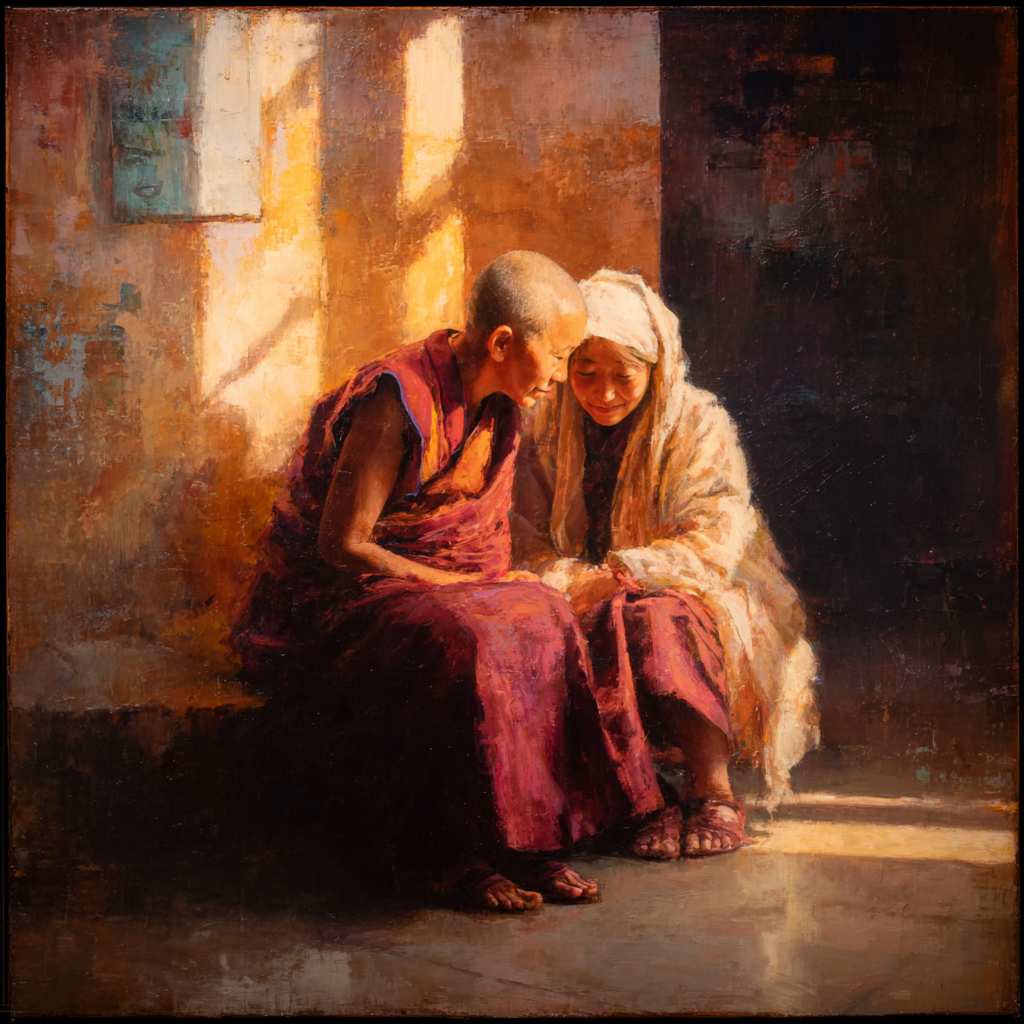
Ruth in the now empty room dropped her eyes and leaned back against the stone wall with a soft sigh. A part of her thought that nothing had to be said. She’d already said it in a dream.
“I know it doesn’t matter much,” Somi whispered, sending a pulse down Little Mei’s spine. “If this is all that we have, it’s meant more to me than you know.” Somi pulled in closer to whisper a secret, “I love you, sister.”
It took Ruth Lubaba a couple of heartbeats to realize that those words were spoken out loud. This was not a dream, but it felt like a dream, and perhaps she’d spent too much time dreaming to know the difference.
“I’m sorry,” Somi said.
“It’s okay,” Ruth reassured her. “I don’t always follow the rules either. And you sometimes make me want to break my vows.”
Her stunning admission echoed in the empty office.
Sister Somi blushed. Her complexion was like strawberry in a butter cake batter.
Mei’s heartbeat quickened with her every breath. It felt like robbing a bank.
“The master was right.” she thought. “How could anyone resist me?”
Sister Somi rose quickly to her feet, leapt into her sandals, and fled, leaving the older nun fighting to catch her breath and slow her heart.
“Forgive me, Mother.” Ruth thought aloud in the empty room. “If this was a test, I did not pass.” She turned her face to the sky obscured by stone and confessed her weaknesses. “I am only human,” she said. “Please help me to be stronger.”
Her desire was as empty as the office they had spent the afternoon clearing. And the shame turned her skin from cherry-red to deepest amber to almost blue.
“How could anyone resist temptation?” she thought aloud. “How could anyone resist the Daughters of Mara?”
The lust for life is a lust for each moment filled with desire, adventure, and the sublime. Mei was finding it hard to resist the temptations of the Daughters of Mara.
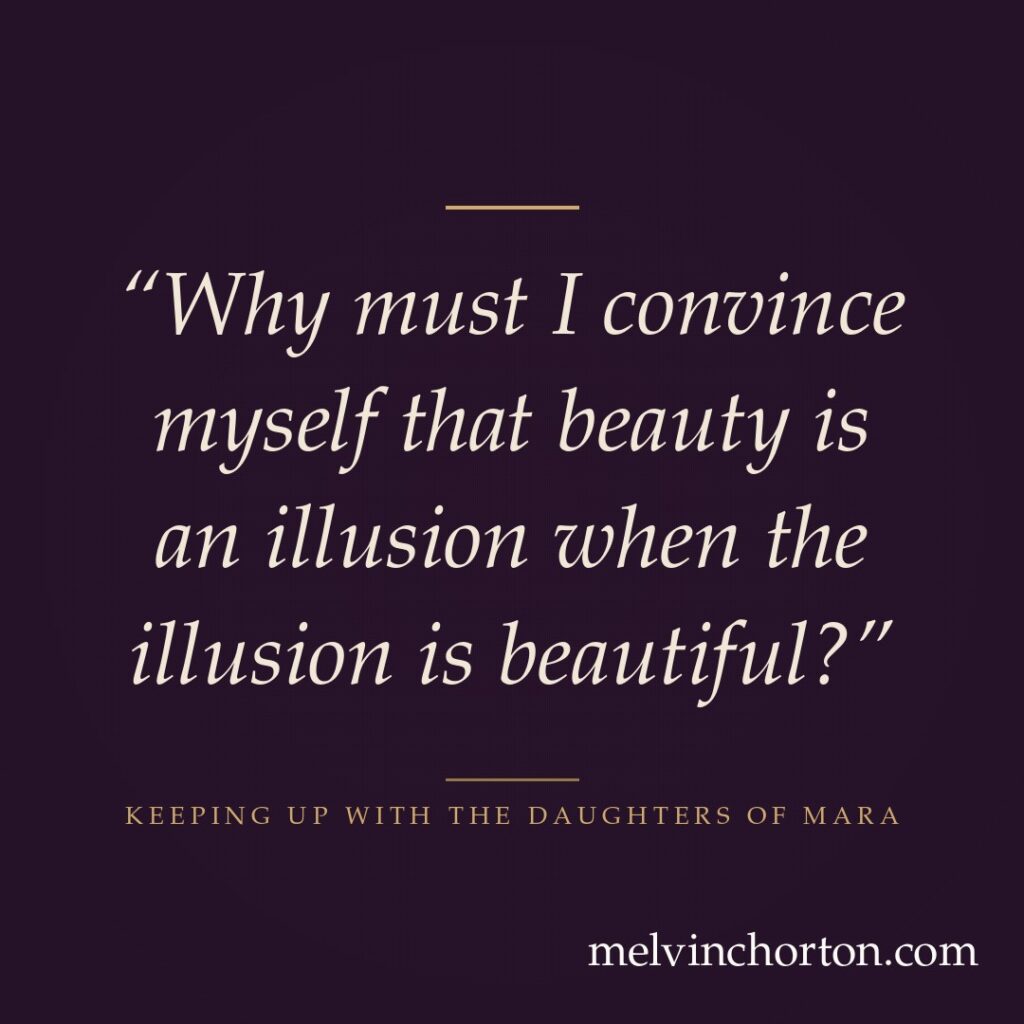
“Enough tricks!” she thought. “Why must I convince myself that beauty is an illusion when the illusion is beautiful?”
She imagined a warmth that was slightly out of reach while placing her right hand just there and holding it, squeezing it tight against her wrist. She sent one long digit slowly across the edge of her pulse point. Opening gently her impulse, she took a tiny bite with no regret. Bottom lip, upper teeth pressing down a bit too hard. Exploring feelings of defiance while Mara’s children watched.
“I thought you lived in a school?” Arati said. “Oh my god,” she said, rolling her eyes.
“I don’t think she cares, Arati,” her twin sister responded.
“That’s crazy, Rati,” she agreed. “I think you might be right.”
Mei was breathless and balanced. “Desire can serve as motivation, much like compassion for others and self-compassion,” she thought.
She was fully aware that all phenomena were like illusions and that desire was a construct. It only existed conventionally.
Little Mei gasped again as she realized she was not in her private room, alone, but in an office emptied of paper, chairs, and people but filled with deities and demons that had come to watch the dance between Mei and Mara’s girls.
“You still resist us,” Trisna said. “When you should be disgusted with yourself,” she told Ruth.
Sister Ruth was worried but reasonably sure that she would hear the approach of anyone living, anyone coming.
“Let them come,” Rati said. “I believe she wants an audience.”
“The girl will love herself and the mess she makes of her life,” Trisna offered with a self-satisfied tone.
The Daughters of Mara repeated her wishes like a mantra. “Let them come. Let them come.”
“You’re thinking of breaking your vows,” Arati said. “Bad girl.”
“It’s just a tiny one, Sister.” Rati justified. “Like the length and width of a panted breath.”
“Great passion becomes an object of contemplation or a method of concentration,” Mei theorized. “Like impermanence or perfect liberation.”
“I would expect nothing less from a girl raised by yaks,” Trisna said.
The tendrils of Mei’s imagination found the place where her desire and nervous system converged as her left hand pushed hard against the floor.
“It was merely a flesh wound, Sister.” Rati said. “That’s not breaking a vow at all. She barely touched herself.”
“A thought does not a vow break,” Arati answered. “Oh, what would Mother Chu think?”
A brain becomes flushed with blood, a body filled with energy, and a mind becomes locked in single-pointed concentration.
With the motivation to help others, Mei climbs and does not fall.
“Stop this!” Mother Chu shouted from a space inside Mei’s head reserved for shame and disappointment.
Like desire, she thought, this is where I find what I’m made of.
Like desire, this is where I become.
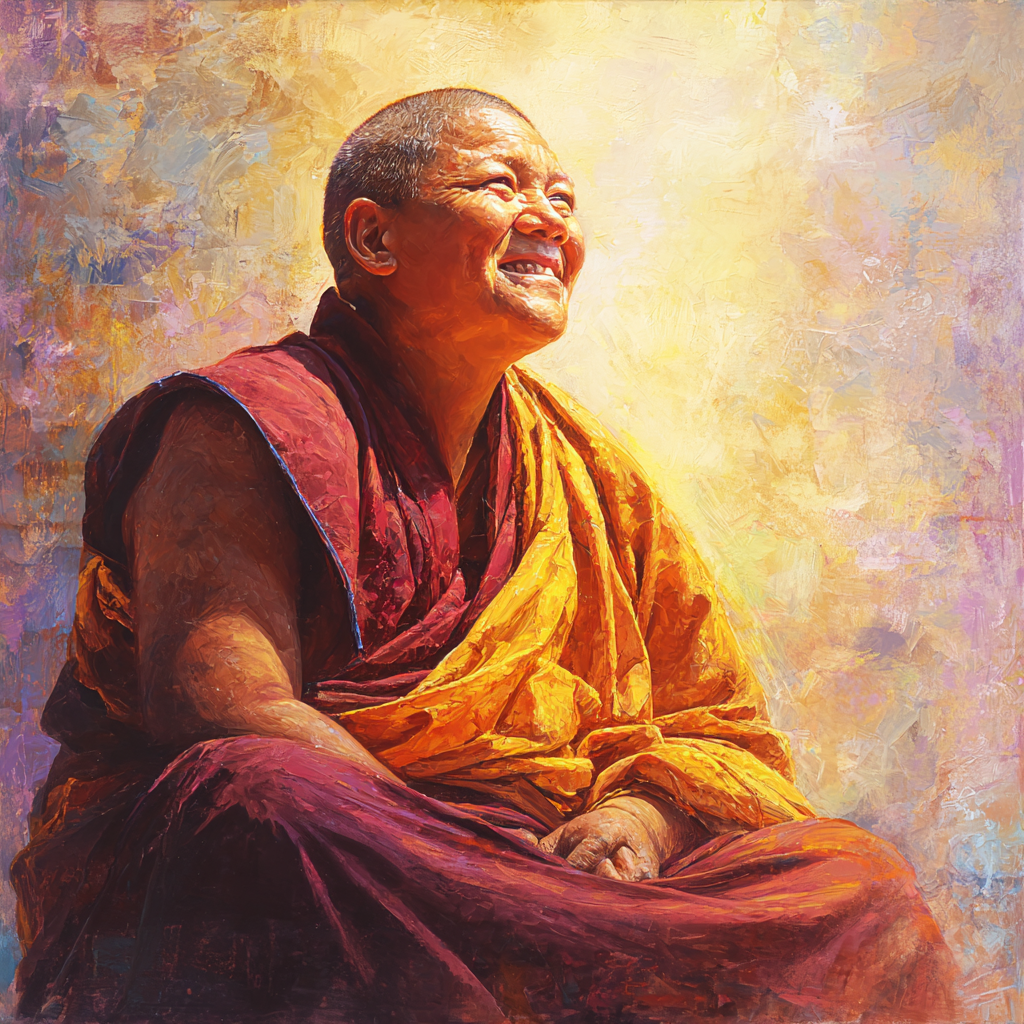
“My self,” she thought. “The powerful parts of me.”
The Daughters blushed.
The images of Mara’s Daughters faded into nothingness as Sister Ruth floated into the clear light of emotional clarity.
They never spoke again; those naughty Daughters of Mara, but they were always close. And Mei’s voyeuristic addiction didn’t so much fade as pass into curiosity, as did her desire for sexual adventure or the need for abandon on the inner net of the astral plane.
Over the next several years, Mei Lubaba used her sleeping hours for sleep and her waking hours for contemplation and study. The guilt lifted gradually, the way a bruise does — color by color, most of it anyway. She and Somi remained what they had always been to each other — close enough to feel the pull, wise enough to stand at its edge.
A small part of her ego wished she had never said those things to Sister Somi in a dream. But that, the dream master would say, is what dreams are for. To say the true thing in the place where it costs nothing — and carry the knowledge back with you into the light. ||
Read another story → · See all of Melvin Horton’s stories →
Share this:

I occasionally say interesting things. Sign up for the newsletter →
Comments are closed.